
As I wrote in a previous post, fostering Apri has been eye-opening. Unlike my previous fosters, she was not sick or injured. Also, she was very young, about 7 months. I’ve fostered mostly senior or middle-aged cats. I soon realised that teenage cats have a lot of needs. Mostly, the need for stimulation, which I’m unable to provide as I’m always out of the house and live alone, unfortunately.
And I tried to provide that for her by getting her a cat tree, automatic AI-controlled toys, boxes, walks on leashes … but it wasn’t enough for Apri. Day by day I see her showing more and more behavioural problems. (She was scratching me so often at one point that I had a new mark each day.) Mostly, I could sense that she was terribly bored and frustrated, and that her walks outside was only making her even more frustrated.
After talking to several experienced rescuers, cat owners and poring through Reddit, I came learned several lessons about cat ownership, some of which would probably offend a large swath of the Internet.
The following points is something I wished would be given to new cat owners or those who are thinking of having a cat but have zero to little experience in owning one.
It’s an utter misconception that cats are “less work”
Sure, they are independent creatures who probably don’t need much monitoring, but they have needs, especially when they are younger. I swear, I’ve had a much easier time taking care of my dog who had multiple health issues. I am literally worried each time a cat is sick because I have to give it pills, and I’m often bitten when I try.
Also, since cats are agile, nimble creatures, if you choose to keep them indoors, be prepared for escape attempts and cat-proofing your home to the wazoo. If you have a balcony, be sure it is fenced up. I don’t have to do that for my dog as much! A gate is all it needs to be kept in the compound while a cat would probably need a catio.
You need to be prepared for medical expenses
If your cat is taken from the streets, be prepared to shell out money for vaccinations and neutering/spaying procedures. It’s the very minimum you should do. Then, as the cat ages, they will end up with more and more medical bills. You have to be prepared financially for that.
“Cats should be kept indoors” is a very region-specific norm
This was a surprising discovery for me.
Suggest that a cat should be allowed outside on the Internet, and you’re probably going to be yelled at for being irresponsible. Usually the culprit is an American or an Australian.
Apparently it’s a very hot topic among cat owners in the US. There are cat owners in the US who allow their cats outside, and there are even working cats – barn cats – who live in farms and who spends their lives catching mice for the farmers. But these people prefer to remain silent because they are often assumed to be “irresponsible” and “pro-bird-deaths”.
Interestingly, many folks in the UK are not only okay about cats roaming outside, but think keeping them indoors-only is cruel. Some UK shelters do not allow cats to be adopted unless they have access to the outdoors! (The opposite recommendation is made for US shelters, of course.) These Reddit threads are quite interesting to read:
- Why is it normalised to let your cat roam outside?
- How do you feel about the culture of allowing cats to free roam in the UK, vs the expectation in Australia / US that cats should only be outside if supervised?
I even asked folks on Mastodon about this indoor/outdoor debate, and noticed the same trend: Americans/Aussies prefer cats indoors, Europeans are fine either way. However, the American tendency towards indoor cats maybe skewed online. I was also told that there are many Americans who are okay with their cats outdoors too.
The recommendation for making cats indoor is due to the fragility of US and Australia’s ecosystems. Cats were only introduced a few centuries ago into America and Australia, and have been wiping out native species. Meanwhile in Europe, cats have been part of the ecosystem for centuries, if not millennia. So, the wildlife are not as endangered by them.
How about Malaysia?
Cats have been around for yonks in Asia, and as far as I know, Malaysia doesn’t have predators like coyotesor raptors that could chomp on them like in the United States, though if a cat were to wander around a kampung he could end up in the stomach of python.
Ideally, cats should stay indoors, but I’ve come to realise an unconventional truth: Whether you need to keep a cat indoors are influenced by several factors:
- Cultural influences (for eg US)
- The presence of predators
- A place with lots of cars
- A cat’s personality
Therefore, whether a cat can be an indoor cat depends on the cat. So, every case is different. “Every cat should be an indoor cat” is an idealistic concept that may not be realistic in some cases.
Personality fit is very important
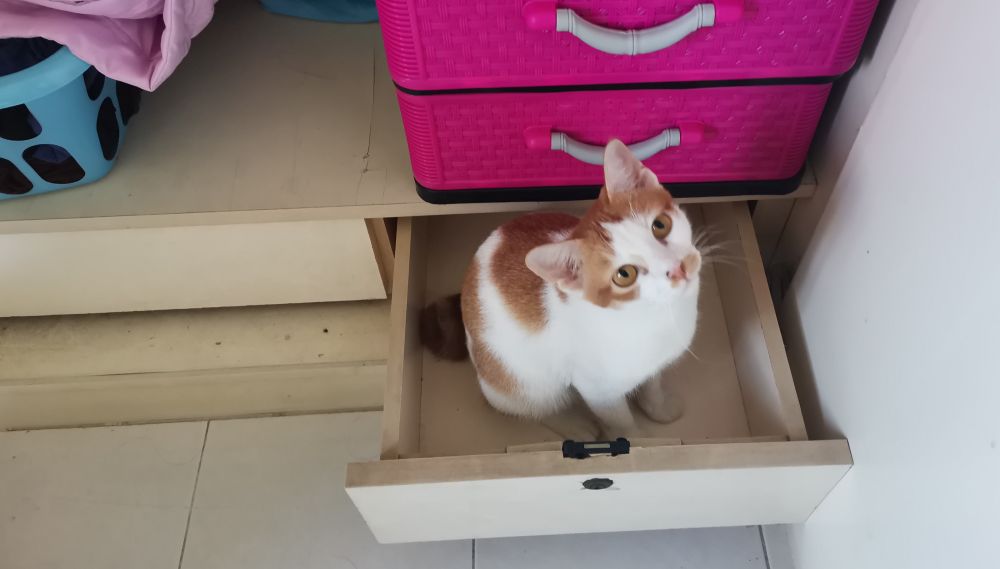
I have friends who have indoor/outside cats. Meaning, their cats are allowed to roam. I’ve always wondered why they’re okay about exposing their cats to many dangers outside – diseases like FLV, FIV, cars, mean humans, dogs … I shudder when I think about it all.
But here’s something I realised after fostering two escape artists: Sometimes they are so miserable indoors, you just need to let them go and accept that they may have shorter lives.
I had a friend who has a fluffy, gorgeous black Persian. He is what I call, a perfect kidnappee candidate in Malaysia, where these pets are often snatched and resold. So, my friend tried to keep him indoors, naturally.
But the Persian wouldn’t have it. One day, the cat crashed through a window to escape. So, my friend has given up and lets him roam. Void comes home for meals and is generally less inclined to crash through glass windows now, and is much happier. My friend does worry when he doesn’t come home, but keeping him indoors was making both of them miserable. (And in case you’re wondering, the Persian cat is neutered.)
You will know when a cat is miserable. They yowl. They act out. They moan. They escape at every chance.
When I was fostering these escape artists, I was exhausted from preventing them from escaping or perching at dangerous corners of the apartment.
One of my fosters escaped a few days before he was supposed to be neutered. My neighbour and I watch him trot happily away, his tail held high, and she said: “Let him go. Look how much happier he was.”
He had been soooo miserable in the tiny apartment with me that I was relieved to see him finally happy and free. Yes, this is the unconventional, politically incorrect feelings I had about the matter.
So, yes. While I prefer cats to be indoors, especially if I own one, I know that for me to have an indoor cat he must be the right personality fit, and I must have the right home for it.
You need to have the right abode
Not all cats can be happy in a small space. I quickly realised this with my fosters who were mostly “oh my god let me out of here” cats.
My very first foster was a senior who was content to sleep all day and stare at me from the darkened corner of the apartment. He hated cuddles, disliked attention and was just a little furry statue with occasionally blinking eyes. (Wrote about his story here – scroll down to the Aug 2022 entry.)
I once said to him, “Ya know, if you were not having the runs every day, you’re the lowest maintenance cat ever.”
The escape artist cats kept my stress high because they obviously did not like being cooped up in my tiny apartment and were always following me around and meowing at me to be let out.
Apricat, that scamper, has taken to nipping my toes to get my attention when I’m trying to work or wash the dishes. And it was a bad idea to keep a cat like that in an apartment with balconies, even if it was on a low floor—the cats liked to perch at scary places, and each time I try to remove them I get an annoyed swipe.
If I’m to keep a cat as dominant and adventurous like Apri indoors, I would make sure I have a garden and a backyard, and fence it up to prevent her from escaping.
If you live alone, you may have trouble managing a cat
Of course, that’s not true for every cat. But a highly energetic cat will need lots of stimulation, especially if you plan to keep it indoors. If you plan to let the cat roam and treat your home like a B&B, most probably it’ll be more manageable.
If you have a family, every member can help you care for a cat. If you are alone, the care will be entirely on your shoulders, including the bills. Are you prepared for that?
Are you really a cat person?

The most politically incorrect question ever! But I’ve come to realise that I’m more of a dog person. I like cats, don’t mind petting them and caring for them. But I’m nervous around them. Yes, you can even say that I am afraid of them.
I get anxious about their unpredictability, their tendency to bite or claw you, the difficulty in giving them medications (because they will bite and claw you).
When I tell cat owners that I hate being clawed and scratched by them, they usually have little sympathy and would say: “Oh, that’s normal!”
Like it’s nothing.
But to me, it was not nothing. I pretty much afraid of a cat after they do that and avoid them like a plague. Even if they were doing it because they were rough playing.
This was something I had to struggle to accept because I consider myself a brave person! But I’m not brave with sharp fangs and claws lol.
When you’re confined in a 900sqf apartment with a temperamental, bite-y cat, it is a recipe for high blood pressure.
And I know that at times Apri is just playing with me. However, there were clear moments when I knew she was pissed off at me. Like that time when I tried to bring her into the apartment after an hour’s long walk on a leash, and she wasn’t having it, and I ended up having to get a neighbour to help me.
Yet, my neighbour who is an experienced cat owner, did not dare to go near Apri because she was hissing and yowling.
So, yeah.
If you want to own a cat, you need to consider all these factors. Really, really consider them and ask yourself—can you do it? I wish someone had given me this list when I toy with the idea of owning a cat. It would have slapped me awake instantly!
However, if you are considering adoption, do work with an experienced and reputable rescuer or shelter who will give you a home trial. There’s no harm in “failing” the trial. You need to make sure it’ll work, after all. Your cat needs to have the best life it can get, and you need to be able to manage it.

 Elizabeth Tai
Leave a Reply