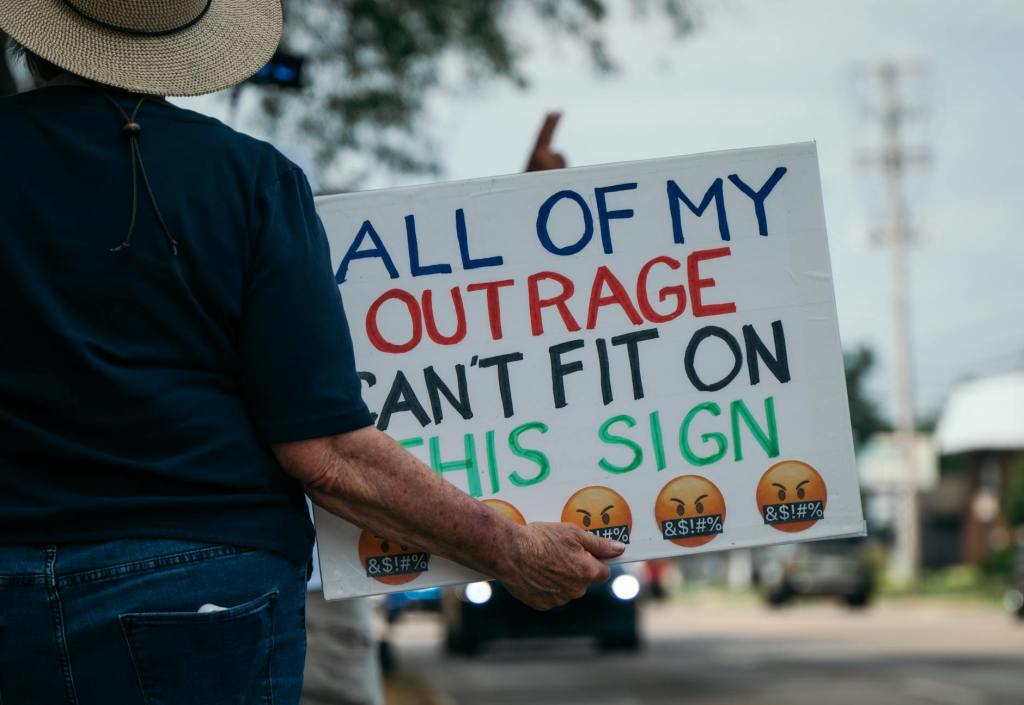
Another day, another storm in the writing community teacup!
The storm, this New York Times article: The New Fabio is Claude
TL;DR: Coral Hart uses AI to generate 200 books a year. This has made many writers mad, mad, mad.
(Somewhere in a glistening office tower is a very satisfied editor – the ragebait has worked as the article is widely discussed everywhere. KPI met!)
Coral Hart is just the newest “outrage” in a long list of “outrages” for writers.
If you’re as much of a social media hermit as I am, you’re probably unaware that the fiction writing community is currently being torn apart by those who use AI to write and those who aren’t.
I won’t go deep into the arguments for or against writers like Coral Hart right now, as this article is more about the writing community than AI and the answers are just a Google away.
Also, when I’m talking about the writing community, I’m talking about the online writing community that writes in English. They often come from countries such as the United States, Europe, and to a degree, Australia and New Zealand.
I personally do not know how the Malaysian fiction writing community is reacting to AI as I have limited contact with the community at large. (That’s another long story.)
How I reacted when AI became a thing
Like most writers, I was also resentful and upset, especially about the idea that our writing has been used to train AI without our permission.
But I’m a realist because I work in tech, and I have a realistic view of the technology. I have used AI for quite some time, even before ChatGPT became a thing.
Over time, my perspective changed as I found out how the technology worked, and calmed down. I am even experimenting with using AI to assist me when I write fiction.
Here’s the harsh truth: Either a writer is willing to adapt or they are not. Those who refuse will end up being behind, as they won’t be able to reap the benefits that AI gives a writer.
When you’re a working writer, you gotta face industry realities
On a practical level, at work, AI has been invaluable in helping me learn concepts faster. I’ve also created agents and accelerated my writing workflows because of it.
A powerful AI search bot on a knowledge base with rich data has been game-changing for me as well. (No more begging for stuff from colleagues and waiting for days to receive them!)
AI is also discussed in societies differently. In the West, doomerism prevails. In the East, especially China, there’s lots of optimism and it is now actively used in smart factories and hospitals. There are different types of AI, and LLMs are just one of them, so for the purpose of this article I’ll be focusing on LLMs.
These regional cultural attitudes will affect how AI is received in writing communities.
At the end of the day, AI is just technology—neither inherently good nor bad.
Writing communities have always been prone to toxicity; AI is just the newest trigger

To be honest, the fiction writing community has always been toxic to me. Even in Malaysia.
They’re always squabbling and attacking each other for one reason or another. During the early days of indie publishing, traditionally published authors sniffed at indie published authors, saying they’re not real writers. Now, it’s writers who are using AI assistance that are “not real writers”.
I’m not sure what it is about the writing craft and why its communities are like that. I have a theory that this is because writing, as a craft, is so closely tied to one’s ego. So, anything that threatens that makes people go crazy.
I’m a working writer (like, I literally write for media and corporations). I have been writing professionally for decades. Not only has my ego been pulverised by sharp-tongued editors and scathing reviews, I have no time for this shit. I need food on the table, so I need to write, end of story.
I prefer to use my limited free time to practice my craft – write fiction free of the demands of a cash till or boss. I don’t have time to reply or write posts in forums or social media defending my ego or hoping to get some understanding from a community that is often fighting among themselves.
During the early days of indie publishing, traditionally published authors sniffed at indie published authors, saying they’re not real writers. Now, it’s writers who are using AI assistance that are “not real writers”.
One thing I noticed lately, especially on Substack, is that many anti-AI writers have ended up bullying writers who do.
Frankly, I have no idea why people do this. What will that accomplish? How will that improve anything? Their anger should be directed at the tech giants who impose technology without understanding its impact on creatives, or at governments that refuse to regulate.
Honestly, it is not worth arguing with these bullies because they are too fearful of a technology they do not understand. The right thing to do is to block them because your energy is precious—you need to use it to create, not engage with people who refuse to do their own research and dare to experiment with this technology to truly understand what it means.
Unless these bullies who come hurling nasty words at you truly understand what AI does, they shouldn’t bully others about it. They only reveal their own lack of knowledge and understanding.
If a writer is hungering for community, especially one that uses AI to support their work, the best thing is to get it from small pockets of like-minded writers. Big is not always better.
The disability perspective
Another common narrative is that AI isn’t solving real problems but creating problems to solve.
For one, and I will continue being annoying about this, I have seen how it helps neurodivergent communities or those with cognitive problems, even in the creative field. Their struggles are valid, even if they aren’t always visible. Let’s not dismiss their problems so quickly just because their issues seem incomprehensible or not real to neurotypicals.
Ethical AI use?
As for writers who use AI, they must decide for themselves how they want to use it.
Sadly, due to the hostility against AI in the fiction writing community, I’ve come to believe it’s not worth announcing that you use AI.
One, writers don’t need validation for the tools we choose.
Two, I find these arguments around AI a bit silly. We’ve been using AI long before LLMs became a thing. People argued that spell checkers weren’t AI, but modern versions definitely are. AI has done a lot for knowledge management, a field I work in and love. It makes knowledge sharing easier and information more accessible.
What we need to discuss
What we really need to discuss are the rampant capitalistic forces that are driving this hype and the safeguards that are sorely needed to protect jobs, creative works, and societal stability.
We need to discuss the production-driven, “we need to write more books faster” culture that is now festering in indie publishing.
We need to come up with a better way to matchmake books and authors with their destined readers.
But no, writers are fighting with each other.
And the powers that be continue with a grin, knowing that their profits are still coming in because the writing community is as divided as ever.
I just know there would be a writer or two who would probably come at me and yell that I’m supporting Coral Hart or all for generating novels with AI due to my Guide to writing fiction with AI, all because I have written such a guide and I’m not raising my pitchfork at Coral.
Which, of course, makes me question the reading comprehension abilities of writers who claim to write professionally, sometimes. I will address my reaction to Coral’s situation, and what I think about generating 200 novels a year in my next post, promise.


Leave a Reply