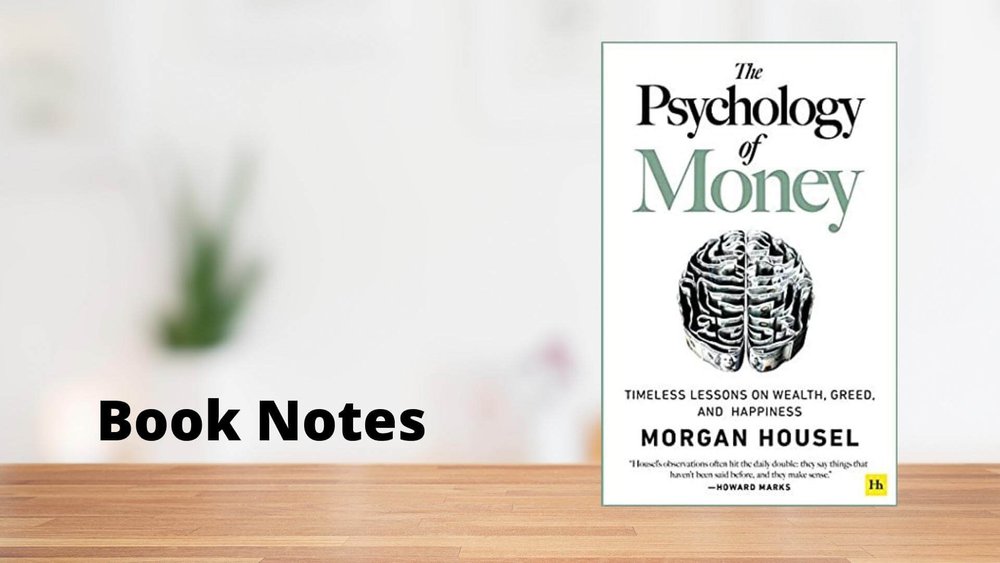
Author: Morgan Housel
Published September 8, 2020 by Harriman House
Mr. Stingy raved about this book so much I had to read it. Fortunately, my Scribd subscription had the ebook and I devoured it immediately.
And lo and behold, it was quite an illuminating book.
Morgan Housel is a partner at the investing firm, Collaborative Fund, and a former columnist at The Motley Fool and The Wall Street Journal. He definitely has the experience to fuel what he wrote in the book. I am rather gratified, for one, that he is a big supporter of passive index funds or broad market ETFs. (That’s my current investing strategy.)
Bonus note: Morgan also blogs — his essays are interesting reads!
Favourite quotes
“Physics isn’t controversial. It’s guided by laws. Finance is different. It’s guided by people’s behaviors.”
“‘Enough’ is realizing that the opposite—an insatiable appetite for more—will push you to the point of regret. “
“But there’s only one way to stay wealthy: some combination of frugality and paranoia.”
“The ability to do what you want, when you want, with who you want, for as long as you want, is priceless. It is the highest dividend money pays.”
“If respect and admiration are your goal, be careful how you seek it. Humility, kindness, and empathy will bring you more respect than horsepower ever will.”
“Past a certain level of income people fall into three groups: Those who save, those who don’t think they can save, and those who don’t think they need to save. “
“Do not aim to be coldly rational when making financial decisions. Aim to just be pretty reasonable.”
“Financial goals made when you were a different person should be abandoned without mercy .”
Lessons
1. You don’t have to be perfectly rational in your financial decisions. Instead, manage your money in a way that helps you sleep at night. For example, paying off your house loan early may not make much financial sense, however the ability to sleep well at night during tough economic times, knowing that you have no debt and a roof over your head that will not be taken away is priceless.
2. Use money to gain control over your time. Freedom to do what you want, when you want it, is priceless. Money can buy you that. (This is my main drive to achieve financial independence.)
3. Save like a beaver trying to stem raging floodwaters. Saving will be a large part of your financial success.
4. Uncertainty, doubt, and regret are common costs in the finance world. View them as “fees” you pay as an investor – become okay with things going wrong.
5. But avoid the extreme ends of financial decisions. Don’t assume that you’ll be happy with low, poverty-level incomes for one. And don’t go all in with risky investments.
6. Every investor should pick a strategy that has the highest odds of successfully meeting their goals. Morgan echoes the advice of people like Warren Buffet and John Bogle: For most investors, that means dollar-cost averaging into a low-cost index fund, which will provide the highest odds of long-term success.
7. The path to staying wealthy is a combination of frugality and paranoia.
8. Pessimism sounds smarter; it’s intellectually captivating, which is why the media and influencers spin stories about the market falling.
9. To do better as an investor, increase your time horizon in investing – yes, long-term investing wins over short-term ones. Risk pays off over time.
10. Don’t follow the herd! Don’t follow the financial decisions of others – they have different needs, life circumstances, and goals than you.
Thoughts
I thought I didn’t have anything new to learn about behavioral finance, but this book surprised me. For one, Morgan says: “Do not aim to be coldly rational when making financial decisions. Aim to just be pretty reasonable.”
Why? Because reasonable is just more realistic and you can stick with it better for the long run.
That’s new to me — I’ve always aimed to be perfectly rational in my financial decisions and was sometimes disappointed that I was not. Morgan’s advice: Make the decisions that will help you sleep at night.
I’m glad I prioritised that.
This is not the kind of book you read to find ways to get rich quick. Instead, it’s a thorough education on how your behaviour will influence your investing strategy and determine how successful you will be with your finances.
The Psychology of Money is a good reminder and guide on how to be a wise investor, and that having the soft skills for it and the right mindset is very, very important. It will determine your financial success.
 Elizabeth Tai