
At the foot of Mount Maebongsan in the Mapo-gu district of Seoul sits a unique cultural centre. The stark, minimalistic buildings’ of the Oil Tank Culture Park would look at home in a science-fiction movie.
However, once upon a time, these 15m-tall oil tanks held 69.08mil litres of oil. Now pieces of the tanks have been carved out, reused and rebuilt to become theatres, buildings and community centres.
Last year, I had the chance to visit these wonderful examples of urban regeneration. It was a great visit, even if the summer heat was making me bake outside.
Perhaps it comes with being a minimalist and a zero waste aspirer, but I am terribly inspired when organisations or governments reuse old things in innovative, inspiring ways.
The Oil Tank Culture Park blew me away.

Second life
Built 40 years ago as a response to the 1973 oil crisis, these five oil tanks were closed in December 2000 when the Seoul World Cup Stadium was being built nearby as organisers deemed it too dangerous to have a facility like that so near a public stadium.
By 2013, when the Seoul city government decided to revamp the facility, the place had become a garbage dump.
Using ideas submitted by the public, the builders of the park reused the oil tanks’ structures and repurposed them.
For example, the exterior of T6, a community centre that includes a cafe that serves drinks with straws from rice, is made up of sheets of metal harvested from the oil tanks.
T1 was the smallest tank and once stored gasoline, but now the steel walls and roof have been replaced with glass, turning it into a beautiful glass exhibition hall that often appears in dramas, we were told.
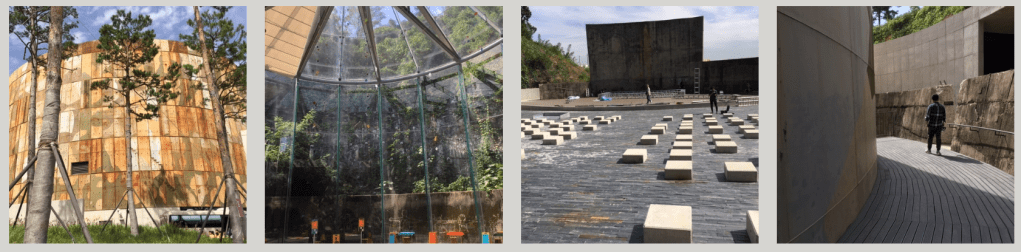
The oil tank that is T2 has been cored out. The sites’ great acoustics has made it a natural choice as an outdoor theatre. It also has an indoor theatre below.
T4 is the “Culture Complex”. It’s now used as an exhibition and performance hall.
T5 is the “Story Hall”. Its purpose is to record the stories of the “past and present” and this includes the story of the Oil Tank Culture Park. Inside this tank, people can watch a “360-degree” photographic show, projected on the walls of the oil tank structure.
Only T3 remains largely untouched. It’s now deemed a “Seoul Future Heritage”, a museum to showcase how the original tanks used to be.
Malaysian authorities, take note – old structures can become new again. Also, they may great pieces of art!
For more information, visit http://english.seoul.go.kr/enjoy-culture-oil-tanks-culture-park.
 Elizabeth Tai