16 OCTOBER 2020
Last year, someone asked me what I did to relax. I said: I blog, write fiction and read. Sometimes, I love to go to a cafe to read and journal for hours. Her reaction surprised me.
“That doesn’t sound fun. What do you really do for fun?”
“But that’s what I do for fun!” I protested.
“Yeah, but it’s related to your work. You write for a living don’t you? Plus, you do a lot of thinking when you are doing those activities. Do you even get to relax your mind when you do those activities? Also, all your hobbies have something to do with words and working with a screen. Don’t you have screen-free hobbies?”
Her remark really got me thinking.
She was right. Many of my “hobbies” were related to my efforts in building my personal brand. Although I love blogging, it was also a creative marketing exercise so that people will eventually find my website. I journal in order to be more productive rather than to self-reflect. I even watch television shows to fill my creative well so that I can write more fiction! All these activities had an end goal in mind.
And yes, all my hobbies involved me squinting at a screen, thinking hard.
As I brainstormed for ideas for a screen-free hobby, I remember I used to love gardening when I was a kid. I remember a childhood pottering around a garden in school, planting seeds and watering plants between classes. Growing various crops in the house garden. Then, life took over and I had to focus on major exams, university, starting a new career, and I forgot how much I loved gardening.
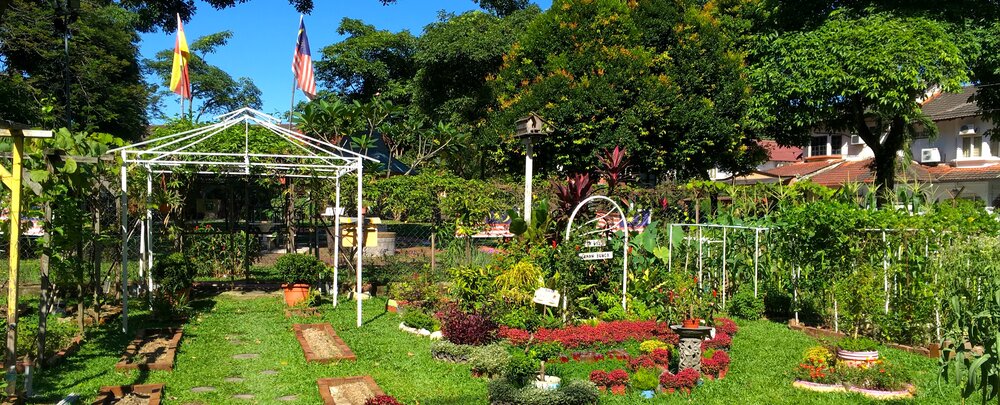
So, I began helping my dad out in the community garden near his home. My tasks were very simple at first. I did weeding. Lots and lots of it. Then, I slowly began to learn the fundamentals of gardening: how to improve the soil, nurturing seedlings and more.
Over the months I realised that I was gaining a lot of benefits from spending two hours under the hot baking sun digging through dirt and pulling out weeds. So much so that I’m starting to call the edible garden the “investment vehicle personal finance bloggers don’t talk about”.
Here are the benefits of an edible garden:
1. It’s great exercise
All that squatting, bending, pulling and lifting is fantastic exercise. When I first started gardening, I would go home so tired that I would have a long nap in the afternoon. But it was a good kind tired – of a body that had been well and thoroughly exercised. I often wake up refreshed and ready to do something creative.
2. It is great for mental health
Pulling out weeds turned out to be a surprisingly meditative activity for me. When you’re bent over the ground, blinking away sweat as you try to uproot a stubborn stalk of weed, that’s all you can think about. There’s also something therapeutic being outdoors surrounded by green plants. And I get so thrilled when my seedlings grow and become a thriving bunch of edibles.
Needless to say, when you are in good mental and physical shape, you spend less on doctor’s bills.
3. Save money on groceries
I worry about pesticides on my vegetables, so I try to buy organic vegetables if I can. However, one tiny packet of organic vegetables, enough for just one meal, can cost me up to RM4. Now I have a decent supply of organic vegetables. Not only do I save money I am assured that my vegetables are pesticides free.
4. It’s your food bank in times of emergencies
During the recent COVID-19 Movement Control Order, vegetables kept running out at supermarkets as supply chains became disrupted. Horrifyingly, some unscrupulous traders even hiked up prices to crazy levels. This experience really drove home the point that having a garden full of edible vegetables would be mighty useful during emergencies such as a lockdown. In fact, people in the United States, Britain and Australia were encouraged to plant “Victory Gardens” at their homes and in public parks during World War I and II. I believe in the age of COVID-19, every Malaysian household should have a Victory Garden. Not to sound pessimistic – in case another lockdown occurs, at least you’d have a ready source of nutritious vegetables at hand.
5. You could sell your produce
I’m not quite there yet with my tiny plot in the community garden, but selling vegetables from your garden is quite possible. And you don’t need acres and acres of land either. When I think about turning gardening into a thriving business, I think about the Dervaes family, who has a thriving urban farm operating out of a suburban house in Los Angeles. The farm began as a way to regain ownership of their food, but over time it turned into a business – the family supplies fresh, organic produce to restaurants in Los Angeles. Then there’s the very inspiring story of Nuraishah Shamsuddin who left her graphic designer job to start a new career as an urban farmer. (And to emphasise how gardening is good for health – Nuraishah lost a heap of weight after she started her new life!)
How about you? Ever think of creating an edible garden? Leave your comments below!
Follow my vegetable gardening adventures at my instagram account @liztaiwrites.
PS: I will be taking a break from blogging starting from today. Work has been ramping up and I would like to use my free time to recharge by gardening and taking a break from writing by sleeping and experiencing stories by reading and watching TV. (Also, I think it’s good for bloggers to take a break from blogging once a year, and I’ve practiced this every year.) I’ll be back end of November. See you then!
 Elizabeth Tai