
Penang, without a question, is a fantastic base for any digital nomad. After all, it’s deemed one of the top 10 cities for digital nomads by people more important than me.
Reasons:
- Rich in culture — it’s a UNESCO heritage city
- Tropical weather
- Island living
- Access to great food
- Modern amenities – WiFi is easily available
- Affordable cost of living for most Westerners. However, some locals can get super annoyed when Westerners brag about their ability to geo-arbitage their way to a luxurious life in a “cheap island”.
I was born on Penang island (the Penang state is made up of an island and a patch of land in Malaysia’s Western peninsula, Butterworth). I spent my childhood there, speak the unique (and sadly, dying) Northern Hokkien dialect many locals speak and my family are Peranakans (Straits Chinese) who have been there for centuries. Alas, like many Penangites, my parents had to move down south to Kuala Lumpur to make a living, so I only spent a few years growing up in Penang. However, Penangites are fiercely proud of their home state (I’ve not met a Penangite who hates Penang) and often long to return to live there again.
I am one of them. I spent a few weeks in 2021 in Penang. Partly to attend to family business and also to have a taste of the digital nomad life.
It was fantastic to just get away and yet be able to work at the same time. It was also fantastic, as a Penangite, to feel like you truly am home, back in a place where everyone spoke my dialect, back to visit relatives and the places your ancestors were.
Here are some of the things you’d expect if you were to set up base in Penang:
Language
Most Penang folk speak good English, especially the old timers who grew up during British rule. Like most Malaysians, Penangites are multi-lingual, speaking at least Bahasa Malaysia (Malay) and English. The fascinating thing about Penangites is that it’s not surprising to find Chinese speaking Tamil, or Indian or Malay folks speaking Northern Hokkien.
Weather
Humid, warm to blazing hot. If you prefer it to be cooler, come around November to December, where the monsoon rains cool down the island heat. But be careful, that’s when flash floods occur too.
Travelling to and around Penang
My transportation of choice to Penang from Kuala Lumpur is a domestic flight, which you can get cheaply from Firefly or Air Asia. My parents, however. love taking the ETS train from Kuala Lumpur to Penang, which can take up to six hours. Once you reach the Butterworth station, you have to take a ferry to Penang island. Honestly, it’s one of the best ways to enter Penang island!
The iconic ferries, however, ceased operations in 2020, though you can still take passenger-only boats to get across the straits. The old ferries will be used to transport vehicles only. Apparently, an “airport-like ferry hub” is supposed to be completed by August 2022.
Domestic flights are the quickest and most convenient. However, the train-ferry combo is definitely an enjoyable way to see the Malaysian countryside and ride the oldest ferry service Malaysia.
Travelling around Penang is easy. Each time my parents visit Penang, they insist on taking public transport. I am not sure if it’s nostalgia or my parents’ Penang thriftiness. (They say Penangites are one of the most stingiest people in Malaysia, hah!) But public transport in Penang is, how do I say this, unpredictable. There are no light rail transits, so busses rule the often-jam-packed streets and timeliness is not a guarantee. That said, you can easily grab a Grab there or walk around Georgetown to get to places — it’s a very walkable city.
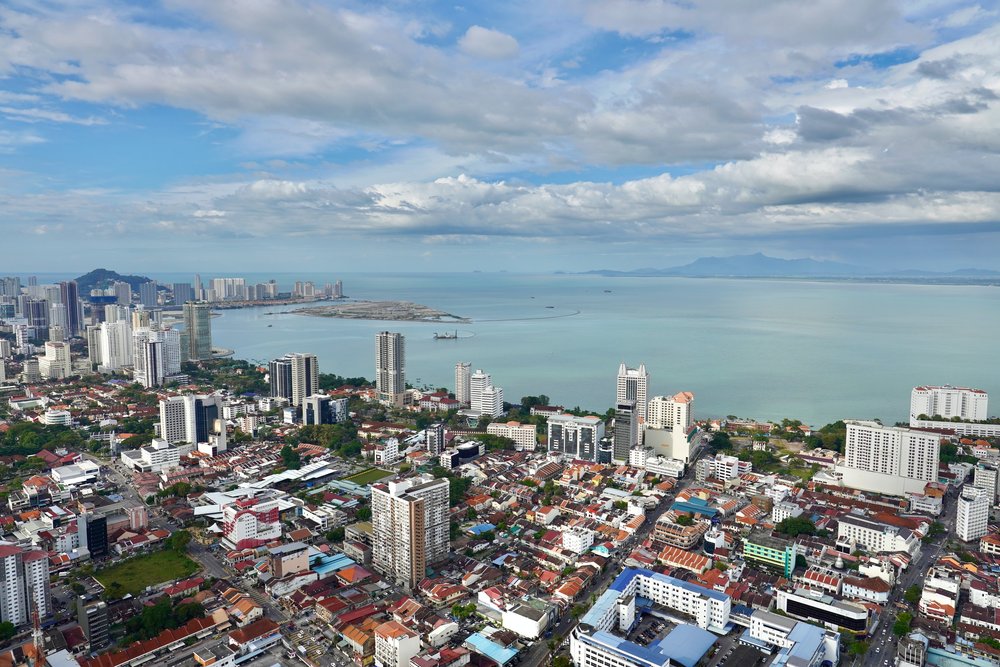
Where to stay in Penang
During my brief sojourn as a digital nomad, I lived in a ridiculously beautiful yet affordable apartment on top of a hill near the seaside town of Batu Ferringhi. (I had a private arrangement with a person who gave me a sweet deal in return for some cat-sitting duties.) There, I could watch the ocean all day from the living room and from the master bedroom. Every morning, I will step onto the balcony, breathe in the salty, sweet scent of the sea and marvel that I had the chance to live in such an amazing place. The cats I was cat sitting loved the ocean view too — they would spend many hours on top of the cat tree, gazing at the blue horizon. What a pampered life!
That said, if you do not have a car, Batu Ferringhi may be too quiet and isolating for you. The infamous weekend traffic jams could make things quite inconvenient for you too.
A Grab ride to the nearest place — Batu Ferringhi town — was at least RM6. Sometimes I can’t get any cab ride at all! My apartment complex was not within walking distance to any shops, so if I needed to get groceries, I’d have to take a ride to the nearest mall, Straits Quay Marina Mall for RM10.
It gets expensive.
There’s a reason why many Penangites shudder when you mention Batu Ferringhi.
“You won’t find many locals living there,” said my Grab driver, who lived at Batu Ferringhi too. “It’s too far away from conveniences and the tourists really create terrible, terrible traffic jams.”
A friend of mine who moved to Penang a few years ago was thinking about renting an apartment at Batu Ferringhi by the beach until she was stuck for hours in one of those terrible, terrible traffic jams. She changed her mind and booked an apartment in super-unromantic Bayan Lepas instead. In fact, many locals prefer to live in that area because it’s near the factories and offices where they work.
But you’re not a local. You’re a digital nomad with aspirations to see the sights, experience life in Penang and work at the same time! Then, Georgetown is hands down the best home base for digital nomads in Penang — it’s close to the heritage spots, transportation is freely available, there’s plenty of lodgings and cheap food around.
That said, you should at least stay in Batu Ferringhi for a couple of days. Seaside living is divine!
If you want to find long-term accommodation in Penang, AirBnb is probably your best best, though it may not be your cheapest option. You may end up paying RM3000 (about US800) or more.
You can also make a deal with a local like I did. (I paid about RM1300). However, that can be understandably difficult to do and many Penang apartment complexes frown at owners renting out their apartments short term.
Look up listings at iProperty to connect with real-estate agents or Speed Home to speak directly to house owners to see if you can snag a short stay. Or, you can hope over to Mudah or iBilik to find room rentals.
Food in Penang
A Klang Valley friend insisted that Penang food has “jatuh standard” (dropped in standards).
Of course, you will never get a Penangite to admit that! We’re far too stubborn and proud about our heritage.
Personally, I don’t think Penang food has deteriorated. It’s just tricky to find authentic eats these days. Many of the great hawkers have either moved away or, sadly, passed away. Their children probably did not carry on the family business, preferring to work in glass towers in Kuala Lumpur.
That said, there’s still plenty of very good food in Penang — if you know where to find them. Every Penang person has their favourite hawker stall which they insist has “the best char kwey teow” in town, but alas they’re not writing convenient online guides about it. However, if you insist on eating what the locals eat, just ask a Penangite and they’ll happily give you their recommendations.
Don’t eschew the popular eating places, however. My parents may be true-blue Penang folk, but they eat at New Lane Street every time they make their yearly sojourn to Penang.
“You can find all the hawker food in one place there,” said Mum, who has a decidedly unromantic view when it comes to culinary selection.
If you want to try Penang food classics like lobak, kueh kak, char kwey teow, assam laksa and more, New Lane is a good choice even if locals sniff and call it a tourist trap. By the way, the best assam laksa in town (for me) can be found at the foot of Kek Lok Si temple in Ayer Itam.
Food is relatively cheap, with hawker food starting around RM5 (about US$1.50) or less!
Co-working in Penang
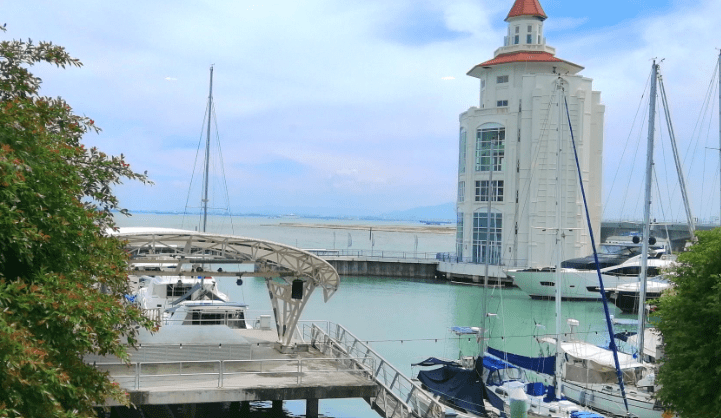
There are plenty of co-working spaces in Penang. However, my favourite base was the ADA Serviced Office at the picturesque, seaside mall, Straits Quay.
It has views of the sea and marina, and access to good food. The co-working place is spacious, though they have an extremely odd rule of not allowing people to work at the front section of the office. It’s quite pricey for a day-pass (RM50 when I was there). However, they have a monthly pass that you could get if you think you’ll be there more often. (I preferred my ocean-view office at the apartment).
Take a lunch break at Nyonya Breeze Desire, which has authentic Peranakan food. Try the Perut Ikan (fish stomach). Then, after a hard day’s work, end your day at one of the restaurants facing the sea. This is a very unique co-working experience that you’ll rarely get.
What to do in Penang
Where do I even begin? Eat a lot of good food. See a lot of historic places. Some of my favourite things to do:
- Take a walk around Georgetown and visit the UNESCO World Heritage Zone and Armenian Street
- Sip coffee at hip cafes like China House
- Have a taste of the street food and restaurants of Penang
- Stay in a chalet on top of Penang Hill
- Visit Kek Lok Si temple
- Enjoy seaside living at Batu Ferringhi — stay in one of the swanky hotels that dot the coast. I love Lone Pine
And because I’m a proud Peranakan – visit the Penang Peranakan museum
Other experiences
Admittedly, I am biased, but Penang is a great place for digital nomads. Affordable cost of living, low barriers in terms of language and access to technology. But most of all, it’s a great place to experience island living and a place rich in culture and heritage. A complete package for any digital nomad.
Read what these digital nomads say about their time in Penang:
- Video: Georgetown, Penang – Best things to do
- Living in Penang: Settling into digital nomad life — perspective of a digital nomad travelling with family
- Is Penang Worth Visiting? It’s Got The Hype
- Video: This Is Our Home In Penang, Malaysia – Condo Tour + Malay Kopitam
- Pandemic in Penang: A Play-by-Play from Two Digital Nomads in Malaysia — a very long, detailed diary of their time in PenangI looked everywhere for a digital nomad perspective from an Asian but could not find any, alas! If you know of any digital nomads from Asia who blogged about their time in Penang, do let me know.
Subscribers of my newsletter, The Commonplace Book, receives a complete essay before it is published on the website. Subscribe now
 Elizabeth Tai