In my last post, I spoke about the differences between the POSSE and PESOS blogging styles and why it’s important. Today, I’m going to show you how I actually implement this with my website.
#1 Turn selected social media into posts
Unlike the POSSE gang, I prefer to PESOS my content. So I pick a social media post to expand into a blog post.
I’m pretty selective when turning social media posts into blog content and am pretty content to let some die and disappear. Seriously, not all my thoughts are worth recording in the blog, I promise.
And when I do record them, I don’t just copy and paste the social media posts wholesale on the blog. I prefer to rewrite the posts to suit the platform.
Every platform has a different audience, so every content should be tailored to them. Does this sound like a lot of work? It can be, but I generally like the rewriting experience, so it’s not a big deal for me.
Should you do it? Ideally, you should craft your content to suit different channels, but I have seen some IndieWeb bloggers who just auto-mirror everything into every channel. It really depends on what you prefer. I mean, it’s your online home!
#2 Mirror my Substack content onto this blog
If you are not aware of it already, I have a Substack newsletter, Tai Tales, where I post my fiction and write about publishing online.
I used to think that I needed to create special content just for Substack, but not anymore. For the longest time, I let my guard down because the folks at Substack seem really nice and writer-friendly. But after what happened to Twitter and Reddit, and remembering how Medium devolved into a platform where it’s now difficult to be seen, I need to face the hard truth that I’m not the boss of Substack (like, no duh) and it could easily disappear one day.
Because it isn’t a platform I control, the CEO may one day turn mercenary and think, “I need profits now and I don’t care how I screw over users to get it” or sell the company to less writer-friendly billionaires in the future.
The days of thinking, “Surely they won’t do this to their users?” is over. The lesson from the Internet/Social Media events of 2022 and 2023 is, anything can happen. So, I need to be ready to move at any time, eventhough I personally think that Substack is absolutely fabulous.
That’s why I’m currently in the process of copying over the content of my newsletter, Tai Tales, to my WordPress blog. Thanks to WordPress.com’s new newsletter feature, I can make this content only accessible to my people who subscribe or follow my blog. I can even make some of them paid!
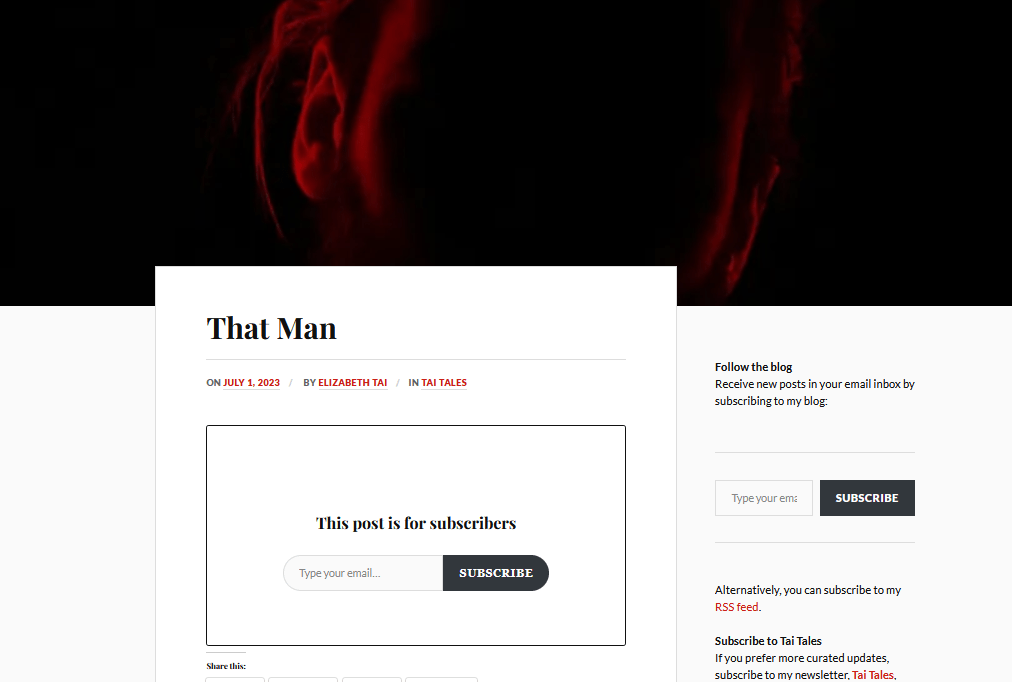
In essence, I’m creating a separate channel and hopefully, stream of income, for my newsletter.
I’m not getting off Substack as the platform has a powerful recommendation engine. Since participating in its Notes feature, my subscriber count has shot up. Also, it’s a fun little place to hang out with other writers.
The problem is, it’s not terribly great at reaching readers outside its writer-heavy ecosystem of readers.
WordPress.com actually has a community and content recommendation ecosystem with their Jetpack Reader. It may not have as robust, user-friendly or active as Substack’s, but it still offers me the opportunity to reach readers who are outside the Substack ecosystem.
My theory is that not all WordPress.com users are eager to plug in to another ecosystem like Substack’s just to read my newsletter, so I’m offering them the option to subscribe to my blog without leaving the Jetpack Reader ecosystem.
#3 Automate notifications on various platforms
Each time I post content on this WordPress blog, a short, summary post will be sent out to the followers of my accounts on the following platforms:
- Tumblr
- Facebook page
- Mastodon
Fortunately, WordPress.com (which this blog is hosted on), makes it easy. I use its sharing features to push out notifications to the platform.
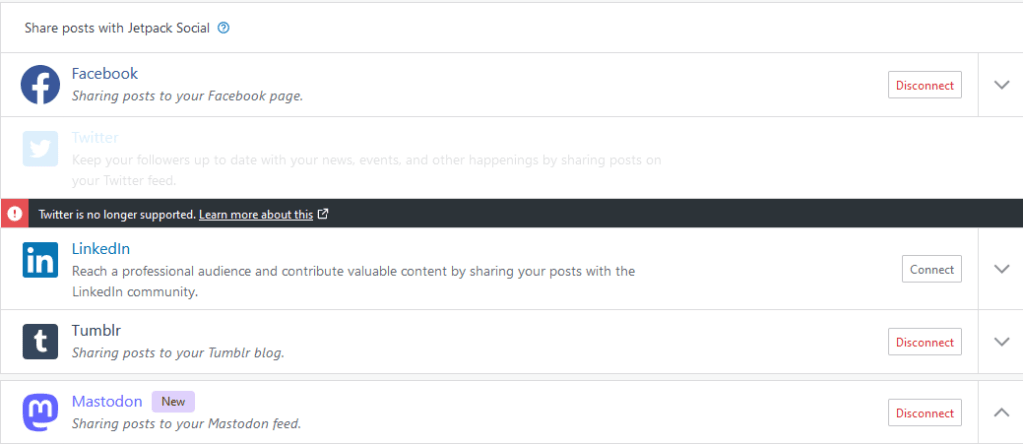
I also include links to new blog posts in the Weekend Tales edition of the Tai Tales newsletter. This is not automated.
If you dive into the IndieWeb space, which is dominated by tech-savvy folks or developers, you’ll find that lots of people automate their processes using fancy codes and tools. I’m not there yet, and honestly, I’m not sure if that’s the right approach for me. I just prefer my blog posts to be more human, you know?
#4 Include social media comments into blog posts
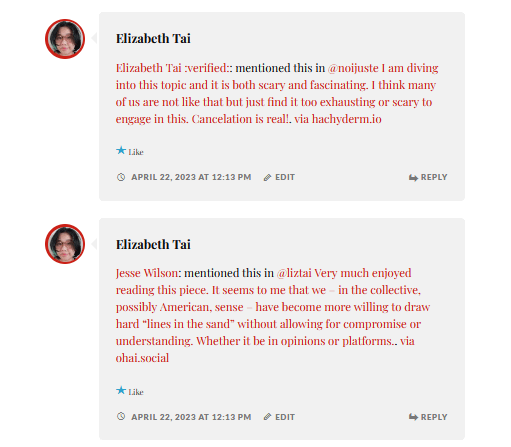
Brid.gy is a handy tool that lets me include Mastodon comments on my WordPress posts. It’s like bringing the discussions right into the heart of my blog. Pretty neat, huh? It helps foster a sense of community and interaction, which is what the Indieweb movement is all about. I wish I can make it look nicer though. Here’s how the comments look like on a blog post:
I may explore more automation options in the future, but honestly, I’m quite content with my current setup. By blogging the Indieweb way, I will have more control of my online content, and keep it from going poof due to a business decision at some faceless corporation somewhere.
It’s worth owning your digital home
If you’re a writer and not especially techy, this may all seem overwhelming to you, but trust me, it’s truly worth it not to be too centralised or dependent on one platform that you do not control.
Yes, it is sucky that you have to battle SEO content farms to get your website noticed on the Internet. But this is where platforms come in. You use their features and potential to make your content viral to spread your content. But your content needs a home that you control. Full stop.
So, if you have most of your content on Substack, for example, think seriously about mirroring it on your blog. If you have been building your audience on Twitter, Facebook or Instagram, start funneling the content you’ve created there to your website.
Because a platform collapsing overnight is no longer a distant “what if”, but a “when”.


 Elizabeth Tai
Leave a Reply to Elizabeth Tai Cancel reply