- How the common folk are reacting
- Conversations about energy
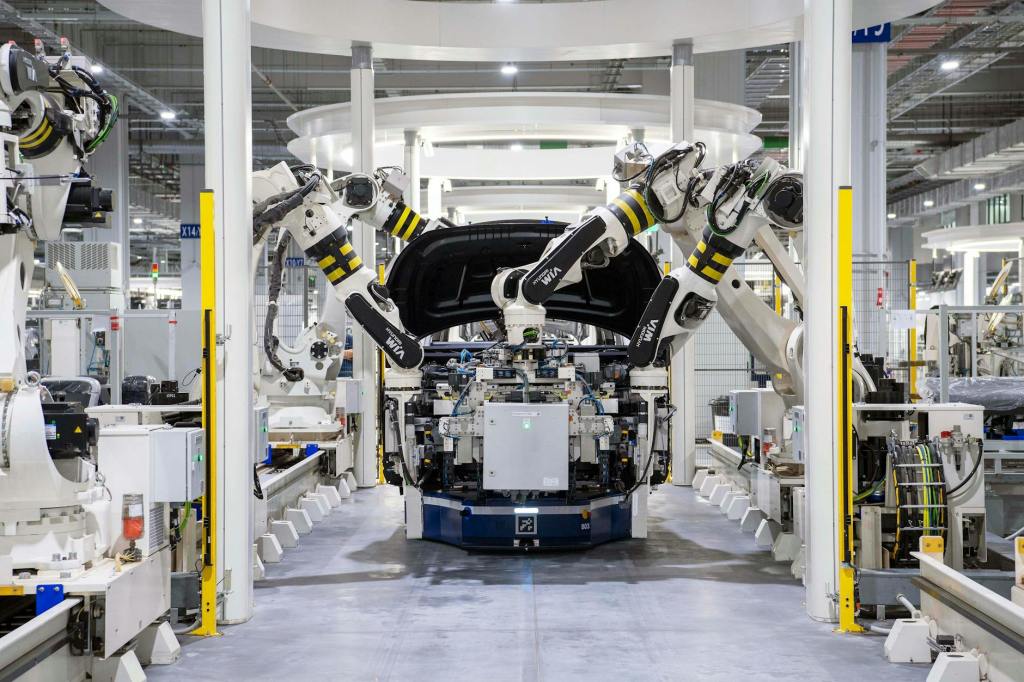
- In China, AI + Robotics are already integrated into industry & society
- Differences in approach
- Why I avoid conversations around AI in English spaces
- South-East Asia’s AI approach
- 1. The End of “Naive” Tech Globalization & The Rise of Technology Sovereignty
- 2. A Clash of Two Tech Paradigms
- 3. The Pivotal Role of Open-Source Technology
- 4. The “Bifurcation” Dilemma for the Global South
- 5. Critique of the US “Cargo Cult” AI Approach
- 6. The Path Forward: An Ecosystem & Developmental Approach
- Malaysia’s reaction and approach to AI (not just LLMs)
- Reactions to this post
Updated: Nov 17. 2025 (new Youtube link)
I was having a conversation on Mastodon yesterday about how different the AI conversation is in Asia from the West.
In Asia, we are less consumed by ethical, morality and monetary reasons; the conversations in Asia are more grounded in practicality.
(To clarify, because I 100% know people will misunderstand – it’s not that we don’t care about the ethics. It’s more like, now that Pandora’s out of the box, we need to learn how to manage it. Talking about why it’s wrong is a waste of time for most of us. We manage our use as best we can. For example, I use mostly open-source, energy efficient models. I use AI only when absolutely necessary. So, no generating popes in bubble suits for me.)
But before you defend why one needs to be moral and ethical about AI, let me say that I can understand why these conversations dominate the likes of countries like the United States.
For one, I personally think AI is used in a way that doesn’t edify or build society:
For one, AI is being used as an excuse to lay off people. (Whether it’s about replacing people with AI or “making room” for the company to make investments into AI.) There’s very little social safety net. I honestly feel for all of you.
And another, it’s all about the money game. AI is all about the stock market, increasing investments, the S&P 500. It’s not applied in a robust way to improve society.
I also notice that conversations in English-speaking social media is often focused on closed AI models like ChatGPT, Gemini etc. In the East Open source AI is a thing and there are small, quiet movements by countries to create their own AI models. I realise how important this is because most close AI models are trained on the English internet; their values, emphasis, and context are mostly Western, which may not suit Asian societies.
How the common folk are reacting
Anecdotally, and based on my experience, I hardly encounter people in real life or online (Malaysians, that is) who are hand wringing about AI ethics. (Of course, this is not a blanket statement. I’m sure we have our hand wringers here, but they are a minority.)
Instead, many are eager to learn how to use it. At work, I have fun conversations with colleagues who are coders and engineers about usage. My co actively encourages a reasonable use of it. (I’m lucky, I know.)
I have a 70+ year old friend who wants to learn so she can teach others her age.
That’s why I ended up accidentally stepping into maelstorm when I wrote about using AI to write fiction. I didn’t realise the conversation was so … er, charged in English-speaking spaces.
The problem was, the people who screamed at me was actually screaming at a shadow of villain in their minds. If they had read my post, they would know I do not use AI to generate raw copy (that would be dumb, time-consuming and wasteful).
Conversations about energy
Also, all the talk about energy concerns is different in Asia as well. Perhaps in Malaysia we share the same energy and environmental worries as the US, but in China, where a big chunk of their energy is green, it is less of a concern and there are plans to upgrade them in new ways, and they have found ways to use AI in an economical, efficient way that is not discussed by the AI pundits in the West.
In China, AI + Robotics are already integrated into industry & society
Updated: Jan 25, 2026 with the video, “Why China is winning the AI race in 2026”.
On Chinese social media, I notice conversations around AI are pretty grounded in very techy stuff like structure, algos, and discussions about what this or that model’s advantages are. They are very aware of the closed-door AIs that the US are producing.
In Cihna, AI talk is quiet as China is more focused on applying AI tech into industry. AI is actively being used in factories, hospitals and transportation systems. The LLMs for consumers are just toys and playthings; the real meat and potatoes are AI in industry.
When people in the English social media talk about AI, especially in countries like Europe and the United States, they are often referring to the Large Language Models; generative AI.
The AI being used for industry in China are different from LLMs.
It’s also a cultural thing because most would prefer to put their heads down and do the work than make grand sweeping podcasts like Sam Altman does.
It’s just been the Asian way (not just Chinese).
In the video below, we see how AI is being implemented into day-to-day life. The creator of this video remarked how “ordinary” it felt to use this tech day-to-day in China.
Differences in approach
Update Nov 17, 2025:
Summary by DeepSeek:
This video compares between Western (primarily US) and Chinese approaches to AI development, the perceived risks of the Western approach, and proposed solutions.
Tristan Harris of the Center for Humane Technology talks about the following:
1. Diverging AI Philosophies: “God in a Box” vs. Practical Deployment
- The West (US): Is characterized as being obsessed with a “religious” race to achieve Artificial General Intelligence (AGI) or “superintelligence”—a “god in a box.” The primary focus and investment are on scaling to the next, more powerful model, with the belief that this ultimate AI will then solve all other problems.
- China: Is focused on the practical application and maximal deployment of existing AI to boost economic productivity. The key areas mentioned are manufacturing, medicine, and strengthening existing businesses.
2. Critique of the Western Approach and its Incentives
- Misaligned Incentives: Companies are in a competitive race where the goal is to be the “leading frontier model” to attract investment. This disincentivizes applying current AI to solve specific, tangible problems (like climate change or energy) because it would divert resources from the core race.
- The “China Excuse”: The geopolitical race with China is used as a justification for a reckless, unconstrained rollout of AI. The speaker argues this is a false belief.
- Historical Precedent (Social Media): The US “beat” China to social media, but the speaker argues this ultimately made American society “radically weaker,” suggesting a similar outcome is possible with AI if not managed correctly.
3. Perceived Dangers and Harms of Reckless AI Deployment
The speaker lists several societal harms that could result from the current trajectory:
- Mental Health Crisis: AI could cause “AI psychosis,” increase suicides, and degrade the mental health of children and society at large.
- Erosion of Human Capability: Specifically mentions children outsourcing their homework and thinking to AI, leading to a long-term weakening of the civilization.
- Corner-Cutting on Safety: The current model incentivizes speed over safety.
4. Proposed Solutions and a Reframed Race
The speaker argues the race should not be about who has the most powerful technology, but who is better at governing and applying it. Proposed regulatory measures include:
- Reframing the Competition: The race should be about applying AI in a way that strengthens society, not just building the most powerful tool.
- AI Liability Laws: Hold companies legally responsible for the harms caused by their AI products, similar to product liability.
- Specific Restrictions: Ban or restrict AI companions for children.
- Whistleblower Protections: Strengthen protections for insiders to alert the public and government about the risks and capabilities of AI models, which the speaker suggests are already concerning.
Why I avoid conversations around AI in English spaces
I wish AI pundits (pro and against) in English spaces would be more aware that the world is a big place, and not everyone treats/talks/think about AI the same way.
I wish they knew that their way is not the only way to think about AI.
But until now, I shall remain quiet (until I occasionally burst out with one of these mini essays), put my head down and learn how to use the thing. I’m also exploring open-source AI systems.
To be honest, I’ve given up talking to anti-AI enthusiasts (even pro-AI, to be honest) who are not aware of how different AI is treated in Asia.
It’s extremely exhausting to counter their most-common reasons for not embracing AI. They need to realise that their context may not apply to Asian contexts. It’s too tiring to explain it to them.
Anyway, I found this video below and I’m ready to dig in! South-east Asians are a very quiet lot.
But when their academicians talk about things, I eagerly listen.
Their conversations would probably put most people to sleep, but they always offer unique insights. (Also, they do a lot less fear mongering and yelling.)
South-East Asia’s AI approach
1. The End of “Naive” Tech Globalization & The Rise of Technology Sovereignty
- The era of unquestioned US technological dominance is over, challenged by China’s rise and other nations building “US-proof” systems.
- Countries are no longer viewing technology as a neutral, global good. The weaponization of systems like SWIFT and Microsoft email has led to a “crushing reassessment” that national sovereignty is at stake.
- This is a paradigm shift from a “naive embrace” of platforms like Facebook and Google to a recognition that these technologies can be used for political interference and regime change.
2. A Clash of Two Tech Paradigms
The geopolitical tech battle is framed as a conflict between two opposing models:
- The US “Weaponized” Model: Characterized as a “win-lose,” adversarial, and militarized framework. The goal is to maintain supremacy by controlling key technologies (like semiconductors through export restrictions) and viewing AI as a finite, winner-takes-all game.
- The Chinese “Ecosystem” Model: Presented as a developmental, “infinite game” approach. The focus is on integrating AI into a broader ecosystem (new energy, communications, logistics) to drive real-world economic growth and meet societal demand. Open-source models are a key part of this strategy.
3. The Pivotal Role of Open-Source Technology
- Open-source is crucial for sovereignty as it lowers barriers to entry for developing nations, allowing them to adapt, build upon, and control the technology.
- The “DeepSeek moment” was a game-changer. It demonstrated that high-performing AI models could be open-sourced, breaking the “money moat” that US companies claimed was insurmountable.
- It enables countries to “humanize” AI by training models on local languages, embedding national values, and developing applications suited to their specific developmental needs.
4. The “Bifurcation” Dilemma for the Global South
- Nations in the Global South, like Malaysia and ASEAN countries, are caught between the two tech ecosystems and do not want to be forced to choose.
- There is a significant asymmetry: The US is actively restricting technology use, while China is not, making the US actions the primary driver of the bifurcation.
- The US’s shifting and “incoherent” policies (e.g., attempting to ban open-source models or Chinese chips) create uncertainty and are seen as “thuggish,” pushing countries to seek more sovereign alternatives.
5. Critique of the US “Cargo Cult” AI Approach
- The US strategy is criticized as a “cargo cult” or “fetishized” view of AI, driven by a military-industrial-tech complex and massive, speculative financial investment (e.g., trillion-dollar data center projects).
- This is contrasted with China’s demand-pull model, where AI is applied to solve real industrial and societal problems. The US approach is seen as creating potential overcapacity without clear, productive use cases.
6. The Path Forward: An Ecosystem & Developmental Approach
- For developing countries, the solution is not to fetishize one piece of technology (like data centers) but to adopt a holistic, ecosystem approach.
- This means building local capacity, using open-source models to develop applications for government services, education, and industry, and ensuring data control.
- The goal is to “socialize, humanize, and civilize” the technology for national development, rather than being drawn into a great power battle.
- Malaysia’s role is highlighted as pivotal, as its decisions on collaborating with Chinese tech ecosystems (like in Hangzhou) could set a precedent for ASEAN and the Global South, emphasizing diversification as the key to avoiding technological traps.
I would also to like to recommend Natalia’s essay, The Great AI Divide: Why China Embraces What the West Fears.
Malaysia’s reaction and approach to AI (not just LLMs)
From the same Youtube video with John Pang, here are the notes made about development of AI in Malaysia:
Malaysia’s Overall Approach: Pragmatic Sovereignty in a Bifurcated World
Malaysia’s approach is not one of naive adoption or ideological alignment, but of pragmatic sovereignty. The country recognizes its position as a medium-sized, developing nation caught between two tech superpowers and seeks to navigate this to its own advantage. The core goal is to use AI for national development without becoming dependent on or dominated by either the US or China.
Key Pillars of Malaysia’s AI Strategy & Reaction
1. Active Pursuit of Strategic Diversification
This is the cornerstone of Malaysia’s reaction. Instead of choosing one side, Malaysia is actively engaging with both to build a resilient and diverse tech ecosystem.
- Collaboration with China: The transcript highlights that Malaysia has signed memoranda of agreement with China, specifically to collaborate on AI. The goal is to plug into China’s mature “ecosystem approach,” which includes:
- Tech Hubs: Partnering with places like Hangzhou, which combines a tech-agile government, leading universities (Zhejiang University), and major companies (Alibaba) with cutting-edge startups (DeepSeek, Unitree).
- Open-Source Access: Leveraging open-source Chinese models like DeepSeek to build local capacity without being locked into proprietary systems.
- Engagement with the US: Malaysia is already a “major hub for data centers in Southeast Asia,” many of which are likely built by or for US cloud providers and tech companies. It continues to engage with US technology and investment.
2. Embracing Open-Source as a Tool for Sovereignty
Malaysia sees open-source AI models as a game-changer for the Global South.
- Breaking the “Money Moat”: The “DeepSeek moment” was pivotal. It proved that Malaysia doesn’t need hundreds of billions of dollars to compete or participate meaningfully in AI. Open-source models lower the barrier to entry dramatically.
- Localization and Control: The plan is not just to use AI, but to adapt and own it. This includes:
- Training models on local languages like Malaysian Malay and indigenous languages (e.g., Kadazan) that are underrepresented in mainstream, Western-centric models.
- Embedding national values into the AI, ensuring it reflects local cultural and ethical contexts.
- Building application layers on top of foundational models to solve local problems in government services, city management, and education.
3. Moving from Consumer to Builder: An “Ecosystem” Mindset
Malaysia’s reaction is a conscious shift from being a passive consumer of technology to an active builder within its own ecosystem.
- Critique of Hollow Investment: The conversation between our speakers explicitly criticizes simply building more data centers as a strategy. While they bring investment, they are “huge energy and water guzzlers” that create few high-value jobs (mostly security and maintenance). This does little for long-term, sustainable development.
- Focus on Real-World Applications: The emphasis is on “developmental use cases.” Malaysia is interested in AI that can:
- Improve government services.
- Manage cities more efficiently.
- Drive specific industries relevant to its economy.
- This is a direct contrast to what is perceived as the US’s speculative, “cargo cult” investment in AI with vague goals of achieving artificial general intelligence (AGI).
4. Pushback Against Coercion and Forced Bifurcation
Malaysia, like much of ASEAN, is deeply uncomfortable with the US strategy of forcing countries to choose sides.
- Rejection of US Restrictions: Our speakers talk about the strong pushback against the “incoherent” and “thuggish” US attempts to ban the use of Chinese chips and open-source models. This is seen as a direct attack on Malaysian sovereignty, preventing it from using the best available and most accessible technology for its own development.
- Asserting Policy Space: Malaysia insists on its right to define its own “interest which is primarily developmental” rather than subscribing to the US’s “weaponized perspective on AI.”
Challenges and Pivotal Role
- Building Human Capacity: A key challenge is developing the local talent with the engineering skills and imagination to build these localized AI applications. The “upstream” development of human capital is critical.
- A Pivotal Player: John Pang positions Malaysia as a pivotal test case. The decisions Malaysia makes—particularly how successfully it integrates with the Chinese tech ecosystem on its own terms—will be closely watched by other ASEAN and Global South nations looking for a sovereign path forward.
In summary, Malaysia’s reaction to AI is one of assertive pragmatism. It is leveraging its strategic position, embracing open-source to ensure control, and focusing on tangible development outcomes, all while actively resisting external pressure to align exclusively with one geopolitical bloc. Its approach serves as a model for other nations seeking technological sovereignty in a divided world.
Reactions to this post
Interesting conversations around this post on Mastodon.
This post could be construed as defensive, and if so, that’s the pity. But I realise that I should say this: We need to have a different conversation about AI, even in Asia.
Fun fact, my first reaction when LLMs made their introduction was: “Oh look at these tech bros, releasing tech without taking into consideration how it will impact the rest of the world or even think about how to deal with the world-shaking consequences.
In my opinion, since they dumped this tech on our laps, it’s now time to manage this. Whinging about the unfairness of being exposed to tech we didn’t ask for from a country thousands of miles away is not going to get us anywhere, is it?
We need to ensure that the downsides of AI can be dealt with. For example, are data centers the end all and be all? Can we create less energy dependent, pollution causing AI?
What I mean is that we need to have productive conversations about AI.
The danger in Asia is ignoring all these downsides, hyperfocused on the benefits.
However, I am heartened that China is producing more energy-efficient models. I’m heartened that they are ensuring green energy is a part of its use.
Personally, I forsee a day where huge data centres are not needed for AI, and everyone has a local LLMs in their computers.
But to ensure this happens, these conversation need to happen. Rhetoric, moralising, fear-based tactics are unproductive.


 Elizabeth Tai
Leave a Reply to moodywarlock Cancel reply