Substack writers, you need a website!

“But I already have a website on Substack,” you argue.

No, no, Substack is just a distribution tool to amplify your website. It should not be your digital home.

In the last few years, I’ve noticed a pattern of writers leaving their websites to make Substack their digital home.

Now, it’s kinda okay if they have bought a domain and linked it to Substack. (Meaning, it’s better than nothing.)

Rachel from Conscious Living is a good example. This way, Substack more or less functions like a content management system (CMS) for you.

However, compared to other CMS it’s very limited, such as the ability to manage your SEO and customize your pages to add more features, but I digress. If you just want a fuss-free platform, this is one way to get it and Substack’s conditions for domains are very reasonable and cost-efficient. As I will explain later, this could change on a dime without warning.

However, there are some writers who are saying: “Hey readers, I’m now writing on Substack, so head on over there (and ignore my website)!”

Some writers do have a website, but link to their Substacks, calling them their “blogs”. If your Substack has a domain name they own, it’s okay, but if it’s xx.substack.com, Substack is saying “All your content are belong to us”.

In conclusion: Writers, don’t do this. It’s short-sighted and unwise and can derail your long-term visibility on the Internet.

The siren call of convenience

Every few years, the internet convinces writers that a new digital paradise has arrived. First, it was social media like Facebook. Then blogging networks like Tumblr. Then it was Medium. More recently, itโ€™s been Substack.

Platforms promise us an eager audience, built-in monetization, a smooth user interface, and a supportive community. As a writer who just wants to focus on writing, itโ€™s incredibly tempting to hand over the keys to our creative kingdoms and let these portals handle everything. (Believe me, I gave in at one point. For years, I just stopped blogging altogether and even gave up a domain that had high traffic! But I got back in 2012 and never left.)

However, this is the truth that has not changed since the dawn of the Internet: When you build your audience entirely on someone elseโ€™s platform, you arenโ€™t a homeowner. You are a tenant. Or worse, a digital sharecropper.

And corporate landlords always change the rules eventually. It’s not personal, it’s just business.


The illusion of the safe space

Itโ€™s easy to feel secure when a platform is in its golden era. But weโ€™ve watched the downfalls of Twitter, the policy shifts of Reddit, and the changing tides of algorithmic networks. Relying blindly on a centralized portal not owned by you means your lifeโ€™s work can alter overnight based entirely on a corporate boardroom decision.

When I looked at how fragile our digital ecosystems really are, I realized I needed a space that wouldnโ€™t go “poof” because a company needed to please its investors or shareholders. This realization completely changed my approach, pushing me to protect my content by learning to blog the IndieWeb way.

Your writing needs a permanent homebaseโ€”a domain that you own and control. Full stop.

Moving from “renting” to syndicating
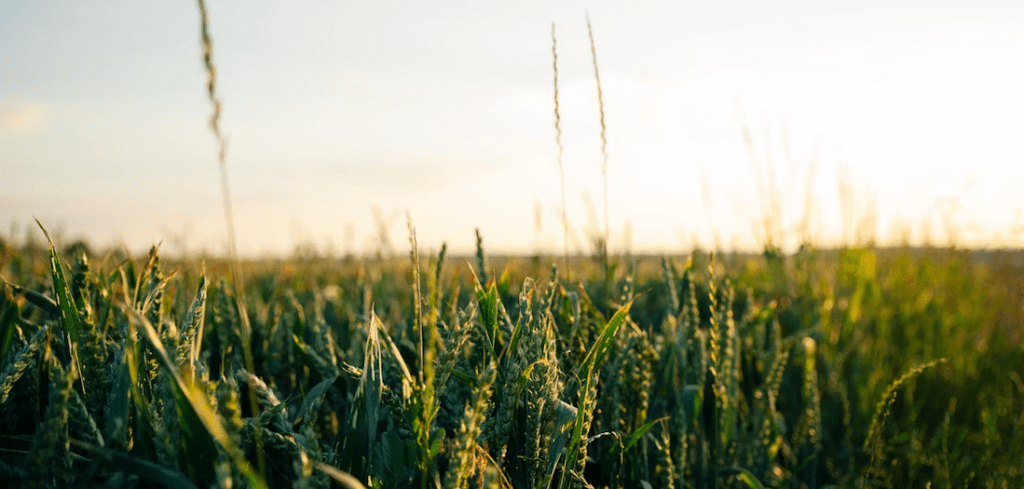
Field
Do you own the land you plant your “content” crops?

The biggest pushback I hear from writers is: “But my website doesn’t have an audience! Substack does.”

But you donโ€™t have to completely abandon social media or platforms like Substack to protect your autonomy (personally, I prefer the word sovereignty but it does sound a tad dramatic).

You just need to change the order of operations. Instead of publishing directly to a portal, you can shift your mindset to POSSE: Publish (on your) Own Site, Syndicate Elsewhere. (I explain the POSSE/PESOS method in an older post.)

By treating your website as the definitive source of truth and using platforms simply as distribution pipes, you get the best of both worlds. I dug deep into this shift when I committed to being an imperfect gardener of my digital garden, exploring how a less market-y way of presenting my content online let me share my wild garden of thoughts without dancing to the algorithm.

A reality check on platform hype

If you are still holding out hope that Substack is “different” from the social platforms that came before it, let’s look at the numbers and behaviors behind the marketing copy.

After spending a significant amount of time observing the platform ecosystem firsthand, I wrote a brutally honest takeaway in What I learned from one year of Substack. The network effects are real, but so is the pressure to conform to what the platform’s ecosystem favors.

This post, by the way, desperately needs to be updated because things have gotten much, much worse since I wrote it.

When you hand your content over to a platform, you have to conform to their rules and their localized biases. For those of us writing from outside the dominant US-centric echo chambers, platform algorithms heavily prioritize specific western narratives, making it incredibly tough for localized or minority voices to be seen unless they conform.

I wrote about this exact frustration recently in Linkblog: Dwelling on the Internet, highlighting how algorithmic complacency forces us into homogenized bubbles.

The flip side – the writers who refused to leave their websites

Each time there’s a new drama on some platform, and writers are shaking their sabers and declaring that they will leave for yet another social media platform they don’t control, I think about writers like John Scalzi.

As of date, John scalzi has been blogging on https://whatever.scalzi.com/ for 28 years!

This sci-fi novelist has maintained a single independent website continuously for nearly three decades; this makes him one of the longest-running, most consistent original bloggers on the internet. Imagine the amount of digital footprint on that website! Unbroken by time or platforms.

(Specifically, he uses wordpress.com like I do, as we both don’t want to bother with the pain of setting up your own self-hosted wordpress website and just want the folks at Automattic to do it.)

He blogs in the classic Indieweb way, though I doubt he is even aware he’s doing it. He treats his social media channels such as X or Bluesky as a way to amplify his website. All roads lead back to https://whatever.scalzi.com/, and this is something I wish every single writer would do.

He wrote recently in Various & Sundry, 6/3/26:

this site acts as my own institutional memory, if I post something about it here it constitutes an official record. I mean, all the posts I ever placed on the former Twitter are now entirely lost to time, since I have gone in and purged my entire timeline there. This site, however, endures. – John Scalzi

Breaking free from platform blues

Trying to adapt your presence across various platforms in an ever-shifting digital landscape is exhausting. One minute a platform is a writer’s darling; the next, itโ€™s being boycotted. Railing against a platform’s focus shift or the presence of (long sigh) Nazis is a useless endeavor.

As I noted in Linkblog March 12, 2026: Platform blues, chasing platform purity is an illusion. Tech will change, corporate algorithms will continue to prioritize profit over human connection, and platforms will continue to cycle through hype and decline.

The antidote to this exhaustion isn’t moving to the next shiny new app. It’s anchoring your work on an independent website with open distribution channels like RSS. It also means ruthlessly using platforms as distribution channels. When one collapses or you prefer to just move, it’s easy to just change strategies because your digital home remains unchanged.

Use platforms to find your readers, but bring them back to your house. Itโ€™s time to stop digital sharecropping on rented land.

Featured photo is by vivek vk on Unsplash

Fediverse reactions

Comments

46 responses to “Substack writers, you need a website!”

  1. Funny- I have the websites- just no traffic

    Liked by 1 person

  2. โค๏ธโค๏ธโค๏ธโค๏ธโค๏ธโค๏ธโค๏ธ

    Liked by 1 person

  3. Costasiella Kuro Avatar
    Costasiella Kuro

    I agree with everything you said!

    Liked by 1 person

  4. Wow, this thought was in the back of my head, but you wrote it, so credit where credit is due. You articulated something that I have been observing as a reality. I’m reposting now!

    Liked by 1 person

    1. Thank you for sharing!

      Liked by 1 person

  5. Thank you for beating this important drum. Every platform like Substack will eventually shift in ways you won’t like, in service of its investors. An independent blog at your own URL is not subject to those forces. And even though WordPress is increasingly a site builder and we bloggers are not the point anymore, at least whatever you publish is fully yours and fully exportable at any time.

    Liked by 1 person

  6. very important sight of the ‘ free platforms’

    Liked by 2 people

  7. I wanted to try Substack for a long time but I didn’t know anything about that. This was illuminating, thank you very much.

    Liked by 1 person

  8. Yeah, I do agree with you.

    But it’s not all about content creators. I have seen most small business owners still depend on social media and Facebook.

    Whenever we suggest setting up their own business website, they usually say the same thing “But.. we already have a Facebook page” or “We already have an Instagram page and we post there” Then they start talking as if they actually own those platforms.

    Most of them are only thinking about short-term goals. And when something goes wrong, they don’t even admit that it was the result of poor decision-making in the first place.

    Liked by 1 person

  9. Thanks Elizabeth for this eye opening post. Have a great day.

    Liked by 1 person

  10. We firmly agree to this! We hate substack as it’s algorithmic, it’s proprietary. We’ve tried buttondown – http://www.buttondown.com – but that service is centralized as well. This account is just to write something with community purposes but main site will reside in a self-hosting service. We own the content, we decide what conditions.

    Liked by 1 person

  11. This year I decided to get my own domain. So far things are going okay on WordPress. I like my decision.

    Like

  12. I take my post link and add it to substack note to push people to the blog. Substack is not great for what I like to do

    Like

  13. At least someone has finally said it!

    A website with your own domain is still one of the best long-term assets a writer can build. The main reason many people are hyping Substack is its monetization potential writers collectively earning from readers. That’s more like building on rented land…..we all know the end.

    Substack should be a distribution and monetization channel if it works for you, but keep building your own website. Platforms come and go, but a domain you own remains yours for as long as you choose to maintain it.

    Like

    1. The monetization is great except that it’s incredibly hard to move them if you decide to leave Substack. They don’t make it easy for you to keep your list of paid subscribers, nor do they make it easy for you to disconnect these subscribers from Substack’s payment system.

      Like

  14. The old wearing siren song back then when Facebook started getting Publishers on board only to force you to pay for reach and no email sharing.

    Same thing with medium and other platforms.

    https://copyblogger.com/digital-sharecropping/

    Like

    1. miles6767kid Avatar
      miles6767kid

      ๐Ÿ˜€

      Like

  15. A valuable reminder for writers: own your website and use platforms like Substack only to share your work, not as your permanent home. Publish on your own site first, then syndicate elsewhere. Your website is your lasting digital home, while platforms can change their rules at any time.

    Liked by 3 people

    1. Same painful lesson I have learned as an Airbnb host. You need your own website and direct booking, use Airbnb only as one of many channels to promote your property. Do not rely on it.

      Liked by 2 people

      1. I honestly have no idea where one has the energy to manage Airbnbs! I have a boring, traditional rental and I find that exhausting to manage!

        Liked by 1 person

    2. Yup. I was posting my book on Honeyfeed, Royal Road, AO3, and I realized: โ€œwhy am I wasting time driving traffic to these other platforms and not my own?โ€

      Liked by 1 person

  16. Yes! This is what Iโ€™ve come to and thank you for valuing this line of thought. Surprisingly, lessening my digital energy on Meta products and coming back to WordPress has allowed me to connect with authentic voices in a slower, more thoughtful way. Iโ€™m not a writer but feel this same vein of thinking applies to all creatives. Iโ€™m new to Substack and was unsure how to navigate it. Your post helps me understand how to do that. Thanks again and I look forward to reading more of your posts.

    Liked by 3 people

    1. I love wp.com’s underrated Reader function. I discovered a few quiet gems that way. I think it’s an underutilised networking system ๐Ÿ™‚

      Liked by 2 people

      1. Yes, Iโ€™ve just recently started using Jetpack and it makes wp Reader function way more accessible.

        Liked by 1 person

  17. Thanks for reminding me. What about Medium? Does it also need a home?

    Liked by 1 person

    1. Medium – unless you have your domain (eg yourdomainname.com) and not xx.medium.com it doesn’t belong to you. Medium can shut your account without warning too.

      Liked by 1 person

  18. KrisHalpin Avatar
    KrisHalpin

    Really helpful and interesting! I was getting the ADHD itch of I NEED TO GO ALL IN ON SUBSTACK but the POSSE/PESOS makes so much more sense

    Liked by 1 person

    1. It may be more work as the platforms do everything they can to dissuade you from doing this, but it’s worth it in the long run! Promise.

      Liked by 2 people

  19. miles6767kid Avatar
    miles6767kid

    Nah L B. Wanhill He does not care bout black people

    Liked by 1 person

  20. This is an encouraging read! I wish I had known the benefits of cultivating a website over the long term.

    Liked by 1 person

    1. Never too late to start!

      Liked by 2 people

      1. Yes! I’ve been on my site for six years now and I will keep it forever.

        Like

  21. Great post! It was super interesting!!

    Liked by 1 person

  22. EXACTLY. I read the first half of this post and I was nodding in my head the entire time. Even though itโ€™s crickets on WordPress in terms of feedback or comments on your work, I would never give in to the likes of Substack. Iโ€™ve been knowing these companies can shut down at any moment and your stuff is gone. At least with something like WordPress, you can move to self hosting.

    Another thing, these websites like Substack lack a good archive. Itโ€™s built for phone first and foremost, so finding your archive is a bit unintuitive. Thereโ€™s no categories or date sorting like WordPress (last I checked).

    You also have greater can control on WordPress, like downloading your entire post.

    Iโ€™ve been on this platform for 19 years but I wished I had kept going in 2015. I took a break and my blog has never recovered ๐Ÿ˜” I tried using Substack but I hated the silence over there. I donโ€™t know how people get their content noticed.

    I thought โ€œitโ€™s crickets over here too. I should just move back to my home at WordPress. At least I have greater control.โ€

    Liked by 2 people

    1. Unfortunately, people get their comments noticed by engaging in Substack’s social media dynamics, which is a job on its own. It used to be that we can just comment on people’s newsletters and be noticed, but not anymore.

      Liked by 1 person

  23. Nice picture ๐Ÿ˜

    Liked by 1 person

  24. Trรจs bon article, et je partage complรจtement cette vision. ร€ 47 ans, je suis passionnรฉ de course ร  pied et de trail, et j’ai crรฉรฉ mon propre blog parce que je pense qu’il est important de construire quelque chose qui nous appartient vraiment sur le long terme.

    Les rรฉseaux sociaux et les plateformes sont d’excellents outils pour faire dรฉcouvrir son contenu, mais ils ne devraient jamais remplacer un site dont on maรฎtrise totalement le contenu, le rรฉfรฉrencement et l’avenir. C’est un investissement qui porte ses fruits avec les annรฉes.

    Si certains s’intรฉressent ร  la course ร  pied, au trail et ร  la nature, je partage รฉgalement mon expรฉrience sur https://run-nature.com.

    Merci pour cette rรฉflexion, qui rappelle une rรจgle essentielle du web : construire sur son propre terrain avant de diffuser ailleurs.

    Liked by 1 person

  25. I have two blogsites through the years. Here and blogger. But i write more here.

    Liked by 1 person

  26. A great reminder: own your website, use platforms like Substack to share your work not to replace your digital home. Your content deserves a place you truly control.

    Liked by 2 people

  27. I like this train of thought. I have always felt the need to own my own domain(s) but I couldnโ€™t necessarily articulate why.

    It resonated with me. Thanks!

    Liked by 1 person

    1. Glad to help! Hope you find your domain soon ๐Ÿ˜‰

      Liked by 1 person

  28. Good ๐Ÿ‘๐Ÿ‘

    Like

  29. I’ve been on WordPress since 2009 (with The Solitary Review having been on here for less than that, but still a few years) and occasionally want to take it somewhere else but there seems no good reason to and some reasons not to.

    Liked by 1 person

Leave a Reply

Your email address will not be published. Required fields are marked *