-
Does AI help you work faster or is it just hype?

With all the research coming out saying that no, it doesn’t, you’d think my answer would be a definite no.
Instead, I’m going to be annoying and say: It depends.
For AI to help you accelerates work, the user needs to use it the right way.
Yes, it all depends on how well the user uses AI, and also, whether the user has the domain expertise in their field to ensure that what comes out of AI doesn’t require extensive rework.
I can only speak from my personal experience.
For me, I think AI does accelerate writing work but not in the way you think. (Meaning: Generate reams of text and voilà, work is over.)
The main benefit of AI for me is that it eases cognitive burden. That it allows writers to create without burning out. Writers like me, anyway, whose day job involves writing cognitively demanding copy about highly technical concepts 😅.
In the past, my work took so much cognitive and creative energy out of me that there was often nothing left for my personal creative work. So, I often had to sacrifice my personal writing.
If my blog, newsletters, or social media posts drop off – it’s usually a sign that things got so busy at work that there’s little energy or creative juice left for me to create for myself.
However, these days, these furloughs are getting rarer, and this is due to the ability of AI to now help me with things that drain me, I can focus on things that matter to me.
I like writing so AI is never going to be my ghostwriter; I won’t let it take that away from me.
That’s part of the reason why I don’t pay for AI services because I don’t really rely on it to generate much text.
Writers often subscribe to models if they want to generate a lot of text as the free versions do not generate a large amount of text.
The open source Deep Seek is enough for me, because I use it mostly for planning, organizing my thoughts and to do detail-oriented work like editing. I also realize that I like to dictate my writing and I often use AI to help me organize my thoughts. And then I fix it by rewriting it. This has accelerated my blogging and writing by quite a bit.
Oddly, I can’t do all this with fiction. I find it too weird to dictate a scene, so if I do use an AI transcriber like Otter.ai, it’s usually to flesh out the story beats for my chapter, and then use AI as a sophisticated swipe file to start my writing.
And yes, I still write my fiction with my own fingers!
With that cognitive savings I gained from using AI, I can now write fiction, or my newsletters and Cdrama reviews without feeling like I am draining my brain dry or burning out every month.
So I think AI doesn’t exactly accelerate my work per se. (Because I do rewrite extensively, and some argue that it’s just faster to write from scratch instead of rewriting and editing like crazy.)
What AI does is that it enables me to produce more because I am no longer exhausted as quickly or as often. I imagine in the days of yore (like a few years ago before Gen AI was publicly available), people would hire personal or writing assistants for all the tasks I’m outsourcing to AI.
How does that translate to the corporate world?
I foresee that in the future, writing teams for corporations will be much leaner. They will be staffed by people who are adept at using AI to create content; AI will be the copywriting juniors or interns. Writers are still needed, but they will have more strategic roles. They manage content workflows, plan, strategize content pipelines and ensure editorial quality.
But the question is, how do juniors become these people? Because expertise is something that gives AI users an edge. Without expertise, you won’t recognize quality copy.
That’s the biggest dilemma of the day – how do we give younger writers the training they need to be strategic writers and editors of the future? -
Conversations about AI are different in Asia
- How the common folk are reacting
- Conversations about energy
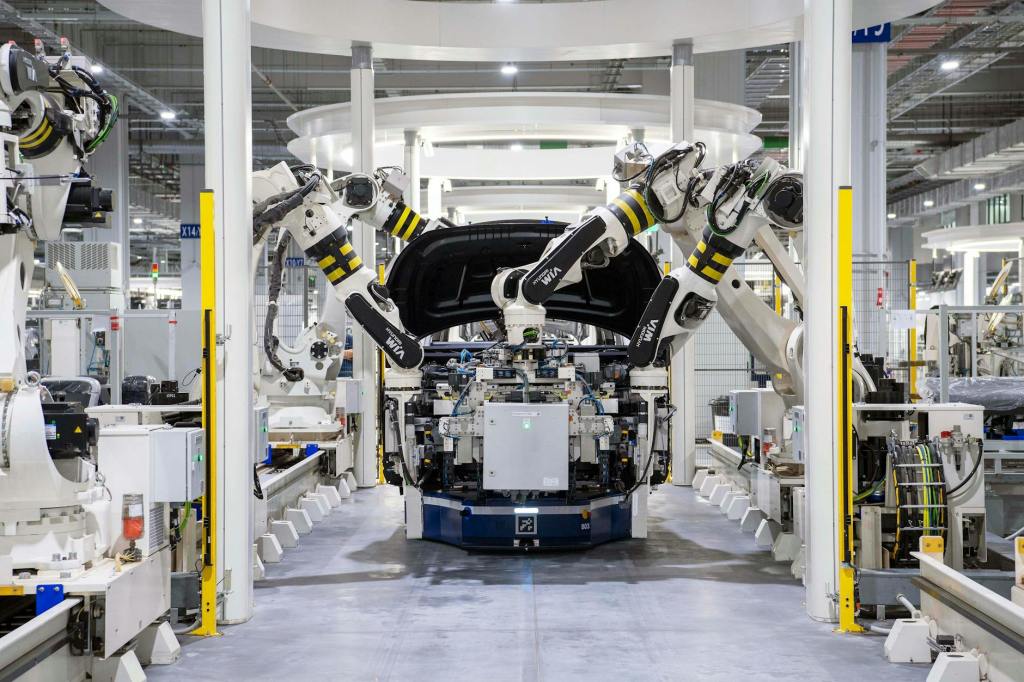
- In China, AI + Robotics are already integrated into industry & society
- Differences in approach
- Why I avoid conversations around AI in English spaces
- South-East Asia’s AI approach
- 1. The End of “Naive” Tech Globalization & The Rise of Technology Sovereignty
- 2. A Clash of Two Tech Paradigms
- 3. The Pivotal Role of Open-Source Technology
- 4. The “Bifurcation” Dilemma for the Global South
- 5. Critique of the US “Cargo Cult” AI Approach
- 6. The Path Forward: An Ecosystem & Developmental Approach
- Malaysia’s reaction and approach to AI (not just LLMs)
- Reactions to this post
Updated: Nov 17. 2025 (new Youtube link)
I was having a conversation on Mastodon yesterday about how different the AI conversation is in Asia from the West.
In Asia, we are less consumed by ethical, morality and monetary reasons; the conversations in Asia are more grounded in practicality.
(To clarify, because I 100% know people will misunderstand – it’s not that we don’t care about the ethics. It’s more like, now that Pandora’s out of the box, we need to learn how to manage it. Talking about why it’s wrong is a waste of time for most of us. We manage our use as best we can. For example, I use mostly open-source, energy efficient models. I use AI only when absolutely necessary. So, no generating popes in bubble suits for me.)
But before you defend why one needs to be moral and ethical about AI, let me say that I can understand why these conversations dominate the likes of countries like the United States.
For one, I personally think AI is used in a way that doesn’t edify or build society:
For one, AI is being used as an excuse to lay off people. (Whether it’s about replacing people with AI or “making room” for the company to make investments into AI.) There’s very little social safety net. I honestly feel for all of you.
And another, it’s all about the money game. AI is all about the stock market, increasing investments, the S&P 500. It’s not applied in a robust way to improve society.
I also notice that conversations in English-speaking social media is often focused on closed AI models like ChatGPT, Gemini etc. In the East Open source AI is a thing and there are small, quiet movements by countries to create their own AI models. I realise how important this is because most close AI models are trained on the English internet; their values, emphasis, and context are mostly Western, which may not suit Asian societies.
How the common folk are reacting
Anecdotally, and based on my experience, I hardly encounter people in real life or online (Malaysians, that is) who are hand wringing about AI ethics. (Of course, this is not a blanket statement. I’m sure we have our hand wringers here, but they are a minority.)
Instead, many are eager to learn how to use it. At work, I have fun conversations with colleagues who are coders and engineers about usage. My co actively encourages a reasonable use of it. (I’m lucky, I know.)
I have a 70+ year old friend who wants to learn so she can teach others her age.
That’s why I ended up accidentally stepping into maelstorm when I wrote about using AI to write fiction. I didn’t realise the conversation was so … er, charged in English-speaking spaces.
The problem was, the people who screamed at me was actually screaming at a shadow of villain in their minds. If they had read my post, they would know I do not use AI to generate raw copy (that would be dumb, time-consuming and wasteful).
Conversations about energy
Also, all the talk about energy concerns is different in Asia as well. Perhaps in Malaysia we share the same energy and environmental worries as the US, but in China, where a big chunk of their energy is green, it is less of a concern and there are plans to upgrade them in new ways, and they have found ways to use AI in an economical, efficient way that is not discussed by the AI pundits in the West.
In China, AI + Robotics are already integrated into industry & society
Updated: Jan 25, 2026 with the video, “Why China is winning the AI race in 2026”.
On Chinese social media, I notice conversations around AI are pretty grounded in very techy stuff like structure, algos, and discussions about what this or that model’s advantages are. They are very aware of the closed-door AIs that the US are producing.
In Cihna, AI talk is quiet as China is more focused on applying AI tech into industry. AI is actively being used in factories, hospitals and transportation systems. The LLMs for consumers are just toys and playthings; the real meat and potatoes are AI in industry.
When people in the English social media talk about AI, especially in countries like Europe and the United States, they are often referring to the Large Language Models; generative AI.
The AI being used for industry in China are different from LLMs.
It’s also a cultural thing because most would prefer to put their heads down and do the work than make grand sweeping podcasts like Sam Altman does.
It’s just been the Asian way (not just Chinese).
In the video below, we see how AI is being implemented into day-to-day life. The creator of this video remarked how “ordinary” it felt to use this tech day-to-day in China.
Differences in approach
Update Nov 17, 2025:
Summary by DeepSeek:
This video compares between Western (primarily US) and Chinese approaches to AI development, the perceived risks of the Western approach, and proposed solutions.
Tristan Harris of the Center for Humane Technology talks about the following:
1. Diverging AI Philosophies: “God in a Box” vs. Practical Deployment
- The West (US): Is characterized as being obsessed with a “religious” race to achieve Artificial General Intelligence (AGI) or “superintelligence”—a “god in a box.” The primary focus and investment are on scaling to the next, more powerful model, with the belief that this ultimate AI will then solve all other problems.
- China: Is focused on the practical application and maximal deployment of existing AI to boost economic productivity. The key areas mentioned are manufacturing, medicine, and strengthening existing businesses.
2. Critique of the Western Approach and its Incentives
- Misaligned Incentives: Companies are in a competitive race where the goal is to be the “leading frontier model” to attract investment. This disincentivizes applying current AI to solve specific, tangible problems (like climate change or energy) because it would divert resources from the core race.
- The “China Excuse”: The geopolitical race with China is used as a justification for a reckless, unconstrained rollout of AI. The speaker argues this is a false belief.
- Historical Precedent (Social Media): The US “beat” China to social media, but the speaker argues this ultimately made American society “radically weaker,” suggesting a similar outcome is possible with AI if not managed correctly.
3. Perceived Dangers and Harms of Reckless AI Deployment
The speaker lists several societal harms that could result from the current trajectory:
- Mental Health Crisis: AI could cause “AI psychosis,” increase suicides, and degrade the mental health of children and society at large.
- Erosion of Human Capability: Specifically mentions children outsourcing their homework and thinking to AI, leading to a long-term weakening of the civilization.
- Corner-Cutting on Safety: The current model incentivizes speed over safety.
4. Proposed Solutions and a Reframed Race
The speaker argues the race should not be about who has the most powerful technology, but who is better at governing and applying it. Proposed regulatory measures include:
- Reframing the Competition: The race should be about applying AI in a way that strengthens society, not just building the most powerful tool.
- AI Liability Laws: Hold companies legally responsible for the harms caused by their AI products, similar to product liability.
- Specific Restrictions: Ban or restrict AI companions for children.
- Whistleblower Protections: Strengthen protections for insiders to alert the public and government about the risks and capabilities of AI models, which the speaker suggests are already concerning.
Why I avoid conversations around AI in English spaces
I wish AI pundits (pro and against) in English spaces would be more aware that the world is a big place, and not everyone treats/talks/think about AI the same way.
I wish they knew that their way is not the only way to think about AI.
But until now, I shall remain quiet (until I occasionally burst out with one of these mini essays), put my head down and learn how to use the thing. I’m also exploring open-source AI systems.
To be honest, I’ve given up talking to anti-AI enthusiasts (even pro-AI, to be honest) who are not aware of how different AI is treated in Asia.
It’s extremely exhausting to counter their most-common reasons for not embracing AI. They need to realise that their context may not apply to Asian contexts. It’s too tiring to explain it to them.
Anyway, I found this video below and I’m ready to dig in! South-east Asians are a very quiet lot.
But when their academicians talk about things, I eagerly listen.
Their conversations would probably put most people to sleep, but they always offer unique insights. (Also, they do a lot less fear mongering and yelling.)
South-East Asia’s AI approach
1. The End of “Naive” Tech Globalization & The Rise of Technology Sovereignty
- The era of unquestioned US technological dominance is over, challenged by China’s rise and other nations building “US-proof” systems.
- Countries are no longer viewing technology as a neutral, global good. The weaponization of systems like SWIFT and Microsoft email has led to a “crushing reassessment” that national sovereignty is at stake.
- This is a paradigm shift from a “naive embrace” of platforms like Facebook and Google to a recognition that these technologies can be used for political interference and regime change.
2. A Clash of Two Tech Paradigms
The geopolitical tech battle is framed as a conflict between two opposing models:
- The US “Weaponized” Model: Characterized as a “win-lose,” adversarial, and militarized framework. The goal is to maintain supremacy by controlling key technologies (like semiconductors through export restrictions) and viewing AI as a finite, winner-takes-all game.
- The Chinese “Ecosystem” Model: Presented as a developmental, “infinite game” approach. The focus is on integrating AI into a broader ecosystem (new energy, communications, logistics) to drive real-world economic growth and meet societal demand. Open-source models are a key part of this strategy.
3. The Pivotal Role of Open-Source Technology
- Open-source is crucial for sovereignty as it lowers barriers to entry for developing nations, allowing them to adapt, build upon, and control the technology.
- The “DeepSeek moment” was a game-changer. It demonstrated that high-performing AI models could be open-sourced, breaking the “money moat” that US companies claimed was insurmountable.
- It enables countries to “humanize” AI by training models on local languages, embedding national values, and developing applications suited to their specific developmental needs.
4. The “Bifurcation” Dilemma for the Global South
- Nations in the Global South, like Malaysia and ASEAN countries, are caught between the two tech ecosystems and do not want to be forced to choose.
- There is a significant asymmetry: The US is actively restricting technology use, while China is not, making the US actions the primary driver of the bifurcation.
- The US’s shifting and “incoherent” policies (e.g., attempting to ban open-source models or Chinese chips) create uncertainty and are seen as “thuggish,” pushing countries to seek more sovereign alternatives.
5. Critique of the US “Cargo Cult” AI Approach
- The US strategy is criticized as a “cargo cult” or “fetishized” view of AI, driven by a military-industrial-tech complex and massive, speculative financial investment (e.g., trillion-dollar data center projects).
- This is contrasted with China’s demand-pull model, where AI is applied to solve real industrial and societal problems. The US approach is seen as creating potential overcapacity without clear, productive use cases.
6. The Path Forward: An Ecosystem & Developmental Approach
- For developing countries, the solution is not to fetishize one piece of technology (like data centers) but to adopt a holistic, ecosystem approach.
- This means building local capacity, using open-source models to develop applications for government services, education, and industry, and ensuring data control.
- The goal is to “socialize, humanize, and civilize” the technology for national development, rather than being drawn into a great power battle.
- Malaysia’s role is highlighted as pivotal, as its decisions on collaborating with Chinese tech ecosystems (like in Hangzhou) could set a precedent for ASEAN and the Global South, emphasizing diversification as the key to avoiding technological traps.
I would also to like to recommend Natalia’s essay, The Great AI Divide: Why China Embraces What the West Fears.
Malaysia’s reaction and approach to AI (not just LLMs)
From the same Youtube video with John Pang, here are the notes made about development of AI in Malaysia:
Malaysia’s Overall Approach: Pragmatic Sovereignty in a Bifurcated World
Malaysia’s approach is not one of naive adoption or ideological alignment, but of pragmatic sovereignty. The country recognizes its position as a medium-sized, developing nation caught between two tech superpowers and seeks to navigate this to its own advantage. The core goal is to use AI for national development without becoming dependent on or dominated by either the US or China.
Key Pillars of Malaysia’s AI Strategy & Reaction
1. Active Pursuit of Strategic Diversification
This is the cornerstone of Malaysia’s reaction. Instead of choosing one side, Malaysia is actively engaging with both to build a resilient and diverse tech ecosystem.
- Collaboration with China: The transcript highlights that Malaysia has signed memoranda of agreement with China, specifically to collaborate on AI. The goal is to plug into China’s mature “ecosystem approach,” which includes:
- Tech Hubs: Partnering with places like Hangzhou, which combines a tech-agile government, leading universities (Zhejiang University), and major companies (Alibaba) with cutting-edge startups (DeepSeek, Unitree).
- Open-Source Access: Leveraging open-source Chinese models like DeepSeek to build local capacity without being locked into proprietary systems.
- Engagement with the US: Malaysia is already a “major hub for data centers in Southeast Asia,” many of which are likely built by or for US cloud providers and tech companies. It continues to engage with US technology and investment.
2. Embracing Open-Source as a Tool for Sovereignty
Malaysia sees open-source AI models as a game-changer for the Global South.
- Breaking the “Money Moat”: The “DeepSeek moment” was pivotal. It proved that Malaysia doesn’t need hundreds of billions of dollars to compete or participate meaningfully in AI. Open-source models lower the barrier to entry dramatically.
- Localization and Control: The plan is not just to use AI, but to adapt and own it. This includes:
- Training models on local languages like Malaysian Malay and indigenous languages (e.g., Kadazan) that are underrepresented in mainstream, Western-centric models.
- Embedding national values into the AI, ensuring it reflects local cultural and ethical contexts.
- Building application layers on top of foundational models to solve local problems in government services, city management, and education.
3. Moving from Consumer to Builder: An “Ecosystem” Mindset
Malaysia’s reaction is a conscious shift from being a passive consumer of technology to an active builder within its own ecosystem.
- Critique of Hollow Investment: The conversation between our speakers explicitly criticizes simply building more data centers as a strategy. While they bring investment, they are “huge energy and water guzzlers” that create few high-value jobs (mostly security and maintenance). This does little for long-term, sustainable development.
- Focus on Real-World Applications: The emphasis is on “developmental use cases.” Malaysia is interested in AI that can:
- Improve government services.
- Manage cities more efficiently.
- Drive specific industries relevant to its economy.
- This is a direct contrast to what is perceived as the US’s speculative, “cargo cult” investment in AI with vague goals of achieving artificial general intelligence (AGI).
4. Pushback Against Coercion and Forced Bifurcation
Malaysia, like much of ASEAN, is deeply uncomfortable with the US strategy of forcing countries to choose sides.
- Rejection of US Restrictions: Our speakers talk about the strong pushback against the “incoherent” and “thuggish” US attempts to ban the use of Chinese chips and open-source models. This is seen as a direct attack on Malaysian sovereignty, preventing it from using the best available and most accessible technology for its own development.
- Asserting Policy Space: Malaysia insists on its right to define its own “interest which is primarily developmental” rather than subscribing to the US’s “weaponized perspective on AI.”
Challenges and Pivotal Role
- Building Human Capacity: A key challenge is developing the local talent with the engineering skills and imagination to build these localized AI applications. The “upstream” development of human capital is critical.
- A Pivotal Player: John Pang positions Malaysia as a pivotal test case. The decisions Malaysia makes—particularly how successfully it integrates with the Chinese tech ecosystem on its own terms—will be closely watched by other ASEAN and Global South nations looking for a sovereign path forward.
In summary, Malaysia’s reaction to AI is one of assertive pragmatism. It is leveraging its strategic position, embracing open-source to ensure control, and focusing on tangible development outcomes, all while actively resisting external pressure to align exclusively with one geopolitical bloc. Its approach serves as a model for other nations seeking technological sovereignty in a divided world.
Reactions to this post
Interesting conversations around this post on Mastodon.
This post could be construed as defensive, and if so, that’s the pity. But I realise that I should say this: We need to have a different conversation about AI, even in Asia.
Fun fact, my first reaction when LLMs made their introduction was: “Oh look at these tech bros, releasing tech without taking into consideration how it will impact the rest of the world or even think about how to deal with the world-shaking consequences.
In my opinion, since they dumped this tech on our laps, it’s now time to manage this. Whinging about the unfairness of being exposed to tech we didn’t ask for from a country thousands of miles away is not going to get us anywhere, is it?
We need to ensure that the downsides of AI can be dealt with. For example, are data centers the end all and be all? Can we create less energy dependent, pollution causing AI?
What I mean is that we need to have productive conversations about AI.
The danger in Asia is ignoring all these downsides, hyperfocused on the benefits.
However, I am heartened that China is producing more energy-efficient models. I’m heartened that they are ensuring green energy is a part of its use.
Personally, I forsee a day where huge data centres are not needed for AI, and everyone has a local LLMs in their computers.
But to ensure this happens, these conversation need to happen. Rhetoric, moralising, fear-based tactics are unproductive.
-
After Charlie Kirk: Reflections from Malaysia

This is not a newsletter where I mock Americans about their state of affairs. I’m not American. So, I do not claim to know the nuances of American politics and her people’s way of life. I do not find the chaos in the United States entertaining in any way.
But as a Malaysian, I recognize the pain of political and societal chaos. We’ve lived it, and I want to say that my heart goes out to every US citizen, whatever their tribe.
Lessons from Malaysia’s turbulence
Over the last two decades, Malaysian politics has been, to put it mildly—wild. Corruption scandals, collapsing coalitions, prime ministers changing like weather patterns. Each new government promised reforms, then stumbled. Some were overthrown after buffet dinners. We were the laughingstock of the world. (Zip to the end of the newsletter where I list Malaysia’s “biggest hits”.)
Through it all, Malaysians learned a hard truth: unity is never automatic. During those years, dark powers tried to divide Malaysians by racial and religious lines. By some miracle, most Malaysians remained united.
In school, Malaysians were taught how British colonialists used “divide and conquer” tactics to keep us from uniting enough to form an effective resistance. Perhaps it is these lessons that kept us vigilant of divide and conquer tactics.
We were also taught this old parable: a single reed is easy to break, but a bundle of reeds bound together is nearly unbreakable.
During the turbulent years of Malaysia (and, to be honest, I don’t think we’re out of it yet), that image stuck with me.
Watching the United States from afar
Hearing that some radical far left folks were celebrating the death of Charlie Kirk was deeply disturbing to me. Seeing the right condemn the left for Charlie Kirk’s death without evidence was equally uncomfortable.
(Before you list down all the terrible Charlie Kirk said, let me assure you that I know about them. However, I want to caution people about evaluating someone’s right to live based on a few sound bites or quotes.)
The fact that people don’t seem to realise that it is disturbing to celebrate the death of another human being is … disturbing.
Well, unless they think that Charlie Kirk is less than human. By dehumanising him, rending him inhuman, it makes it okay to cheer when he’s killed in front of his children.
Urhm. I hope you understand what’s wrong with this picture.
What’s obvious to all of us outside the United States is that the divisions in the US has gone dangerously deep. The country is now divided into tribes that define themselves via political, racial, religious, cultural and even gender lines. And they cannot see eye-to-eye.
From where I sit, it looks like the United States is made up of individual reeds, each snapped off from the bundle, each fragile and alone.
So, what can a normal human being do?
Online, I often see people from the US introduce themselves by labels first: capitalist, progressive, anti-this, pro-that.
Before they start their argument (it is always some kind of argument), they will declare what tribe they belong to.
I want to shake them and say: stop reducing yourself to labels. You’re a human being first!
When I tell American online friends to stop attacking “the left” or “the right” on social media, they think I’m trying to censor them. I’m not.
I’m trying to explain what we Malaysians have learned over the last few painful decades: you need to be united as a people to effect any effective change in your country.
There are three simple things you can do today to get out of this miasma of doom that seemed to have enveloped your country.
One: Treat your fellow citizens as human beings, no matter what political/tribe they belong to.
Two: Share words of love and unity, instead of conflict and division, online.
Three: Stop consuming media that promotes division, hatred and conflict.
Unity isn’t automatic
In Malaysia, rhetoric (racist, political or anything divisive) sometimes result in action from the law; understandably, some folks have come to resent that.
However, after the decade we’ve been through, I am glad that at least it taught some of us to be careful with our words, and that “freedom of speech” is a great responsibility and is meaningless if they cause pain, turmoil and division.
For example in 2022, there were hundreds of videos on TikTok that featured people displaying weapons such as knives and machetes threatening Malaysians with violence during a contentious election. I’m glad that the Malaysian government swiftly acted on this. I don’t believe in freedom of speech absolutism; especially when careless words provokes others to act in violence.
I don’t pretend Malaysia has all the answers. But I know this: unity is never automatic. It’s daily work, it involves give and take, and it depends on how we tell our stories—whether through parades, conversations about race, or even the way we post online.
I hope folks in the United States can break away from the paradigm that they find themselves in.
I hope that you will develop the media literacy needed when consuming media (both mainstream and alternate). Be aware that media, no matter their political affiliation, covers the news like it’s a gladiator tournament in the coliseum, desperately trying to keep people “entertained”, dehumanising “the other side” so that it seems “acceptable” when they are attacked or killed. You can recognise their modus operandi by the way they talk about the “other side”. They are always mocking them. They talk about what makes you different instead of what unites you as citizens of your country or the world.
When citizens no longer view each other as fellow humans with feelings or families, that country is in big trouble.
As humans, we need to step out of the coliseum and not contribute to the chorus for violence. And that means seeing people from other “tribes” as people too. And that means resisting our primal, tribal urges.
Again, unity isn’t automatic. It takes work. Don’t expect it to happen if you write a social media posts celebrating the death of a fellow human being or anything that dehumanises the “other side”. (PS: One very common tactic I see people do online is to call the other side names, whether it be “stupid”, “woke” or “uneducated”. When the media you follow starts reducing groups of people or individuals to a slur or moniker, be careful.)
The reed bundle is only strong if we choose to bind together.
So, citizens of the United States, my heart is with you, and I hope you can overcome this.
Here’s a quick summary of Malaysia’s last crazy two decades (thank you, Perplexity):
Bersih Rallies
– 2007: First Bersih rally organized, demanding electoral reforms and clean elections.
– July 2011: Bersih 2.0 rally held with large public turnout, demanding cleaning of electoral roll and fair media access. Marked by police crackdowns and injuries.
– August 2015: Bersih 4 rally demanding institutional reforms and protesting the 1MDB scandal. Coordinated across multiple cities, facing government arrests and bans.
– Subsequent Bersih rallies through the 2010s and early 2020s continued to advocate electoral integrity and democratic reforms amid government crackdowns on activists.
Political instability milestones
– 2008: General Election weakened Barisan Nasional’s dominance, increasing political competition.
– 2018: Historic electoral victory for Pakatan Harapan, ending BN’s decades-long rule and raising hopes for reform.
– March 2020: Collapse of Pakatan Harapan government, leading to new coalition formation under Muhyiddin Yassin amid mounting instability.
– 2021: COVID-19 Emergency declared, adding to political tension and governance challenges.
– August 2021: Muhyiddin’s resignation as PM amid loss of parliamentary majority; Ismail Sabri Yaakob appointed PM.
– November 2022: Anwar Ibrahim becomes 10th Prime Minister after the 15th General Election resulting in a hung parliament and coalition negotiations.
– 2023-2025: Ongoing political shifts with debates on reform, governance, and managing ethnic-religious tensions affecting peace and stability.
Tai Tales aims to give you perspectives from South-East Asia about Chinese and Malaysian culture. If you enjoy it, consider subscribing.
-
My blood will spill on this land

31 August is Malaysia’s Independence Day. So it’s time for my annual reflections about being a Malaysian.
I like watching videos of tourists making videos of their trips to Kuala Lumpur. Apparently, it’s a very Malaysian thing to watch these videos.
(Though each time I watch these videos, I think: Seriously, guys? Do you think we live in mud huts or something? By the way, our modernity surprises only folks from the West. Folks from China usually say: “It’s not as advanced as we are, but it’s comfortable travelling there at least.”)
Some say it’s down to our insecurity as Malaysians, we just like to be reassured that we’re awesome, and these foreigners most assuredly would say something nice and complimentary about Malaysia.
For me, I probably have a bit of the latter and also this: I’ve been down and negative about Malaysia all my life, and it’s good to be reminded about the good things we have in the country that we take for granted.
While a lot of Americans believe in the exceptional qualities about their country, many Malaysians, especially non-Malaysians, view Malaysia in a negative, almost inferior light.
I grew up with the “Malaysia has no future” mantra espoused by so many that I felt that the only way I could have a future was to escape the country. I was 12 when I started having these thoughts.
When I was 19, I finally did “escape” when I received a scholarship to study in Australia. When I was there, a Malaysian chided me for “always speaking ill of Malaysia.”
But back then, I was hugely bitter about the fact that educational opportunities for me, as a Chinese Malaysian, were limited and I had to work so very hard to finish my degree. Many had to go overseas to get an education, and only the wealthy could do that. As someone from a middle-class family, that was a pipe dream.
In fact, I could only complete my degree due to sheer luck and fortune.
When the Asian financial crisis hit from 1997 to 1998, many of us could not even finish our degrees because of the skyrocketing exchange rates. And I nearly became one of them. Instead of transferring my diploma credits to an overseas university to finish my degree as I had planned, I decided to work instead.
But one day, I decided to apply for an Australian university on impulse, which I knew I could not afford. I thought, “At least it would satisfy me to be accepted.”
When I received the offer letter, it was bittersweet. I was qualified to finish my degree in Australia, but there was no way I could do it because the economic crisis had shrunk the value of the ringgit. What was barely affordable for my family before was now beyond my reach.
But then, the dean of my college told me that the university offered me a partial scholarship. I still remember the scream I let out in the office when I heard the news. The scholarship was enough to allow me to complete my degree, though my dad still had to fork out a large sum to enable me to do it. But it was no longer an impossible sum.
So, I worked in Australia to supplement my living expenses. I brought some money back to my dad, but it was a fraction of what he had slaved to save for me.
So, yeah, I don’t take my education for granted, and I had a lot of baggage when I was in Australia in 1999.
I could’ve joined the many students who stayed back in Australia to get a PR, but I didn’t.
Mostly because I was afraid of carving a life without my family. I had lived a sheltered life, after all, and could not even get the courage to travel to Melbourne on my own!
But then, after I became a journalist, I was forced to travel the world on my own for work. I say “forced” because I’m too sheltered and unadventurous to travel the world on my own.
I visited United States, cities such as San Francisco, Los Angeles, New York, San Diego. I once travelled around the United Kingdom via train, getting the chance to walk the streets where Shakespeare walked in Stratford-upon-Avon, and attended a (not the real band) Beatles show at Liverpool. I visited Manchester, Wales, Scotland, and Ireland.
And of course, I’ve visited Asia extensively: Thailand, Indonesia, South Korea, China at various points in her development and watched in amazement as she developed at astounding speeds.
And then I finally did it – moved to Australia proper, and with a PR to boot! Why I did that is very complicated, but let’s just say a mid-life crisis drove my decision.
But all this only helped me love Malaysia more, despite her flaws. It’s hard to explain, as Malaysia is clearly at a disadvantage, and let’s admit it, suck at many things. But I’m in love with the passion of her people. Watching democracy grow from the watershed year of 2008 to seeing Anwar Ibrahim, the oft-imprisoned opposition leader become the 10th Prime Minister of Malaysia? What a time to be alive and I’m glad I played a teeny weeny part by casting my vote to make it all happen.
In a way, it’s weird to love Malaysia. In many ways, Malaysia has shown how much she resents and disdains me by denying me opportunities because of the colour of my skin. She has also shown me that she loves me too through her kind and generous people, who are often warm-hearted and inviting.
When I was in Australia thinking of whether to cling on to or abandon my much-treasured permanent resident status, I remembered thinking: “I don’t want to just exist in comfort. I want to be part of something that grows.”

Me in Hahndorf, Adelaide. I lived only half an hour from this lovely hill town. I was having a comfortable life in Australia, but I felt like a leech, almost. I worked enough and without ambition just to get enough money to enjoy the beaches, the parks and libraries. But what if I returned to Malaysia to help build these beaches, parks and libraries, rather than enjoy what was already being built?
So perhaps I’m a really odd person because I preferred to do the latter.
It’s tough living in Malaysia. But I love it in my way. Perhaps the love is unrequited, but my ancestors have been here for almost two centuries. I might as well accept that this is the land where my blood will spill*.
Cultural notes
The title of this issue refers to the phrase Tanah tumpahnya darahku (Malay for “the land where my blood will spill”). This sentence is part of our national song, Negaraku (My Country)
Substack’s algorithms can be tricky, so let’s not rely on it alone. Follow me on my websites and other channels via RSS or email — that way, we won’t lose touch: elizabethtai.com / Mastodon / Drama Tea (where I write about Chinese dramas).
Tai Tales aims to give you perspectives from South-East Asia about Chinese and Malaysian culture. If you enjoy it, consider subscribing for free — or support my work with a paid subscription.
As I know subscribing paid newsletter can be quite a commitment, you can also give me a tip:
If you liked this issue, it would be great if you could share it with your network. 🙂
-
Should we bring up China’s Nanjing Massacre today?

I ask: Why not?
It is, after all, a holocaust the world seemed determined to ignore, to brush aside, and till this day, remain ignorant about.
Before I go on, I’d like to emphasise that I’m not aiming to blame or point fingers at Japanese people. After all, one can’t control one’s ancestry. However, I’d like to bring awareness to this massacre, which remains not talked about till this day.
Let’s continue.
According to Michael Glitz, Dead to Rights is the No.1 movie around the world “by an almost invisible (woman) margin”. This surprised me because I thought that in today’s depressing climate, this movie wouldn’t be that successful.
But perhaps due to the curiosity about China at an all-time high these days, maybe this shouldn’t surprise me.
FYI, the movie is about a group of ordinary people sheltering in a photo studio amid chaos. They are forced to develop film for a Japanese military photographer and inadvertently come into possession of images that can testify to the slaughter.
In China, the film ignites strong emotions across China.
From the article:
Renowned director Feng Xiaoning, speaking in a video circulated widely online, shared his reaction to the film. “When the film ended, the entire audience remained seated, unmoving, until the credits had fully rolled. Everyone was lost in deep thought,” he said. “I believe every Chinese person, and everyone in the world with a conscience, will be shaken by this film.”
Tai Tales is usually a light-hearted affair. I try not to post things that could upset people, but the open wound that is the Nanjing Massacre refuses to close, so here we are, still talking about it.
Sorry, I know, I know! I’m still healing from an abscess, and I can’t help but think about this metaphor as my wound heals. Although the wound is recovering nicely, it’s still “open” and has not closed and can send me uncomfortable zaps of pain as a reminder.
I can’t help but think how this is a perfect metaphor for how the Nanjing Massacre feels to the Chinese not only in China but around the world. An open wound. It may have healed over time, but it will zap us randomly without warning.
So, if you’re up to it, this week I want to highlight some articles highlighting the terrible World War II holocaust that the West has dubbed the “The Rape of Nanking”, made famous by Iris Chang’s book of the same name.
When China Says “Remembering History” About WWII, Is It Calling for Revenge?
URL: https://www.fredgao.com/p/when-china-says-remembering-history
China’s commemoration of World War II and the brutal Nanjing Massacre has attracted critics, who are asking, “Why now?” My question is: “Why not?” Unfortunately, Japan continues to deny its cruel acts in World War II, and this is a raw wound for many Chinese communities around the world, especially in China.
Dead to Rights, the movie, lands around the world
I am still shocked that so many around the world (especially in the West) are not aware of the Nanjing Massacre. Perhaps this movie will finally reverse that. Hopefully. I don’t think anything will change, however.
Dead to Rights is coming to Malaysia around end of August, near Malaysia’s Independence Day, interestingly.
To be very honest, I don’t know if I can watch Dead to Rights. I watched the Christian Bale movie Flowers of War and it left me depressed for nearly a month.
I had to process it, in the end, by writing the short story, Blood of Nanking (you can read it on Substack). Yet, the movie didn’t show the graphic detail of what happened. I don’t know if I’d be able to handle watching a more graphic representation of the massacre, though reviews seem to indicate that they didn’t make it too graphic.
FYI, in South-East Asia, we too suffered the same types of massacres, but not to the extent of Nanjing. For example: The Sook Ching massacre in Singapore, then part of Malaya.
‘We were never friends’: A massacre on the eve of WW2 still haunts China-Japan relations
URL: https://www.bbc.com/news/articles/cp89ed9j5ygo
It is unfortunate, but the Japanese government, and its media continue to downplay or even deny that the Rape of Nanjing ever happened.
However, there are Japanese people who acknowledge this history and urge other Japanese to face “the dark side of their history”.
But he’s more of an exception than the rule. This China Daily column, Japan’s selective amnesia threat to peace and historical truth, said: Instead of prompting a thoughtful reflection, Japanese outlets such as TBS Television linked the movie’s popularity to growing anti-Japanese sentiment in China, while the Yomiuri Shimbun dismissed it as “overhyped political propaganda”. The Sankei Shimbun went further by publishing a column with the headline, “The ‘Nanjing Massacre’, as claimed by China, is a lie”. Even former Japanese national soccer player Keisuke Honda initially dismissed the massacre as a “Chinese-made lie”.
Eye-rollingly, typical of BBC who often ends their articles with “at what price”, hints that the movie is part of some kind of propaganda campaign.
Look, guys. Let the Chinese tell their stories, no matter how ugly, how about that?
“They simply said, let’s forget about that, let’s set that aside. They’ve never dealt with the history – and now the problem has come back to haunt them again.” – Prof He, quoted in the BBC article.
The Light of History Should not be Lit by Hatred
URL: https://ccllss.substack.com/p/the-light-of-history-should-not-be
The writer urges that difficult events in history like the Rape of Nanjing should not be fueled by hatred but by evidence, dignity, honesty, and reflection. Historical cinema should commemorate responsibly, balancing remembrance with restraint, to prevent history from being misused as a tool of hostility.
War subjects carry traumatic images by nature, and the climactic pitch of music and performance can, in certain screenings, ignite a mood of collective catharsis. How to prevent that catharsis from being converted into immediate hostility toward present-day others is the public ethics challenge any historical film must face when it meets an audience.
Still, some are criticising China for “bringing up Nanking” today.
URL: https://substack.com/@chinainsight/note/c-145359160
I thought Amber’s response to this was really good, especially this sentence: “But it’s just as unacceptable when people exploit the tragedy of the victims to make a point about other current affairs. Even though issues like extreme nationalism or China’s social problems do exist, please discuss those in a separate setting instead of exploiting the victims and survivors to fulfill selfish goals.”
As for me, I have always had an uncomfortable reaction to Japan government’s “we didn’t do it, they’re lying” stance about the whole thing.
A few years ago, a group of Japanese Christians visited our church, went on stage, and bowed deeply to us, asking for forgiveness for the crimes of their people against the Chinese (and other races) in Malaysia. I remember watching it, feeling uncomfortable, thinking: “But it’s not really your fault. You shouldn’t be the one apologising! But the ones who did it, the government, are refusing to apologise!”
Postcard From Japan
URL: https://cosymoments.substack.com/p/postcard-from-japan
William Poulos visited many places in Japan, but what caught me about his entry was his reflections when visiting the Yasukuni Shrine, dedicated to soldiers who died during World War II. (This shrine is extremely controversial in China. If a Chinese person is seen visiting it, they could end up cancelled, like once-rising-star Zhang Zhehan who had his career destroyed by an image of him standing in front of the shrine.)
William was amazed by the plaque about the Nanjing Massacre, which was blandly called “The Nanking Campaign”, calling it a “masterpiece of propaganda-by-euphemism”.
Why Did We Forget Japanese War Crimes?
https://kenlacorte.substack.com/p/why-did-we-forget-japanese-war-crimes
They forgot because it was convenient to.
I try not to be too salty about this, but at a time when Gaza is being ignored by some governments are we surprised this happened to China’s holocaust? It wasn’t convenient to acknowledge this at a time when Japan was a strong economic partner to the United States (and the world).
Ken argues that Japanese war crimes during WWII, such as the actions of Unit 731 and the Rape of Nanking, were as horrific as those of the Nazis but are far less remembered. It explores potential reasons for this collective amnesia, including Eurocentrism and Cold War politics that shifted focus away from Japan’s atrocities.
The Rape of Nanking
URL: https://minakohistani.substack.com/p/the-rape-of-nanking
This piece reflects on Iris Chang’s book and the atrocities committed by the Japanese military in 1937, describing the event as a “forgotten Holocaust.” It details the systematic brutality and mass murder in Nanjing and criticizes the inaction of the international community.
The Goddess of Mercy of Nanking
URL: https://grumpychineseguy.substack.com/p/the-goddess-of-mercy-of-nanking-minnie
Read about Minnie Vautrin, an American missionary who saved over 10,000 women and children by turning her college into a sanctuary during the Nanjing Massacre.
The Good Nazi
As much as I whinge about the inaction of the world about massacres and genocides, let’s all remember there are always heroes, even from sides whom we consider “bad”.
John Rabe, a German Nazi, was one of the many good foreigners who rescued the Chinese during the massacre.
There’s a movie about it; it’s in German:
Interestingly, someone made the movie available on Youtube, with English subtitles. Do watch it if you can.
The Chinese also truly honour Rabe, preserving his house in Nanjing as a memorial.
End notes
Some will cry Dead to Rights is Chinese propaganda. (Well, in that case, was Schindler’s List propaganda?) Sure, it’s “inconvenient” for China to talk about this now during heightened tensions around the world, especially since the tarriffs are making things difficult between China and Japan as well. But there’s never a “convenient” time to talk about genocides.
My philosophy about the whole matter is this:
If some powers that be want us to forget that The Rape of Nanjing ever happened, or want us to “let the past remain in the past”, then it’s up to the people of China to continue reminding themselves and the world that this brutality did happen so that history will never ever repeat.
It’s their story. Let them tell it.
Note: Nanjing is the Mandarin pronunciation for the city. 南京 – 南 (Nán), 京 (Jīng) means South Capital. It’s a city in Jiangsu province, China.
Thank you for reading Tai Tales! To receive new posts and support my work, consider becoming a free subscriber.
As I know subscribing to a newsletter can be quite a commitment, you can also give me a tip:
If you liked this issue, it would be great if you could share it with your network. 🙂
-
Guide to writing fiction with AI
I started this journey out of frustration. I’ve had a story languishing in my mind (one of many!) that wouldn’t stop nagging me each night. So, one day, I decided to let AI write it for me by sending it my storybeats (description or outline) with the dialogue I have of each chapter.
Since then, I got more and more curious about the process. I started wondering out loud if writing fiction with AI is as evil as the writing community made it sound.
Experimenting with AI fiction writing made me more aware about my creative writing processes. This helped me clarify what processes I will outsource to AI, and what I will keep.
🌿If you’re following my website via RSS or subscription, please note that this is just a “seedling” or a post where it is a work in progress.
This guide will be updated as I explore this topic, so do bookmark this page and return to it. Below is the list of essays about this topic.
You can als bookmark the page with the tag “Fiction writing with AI” or follow it with an RSS reader like Feedly. Just copy that link and feed it to your RSS reader.
Note: Some of these posts are only for subscribers to the blog. I usually only reserve posts where I get personal for them. Subscription is free.
Posts about writing fiction with AI
No posts were found.
-
Fiction writing: What tasks will I outsource to AI?

🌸 P.S. Follow the guide on my experiment writing fiction with AI—it includes a list of all the posts about it.
In my previous post, What my AI fiction writing experiment taught me about my creative process, I mentioned SJ Pajonas’ post, “The Joy Factor: How to Use AI Without Losing What You Love About Writing”. In that post, she talked about how we need to find the parts of our writing process that we loved, and the parts where we didn’t.
The parts that we don’t, we can outsource to AI.
Why do this? If we outsource tasks that we don’t like or cognitively drain us, we will be able to save that cognitive energy for tasks we value and love.
Tasks I will outsource to AI
Brainstorming outlines
Note: Brainstorming, not creating! I find AI’s plots pretty pedestrian, to be honest. Besides, I want ownership of my plots.I’m a discovery writer, or a pantser. I may have the whole story in my head, but there are gaping holes in it. I find it hard, sometimes, to understand how my story goes from point A to Z. So, sometimes I get stuck because I write myself to a corner. AI will help me brainstorm a way out. I hope to explain my brainstorming process in a future post.
Editing and proofreading
Despite being a professional editor in real life (once for a national newspaper, at that), proofreading drains my cognitive batteries like no other. I just prefer to write! AI will help me massively in this. My tool of choice is Prowriting aid, which I have paid a lifetime subscription.Creating story bibles and “fact-checking”
I like coming up with character arcs and plots, but that doesn’t mean I like write about them.I find the work to create story bibles tedious, so I’m glad I have AI to generate the copy I need for my outlines, character descriptions and more.
With the story bible, I can ask AI to ensure consistency and accuracy in character names, places and plot lines, something I truly hated to do in the past – fact-check my own fiction!
Marketing
Book blurbs, social media promotional posts — I am more than happy to outsource this to AI, thank you very much.Book covers
This is controversial, but I may do this.One of the biggest stumbling blocks for me is that I write in genres where pre-made covers are just not that great or even readily available: Science fiction, and the unique Chinese genres of wuxia and xian xia.
In the past, I tend to rely on pre-made covers as I don’t have the energy nor the money to work with an artist to create specialised covers.
My previous attempt with a cover artist was not great. I sunk RM500 into th ewhole thing but it was a disaster because the cover turned out awful, and I never used it in the end.
If I do use pre-made covers, I spent countless hours searching through the catalogues of cover artists. Most of the time I had to settle with what I could find at my budget.
In the end, I thought of creating the covers myself, but the stock images for science fiction novels are generic and overused. I remember the dismay I felt when, after paying a pretty penny for a premade cover, I found the same exact cover being used by another author.
So, yes, I probably will use AI to generate the image for my ebook cover.
Tasks I will keep because they give me joy
Coming up with the actual plots and character arcs
AI can pry this from my cold, dead hands.Writing the prose
I read with interest, people who generate first drafts and then rewrite them. I did try that out of curiosity, but I think it was so awful, and the rewriting work so much, that I don’t think it’s worth it. Apparently, you can train the AI to write in your voice, and while I did try that and the results were much better, I still felt uncomfortable outsourcing this part of the process to AI.Because my biggest joy is to write prose, and to learn to write better prose. I’m a craftsman who enjoys the process of improving my craft.
There are moments when I’m so inspired that the text just flies off the keyboard for me, and writing the entire chapter is effortless.
But there are moments when I cannot seem to write a word because my brain is so bored with writing necessary scenes and just wants to write the “fun bits”.
AI would be helpful in making that “rough ugly first draft”. However, I must supply it story beats (rough outline of the scene) and dialogue. Without it, that first draft would feel like too much work, not mine, and an unsatisfying exercise.
Somehow that first draft enables my brain to get over that inertia and finish and even extend the chapter. There’s probably some neurological hack at work here, which I hope to explore in the future.
Conclusion
So, in conclusion, you can see that “using AI to write fiction” is a lot more complex than just the act of generating raw text, do zero edits, and then slapping it together into an e-book format and publishing it on Amazon.
It is more of a collaboration between AI and human. Think of AI as that research assistant, cover artist, writing buddy or beta reader or proofreader that will never get bored of your requests. It is someone who will tirelessly work with you at your side as you hammer away at your book.
-
Digital decluttering: Marie Kondo-ing the content I consume

Information overwhelm has been a long-standing problem with me. I find it so difficult to choose which content to focus on; partly because I feel like supporting every writer I see, but I have to admit that I just cannot do read everything.
I no longer look at geopolitical content as much as I used to—thank God. I don’t even know why I was so obsessed with them before. Now, I’m thinking of reducing my blog feeds and Substacks. I need to reduce them significantly, but I don’t want to lose contact with all the wonderful blogs I’ve found.
Personal guidelines to manage information overwhelm
The big question: what guidelines do I need so that I don’t end up following enraged by my feed?
Although I enjoy reading about the many use cases of AI, right now, there’s so much toxic discourse around the subject that I have to avoid my Substack Notes feed altogether.
I like following AI content, but only the kind that is positive and nuanced. But the Substack algorithm is a mess – I can’t curate it like I can on Mastodon. Nor is it as ‘obedient’ as those on Xiaohongshu (Red Note). It has an agenda of its own.
One irresponsible click and I’m suddenly being recommended outrage content: Posts that are performative moral grandstanding, Restacks that are thinly-veiled attempts at bullying people, outrage, moral panics…
Posts that make me itch to respond with an angry retort…
So I have to come to the sad conclusion that the best way to manage this is…
Removing Substack from my phone
So, recently I wrote this on Mastodon and Notes:
Notes isn’t fun anymore. I’ve deleted the app (again) because it’s just too toxic. I lack the discipline not to peek at the FYP feed. Each time I do it’s a test of wills: Can I resist engaging with yet another rant? (Spoiler: Often, no. 🥲)
This isn’t an airport—you don’t need to announce your exit. That’s always been my philosophy when leaving platforms.
But this is for people who follow me on notes and whom I interact with often: I’m limiting my time on Notes
Moving forward, I’ll focus on my newsletter and your comment sections instead.
I’m realistic enough to know I can’t quit entirely; there are still actual humans that I enjoy talking to. But lately, I am being forced to read, or end up having to reply to debate bros or moral scolds.
I don’t enjoy ideological trench warfare.
Pre-Notes Substack was so much more cosy and community like. Now it’s just a rage buffet where I’m constantly bracing for hostility just for having the “wrong” take. It’s like Twitter, but with essays.
As a non-American, the relentless US culture-war spillover is exhausting. My interests (Chinese culture, AI) sit at the intersection of every hot take imaginable, and I refuse to performatively hate [insert topic] to prove my “purity.”
The collective blood pressure here could power a small city.
Substack needs Mastodon-style guardrails: keyword filters, limited reply visibility, etc. Right now, posting feels like poking a raw nerve into the open air—will this spark a great convo or attract harassment? I’m tired of the gamble.
I have periodically withdrawn from Notes before but I think after receiving two back-to-back rude comments today from people who claim to be morally superior than I am, I am totally done.
See you in your newsletters, friends.
I have removed the app from my phone and tablet. I mostly retained the app because I liked its read aloud function, and I enjoy listening to Substacks as I do my chores or go out for my walks. But I can use ElevenReader for that, even if it’s more tedious.
From now on, I’ll only access Substack from my laptop. If I want to reply, it will be from my laptop and I will only engage in people’s newsletters and not look at the ‘recommended’ feed any more. I will only follow people who do not write or recommend outrage/moralising posts.
I need to avoid using my smartphone too much anyway. I currently have tennis elbow and each time I use my phone or type too much, it sends me stabs of pain as a warning. In a way, it’s a nice alarm system!
Wrestling with Feedly
My philosophy: To funnel all content to one inbox. That inbox is Feedly, my RSS reader.
My current problem is that my feed is flooded with content I don’t look forward to anymore.
Here’s the thing: every time I open Feedly and see 35 blog posts, I feel like I must read them all. Even when I tell myself I don’t have to, I still feel compelled.
It’s time to do some serious Marie Kondo decluttering.
Will Substack remove its RSS function one day? Most probably, seeing how it’s trying so hard to be social media. Folks like me are an inconvenient stumbling block.
If that happens, so be it, I guess.
Weekend information workflow
I’m also implementing this workflow – it’s not the fastest way to read content, but perhaps this is the friction that I need.
Throughout the week I will scan my Feedly for articles I’d like to read, and compile it in my Obsidian vault.
Every Friday night, I will compile everything from Feedly into an eBook and read it in a café on the weekend.
I do this via Obsidian, which not only packages this into one document but converts it to epub. I will then read it on my tablet or e-reader in a cafe on Saturday or Sunday.
Remember the ritual of slowly going through the Sunday paper over coffee? What, only me? Well, I used to do this, and I guess this is the 21st century version of it.
If I want to respond to people, I’ll write it in my paper notebook first, then reply from my desktop. Tedious, yes. But worth it if it keeps me sane and prevents me from typing something in anger.
TL;DR: My information consumption workflow**
Substack
- Delete the Substack app from my phone. Goodbye Notes, but you’ve been terrible.
- Only access Substack on my laptop and engage within newsletters I follow.
- If I reshare anything to Notes, it is comments to the newsletters.
- If I want to reply to something, do it on my laptop—never on my phone.
Have check-in times for social media
- Check all feeds once a day at 3 p.m.
- During that time, review:
- WhatsApp messages
- Substack posts
- Any other important feeds
- Only do this on my desktop.
Feedly
- Remove or archive feeds I no longer look forward to.
- Move “interesting but not essential” content to a Bookmarks page/folder.
- Keep only:
- Career-related content
- Chinese drama content
- Content from friends
- Political content → Bookmark it instead of keeping it in Feedly.
- Daily: Scan for content I’d like to read and compile them into Obsidian.
- Friday: Compile them into one doc, which will be converted into an ebook.
Weekly Reading over coffee
- On Saturday or Sunday, take that eBook to a café and read it on my tablet or e-reader.
- If I want to respond to something:
- Write the reply in my paper notebook first. (Gives me time to think and not give in to outrage!)
- Type and send it later from my desktop
Platforms that stay
- Mastodon.
- Reddit – only some subs (currently only 3 that I go to regularly)
You know, compared to a lot of people, I’m pretty much a social media hermit!
Smartphone Use
- Avoid excessive smartphone use (tennis elbow).
- Remove any social media apps that tempt me into reactive reading or arguing.
I need to remind myself:
- I cannot read everything.
- That energy responding to rude comments can be used to create beautiful things
- To consume content that improves my life, lifts my spirit or genuinely excites me.
- Avoid toxic, outrage-inducing content
-
What my AI fiction writing experiment taught me about my creative process

🌸 P.S. Follow the guide on my experiment writing fiction with AI—it includes a list of all the posts about it.
In my last post, I wrote about my experiment using AI to write fiction.
The whole exercise was born out of curiosity and frustration. The story, Forever, at last, was just one of many that I could not finish, but it refused to leave me, literally haunting me when I try to sleep.
What I discovered
This experiment has made me realise a few things about my creative writing process:
Reading a story generated by AI, even it I had written the story beats and dialogue, was unsatisfying to read.
I enjoy writing a large part of my fiction, like 90%. Taking that away from me would make writing fiction a truly passion-less and boring exercise.
I am far too territorial with my writing to use AI copy wholesale.
I have a Hemmingway-ish style of writing, thin on description, minimalist and economical. And there’s nothing wrong with that. (I ended up cutting away a lot of the content AI generated.)
Most of the enjoyment I have when writing fiction comes from writing the dialogue. In fact, I think I am more of a scriptwriter by nature than a prose writer.
Understanding my process
I have come to the conclusion based on my experiment with fiction is that I need to write the dialogue (which I enjoy), detailed storybeats with a light description of the scene (which I don’t enjoy) before even using AI.
I will then dialogue with AI to find ways to improve my description which I am weak at.
I seem to love chatting with the AI on how I can improve the existing descriptions or the descriptions it generated. The act of learning is very enjoyable to me.
I do not judge anyone who wants to generate first drafts and rewrite them – some people are satisfied with just rewriting, but I realize I want a lot more ownership, and that I need to vividly visualise the scene and create the dialogue. That is the only way I can use AI without sacrificing my enjoyment of writing fiction.
However, I don’t mind asking AI for help in improving my sparse descriptions of settings.
Understanding what parts of the writing process I like or don’t like
What I love:
- Imagining and visualising the scenes vividly in my head, and then writing the storybeats
- Writing dialogue (I’m especially territorial about this!)
- Creating character arcs (This is my second most territorial thing)
- Creating the entire plot
- Learning how to improve my fiction prose writing
What I don’t enjoy:
- Writing detailed outlines
- Writing descriptions of characters, settings and action scenes (only because I take too long thinking how to do them. I have a feeling once I master this, I’d enjoy it too.)
- Creating story bibles
- Proofreading
- General admin work related to creating the ebook and uploading it to websites
- Marketing the damn book
To me, writing fiction is all about the craft – writing sentences that convey emotion, story flow, character arcs …
I have very little interest in marketing the book or even distributing it for others to read. I have a very interesting approach to my creations. Once I create a novel or piece a fiction, I tend to forget about them and move on to the next. I don’t check up on them, read the reviews, or see how they perform. To me, the piece of art is done, and it’s time to create another.
So, it’s no wonder that I find the latter half of the process incredibly tedious and unfun.
Outsourcing what you don’t enjoy
Here’s what I tell authors: Identify your pain points — the parts of the process that are most annoying and aggravating. Then let AI handle the majority of the work in those areas. – SJ Pajonas, “The Joy Factor: How to Use AI Without Losing What You Love About Writing”
“AI-positive” indie writer SJ Pajonas wrote in her Substack recently that we need to find the parts of our writing process that we loved, and the parts where we didn’t. The parts that we don’t, we can outsource to AI.
It was an intriguing idea. So, I’ll be exploring this idea in the next post.
-
What if using AI to write fiction isn’t an evil act?

🌸 P.S. Follow the guide on my experiment writing fiction with AI—it includes a list of all the posts about it.
When AI first came out, like all other writers, I was pissed off that our work was used to train an LLM model that would replace what made us valuable and special.
Despite all the arguments that LLMs won’t replace actual writers, you bet your socks that some companies and individuals would try.
However, I am a realist, and also a tech nerd, so I began pushing buttons to see what the fuss was all about.
What I found for myself was that AI (LLMs, anyway) gave me relief.
A lot of it.
And it may have also solved a decades-old problem that I’ve had with writing fiction.
The struggle
I have a habit of writing stories just to entertain myself. I have zero interest to sell or even distribute these stories for others to read.
I do this because I am tired of searching or waiting for people to write stories I want to read. So, I thought the most efficient way was to write the story myself.
But I’ve always had this one big problem when it comes to writing fiction.

Subscribe to continue reading
Subscribe to get access to the rest of this post and other subscriber-only content.
-
Subscribe
Subscribed
Have a WordPress.com account? Log in now.

