-
The Vigil at the Manor (Part 2/7)


Subscribe to continue reading
Subscribe to get access to the rest of this post and other subscriber-only content.
-
Is the Internet really broken?
Last week, there was a little storm in the Tech teacup when The Verge, a popular tech magazine, wrote The people who ruined the internet.
Then, Danny Sullivan wrote a response to the piece, Some thoughts about The Verge article on SEO, on his personal blog. Sullivan works for Google, and according to the bio on his personal website, “educates people on Search.”
The HackerNews folks had a lively discussion of both articles in this comment thread.
And then The Verge team put out a response to (waves hands around) all of this in their podcast, The Vergecast, Apple events, SEO, and other fights. (Fast forward to minute 30.)
All in all it has been an entertaining week for tech professionals and enthusiasts like me, watching these folks battle it out.
What they’re saying in a gist
The Verge is arguing that Google has a created an environment where people (namely, SEO professionals), are trying to game the system to get to the top. It’s an endless loop that we are all trapped in, and it’s cluttering up the Internet with junk content and burying the good ones. Search is suffering as a result.
Sullivan is saying that Google search is better than ever, and it says that it is ironic that The Verge is saying what they are saying about SEO and Google when they themselves are using SEO tactics. He is also saying that he and his team are working hard to improve search all the time and put in a lot of work to communicate with the community to improve it.
HackerNews folks, who are mostly IT professionals: Some agree with The Verge, some call Sullivan a corporate shill who has betrayed his journalism roots, others are SEO professionals who says that The Verge don’t know what the hell they’re talking about and are being sensationalist.
My thoughts about the coverage
Note: I work in tech, but I’m not techy. I’m not a software engineer though I do dabble in coding. I exist in this weird zone between the user and the engineer, which is why I love being a technical writer. I’m the bridge between the user and the software engineer and as such, I can see both sides.
So, I’m writing from that perspective. Here are my thoughts about the whole thing.
- When you’re working for a corporation, especially in tech, you tend to exist in this place where you’re trying to help the ordinary person, but you still have to make your company that gives you your paycheck your priority. Not everyone can manage this balancing act, and there’s a reason why some journalists can’t fully transition to being a corporate worker and return to journalism. The ideals that drove them to journalism has to be smothered in corporate settings as there’s no room to be idealistic in shark-like corporate environments. If you don’t adapt, you’re out. Danny Sullivan gives me the impression that he has not only adapted, but is a loyal corporate man. As such, Google’s priorities are his priorities.
- That said, I found The Verge’s use of emotive language to describe Sullivan disturbing. As a former journalist myself, I better back up my statements with solid proof and receipts if I describe someone the way they did. Perhaps they do have receipts, but I’m not sure if talking about a man’s personality that way helps their cause because we simply don’t know him, even if The Verge folks claim they do. These are all assumptions, not facts, and betrays their bias.
- That said, this is an article about the SEO business culture, so perhaps it was the right thing to do to portray the dynamics between the SEO pros and the man responsible for all the dancing they have to do.
- I call The Verge entertainment journalism. It’s a gossip rag for those who are American, upper middle class and dwell in the IT bubble of Sillicon Valley. It doesn’t speak to ordinary schmos like me who are not American, not upper middle class, and whose lives are controlled by tech in ways they don’t experience.
- American tech journalism: Tone wise, I’ve often found them a little too sure of themselves and arrogant in that Sillicon Valley Bubble libertarian way. Tech journalism’s coverage of Mastodon has been particularly eye rolling because they didn’t bother to come down to the level of an ordinary user to find out what it’s like for them. I still remember one tech journalist claiming that it was the journalists who makes Mastodon more vibrant. Big headed, much? Hey, I was a journalist but even I don’t think we’re that important. Their coverage betrayed their insularity; they literally need to get out of San Francisco more.
Is the Internet sucky? As a writer and a user, hell yes
I don’t know any class of user more abused by SEO and Google search than the writer. Whether they’re working for their bread butter or are just writing for fun, writers have to write the way Google wants them to just to get seen.
I wrote extensively about this in Google’s Helpful Content Update isn’t kind to nicheless blogs and How I’m Healing from Algorithms where I said: “Algorithms are forcing us to create art that fits into a neat little box — their neat little box.”
So, despite Sullivan’s claims to the contrary, the Internet has sucked for me in the last 10 years. Not only because I was forced to create content in a way that pleases their many rules, but because I have to compete with SEO-optimized garbage fuelled by people with deep pockets and desires for deep pockets.
However, this year, I regained more joy as a writer when I gave upon SEO and decided to become an imperfect gardener of my digital garden. So there’s hope for us yet.
Despite all this, I’m not surprised with Sullivan’s claims that Google search has improved. From his perspective, it totally has because the users he’s aiming for are not ordinary people like you and me but corporations. For corporations and businesses, it has been great, though with the rise of AI content, that enthusiasm may be dented somewhat since they have to shell out even more money to get their page rankings.
So, even if The Verge was being super sensational about the issue, I have to agree with them. The Internet hasn’t been a pleasant place for people like me, a writer for a long time. The fact that we are the prime generator of content for the Internet is ironic. There won’t be the Internet without us.
However, I don’t think it’s right to say that Google search completely sucks. A lot of things we search for now, we take for granted. For example, searching for the nearest cafe that is open right now, getting directions to an unfamiliar place. As the Yellow Pages, Google is great. I often jump off Duck Duck Go if I want to find more information about those topics because Google is still superior.
But it has been difficult to find authentic content. You know, content about the human experience, written by humans with actual experience. As a result, I append “Reddit” to everything I search for these days. Sometimes I give up entirely and just wander through the maze of forums to find the answer.
Finding personal blogs is nigh impossible now, which is why I said in my article. Google’s Helpful Content Update isn’t kind to nicheless blogs, “…the world wide web no longer belongs to the common people; has not for a long while. This update only strengthens the grip corporations and influencers have on content online.”
Still, as much as I agree with The Verge’s conclusions, I feel that pointing fingers is useless. The bigger question is, How do we fix the Internet for the ordinary person?
The big wigs don’t seem to want to answer that question thoroughly, perhaps because there’s no big money in this, so people have been trying to find solutions on their own.
We have the Indieweb movement, the Fediverse like Mastodon and Substack rising to fill the gap. It’s a ragtag ecosystem humming beneath Google’s layer on the Internet. And I welcome its growth.
Perhaps quiet is what the movement needs, because the last thing it needs is be tainted by greed and avarice.
Mariya Delano, who brought The Verge article to my attention, is planning to write a response on her wonderfully authentic marketing Substack Attention Deficit Marketing Disorder and I can’t wait. She’s one of the rare marketers who not only love marketing but markets for humans and is nice human while doing so.
-
Confessions of a reluctant digital journaler
I lost my journal. It was a gift from a friend. It had beautiful, high-quality paper and a lovely pink cover with gold embossed design. And I just couldn’t find it one day, and don’t even remember where I misplaced it. It was probably during one of my staycations.
It is, probably, currently being read by some stranger, and am mortified by what the person is thinking about what I wrot. But fortunately, I didn’t write much in it. It was mostly daily ramblings about what I’m supposed to do at work. And my really bad doodles.
My most private thoughts are in my Obsidian vault.
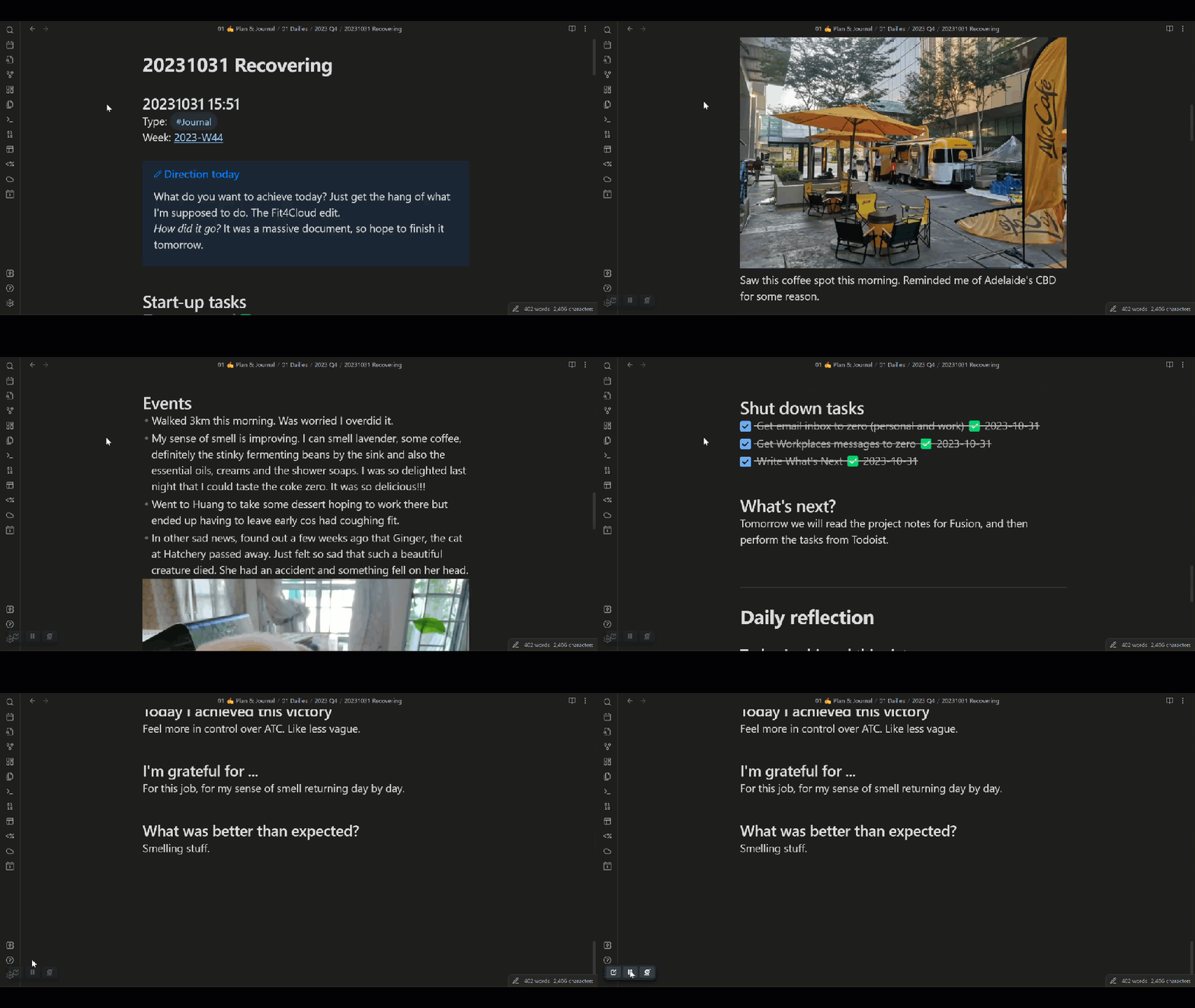
I’ve mostly stopped writing in physical journals because I transitioned to digital journaling last year. I keep my digital journal in Obsidian, and so far, I’m really enjoying the process. I use Ryder Caroll’s rapid logging system, logging what I do/discover/observe/am thinking almost every day in “Daily Notes”.
For a while, I toyed with the idea of using Day One, a popular journal app, because it was more user friendly, but the idea of letting some company have access to my private thoughts made me nervous. And yeah, I need it in a format that was easy to port out, and text files are as portable as they come.
I’ve also gotten into the habit of storing some of my social media posts in my digital journal. I do have a huge number of thoughts that I compulsively blurt out into social media, so why not keep a record of them in my digital journal too? After Twitter’s meltdown last year, I realised my words could be held hostage or eliminated by these platforms without warning, so I need to make sure I keep them safely somehow.
(These days I try to write them in my Obsidian journal first. It prevents me from blurting out thoughts that shouldn’t be on social media! Like, controversial political rants, for example.)
Sometimes, I even include interesting quotes or even posts in my Daily Note.
I also love including photos in my Obsidian journal. It was such a bother when I had a physical journal because I had to print them out and paste them in later, and it was often too much work so I often don’t do it. With my Obsidian journal, it was super easy.
As a result, I am journaling more than ever before, and my journal is growing fatter by the day.
Personally, I prefer journaling by hand but digital journaling, I discovered was just more practical for me because I keep misplacing or losing my journals.
One time, I actually thought I lost a precious journal in the commute home in Adelaide. It was a precious journal because it contained my thoughts about building a life in Australia, and losing that journal left me sad for weeks.
Until I found it in my room. Huh. I’m sure how that happened, but I’m convinced that God took pity on me and placed it in my room, because I remember bringing said journal to the city so that I can write in it in a cafe at Central Market, and looking for it frantically after that trip, unable to find it.
And even if I do keep them safely at home, I tend to stash them in secret places so that people won’t find them and read them. But then, comically, I forget where where I stashed them.
Physical journals are also very difficult to transport with you. When I moved to Australia in 2012, I couldn’t bring my journals with me and stored them in what I hope is a safe place in my family home. But I constantly worried that they’ll be discovered and read.
My ability to lose journals and worrying that it’ll be found or read by people – familiar and unfamiliar – has kept me on edge for years. And while I have no illusions that digital journaling is any safer, at least I’ll have backups of them and won’t lose them completely.
I also seem to journal more now. In the past, because my journal is never around when I need to journal I end up not journaling much. However, my smartphone or laptop is often nearby and I quickly pen a sentence or two every day.
Although I prefer the tactile sensation of handwriting my journals, I have to reluctantly admit that I am journaling more and feeling more secure with my journals now that I’m doing it digitally.
To compensate and satisfy that side of me than hungers for physical notebooks, I still keep a thin notebook which I scribble my thoughts all day, but that one’s more of a jotter pad than a diary. When you look inside and read the entries, it’s a tornado of disjointed thoughts. Not pretty or coherent in any way.
I think for people like me with this tendency to lose things, digital journaling is just the way to go 😅😬
-
The vigil at the Manor (Part 1/7)

Subscribe to continue reading
Subscribe to get access to the rest of this post and other subscriber-only content.
-
Racism, bias in entertainment
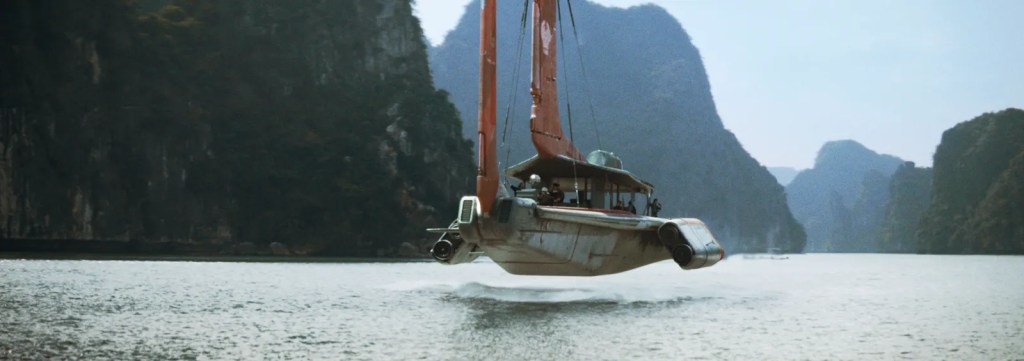
There was an interesting conversation on my Mastodon CDrama group yesterday. We are currently having a watch party of Mysterious Lotus Casebook, and Neon shared an interesting conversation thread about the racism in the wuxia drama. There was also this article, Ethnonationalism in Mysterious Lotus Casebook.
To be honest, my reaction was, “…what?”
I’ve actually read the article before, and my initial reaction was, I have no idea what to think of it. I mean, it’s an interesting theory and good on you that you’re thinking about racism of the Han people and all, but the claim that “these undercurrents promote CCP narratives of Han supremacy and justify the genocide, erasure, and forced assimilation of non-Han identities” makes me go … eh, where is your reference papers and sources thank you? And please don’t send me the US newspapers.
Anyway, I won’t go much into this, as I’ve expressed this multiple times on my blog about this thorny issue.
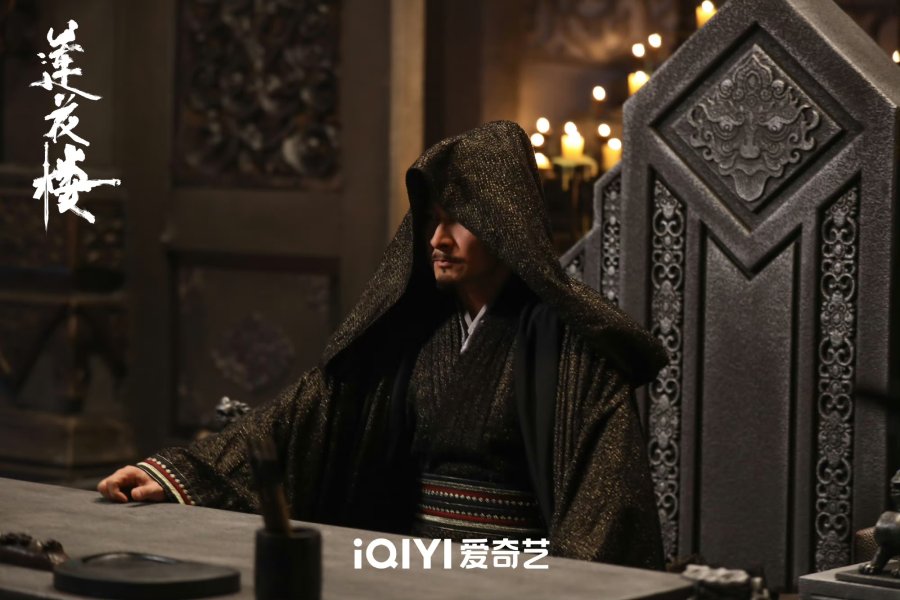
Oh look, I’m evil! I am glad that more people from the West are enjoying more Chinese entertainment these days, but judging from my brush ups with some of them on Reddit etc, it doesn’t seem that they’ve taken pains to learn more about the Chinese people beyond what is spouted in their media. Please visit China, talk to Chinese people and really get to know them before making these judgement calls. Eh, but nobody listens to me. (PS I’ve visited China about 3x, and lived with housemates from China. So I’ve had some exposure.)
I don’t want to go more into this as it tends to attract swarms of commenters lecturing me about the goodness of liberalism and democracy when I don’t really, honestly care. I’m glad you love them though. 👍
I’m also a little tired that I can’t escape this craziness when enjoying my CDramas. It’s so tiresome.
Anyway, the issue with Mysterious Lotus Casebook is that the baddies are these people from a wiped-out kingdom. They practice the darkest sorcery. I agree that at times it went over-the-top with the depiction of their evilness, but I never took it as the entire race is evil, but this faction that supports the revival of the long-dead kingdom is. The show actually mentioned one Nanying descendant who actually fought bandits to protect the people, for one. Simply put, there’s good and bad in any nation, and this nation was led by royalty that practiced dark sorcery.
Kinda like the Sith, ya know?
So, I did not take the article too seriously, though I agree that there’s a thread where strangers are viewed with distrust by China for a long time. (I mean after the Opium wars and the century of humilation, can you blame them?) But during the Tang dynasty, there were foreigners who served in the government.
The crux of this article is that I’d like to remind people that ethnonationalism and cringe-worthy depictions of foreign nations is not unique to Chinese entertainment.
I couldn’t forget that first episode of S**ting Stars where our lead male character, a popular Korean actor, went to Africa to offer aid, and he was, of course beloved by the unwashed African children for his generosity. There were mud huts, lack of technology – ya know, the usual “Africa is backwards and need charity” depiction we see on TV.
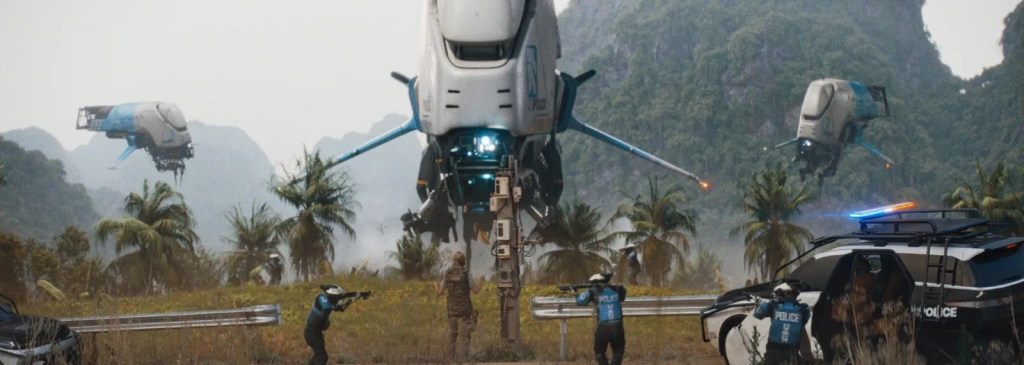
The Asians are coming! The Asians are coming! I was reading Campucino, a newsletter from a Cambodian who shares about the happenings in Cambodia. In her latest issue, she talked about eagerly watching The Creator because it depicted a famous Cambodian landmark. (The film was shot there.) Warning, some spoilers below:
Now, for the part which made me want to get up from my seat and leave the theatre, the part where a floating village was nuked mercilessly. It was a part that was filmed in Cambodia. This scene evoked a very strong emotion in me and I was angry because I saw this before, in a documentary in which the US bombed us with 2.7 million tons of ammunition between October 1965 and May 1975. Keeping my bias in check, I left the movie with this question: Why is it that Asians are often portrayed as either backward, evil, or both, which then gives the West a justification to treat us with blind inhumane violence?
– #64 Karma Police, CampuccinoYa know, my enthusiasm to watch this show has soured somewhat.
I suppose I can write an essay about how Hollywood depictions like are the subconscious, dying gasp of an empire bent on reinforcing and maintaining its hegemony by keeping down the brown people.
Or something.
But I won’t because it’s a film and I never take entertainment that seriously.
I still remember that scene on the first episode of 24. I was so excited that Kuala Lumpur’s Petronas twin towers appeared … only for the pan out to a run down shanty town where people were running around in pointed straw hats at the bottom of the KLCC twin towers.
I would like to assure that, while we may have some shanty towns, we don’t run around in straw hats. Also, there are literally no shanty towns around KLCC, unless you want to count the less shiny and skyscrapy Kampung Baru, in which the residents will be royally pissed if you paint them that way. This is how the area around KLCC looks like:

Photo by Filipe Freitas on Unsplash I guess what I’m saying is, this is more of a humanity problem than a specific-country problem. China has silly censorship pro-CCP stuff in their entertainment. Hollywood likes to depict us Asians as terrorists and living in shanty towns, and Africa still has muddy huts and need a handout.
We all need to do better.
-
What I learned from one year of Substack

Subscribe to continue reading
Subscribe to get access to the rest of this post and other subscriber-only content.
-
Thoughts on the Israel Palestine conflict
While I am aware of the conflict happening in Israel and Gaza now, I am largely silent about it on social media because I don’t want to attract the attention of toxic people to my space. Some of them don’t even mean to be toxic. Most are good people horrified by unnecessary suffering, whether they are on Palestine or Israel’s side.
The problem I have about the discourse around the Israel-Palestine conflict is that people feel like they need to take a side. Are you pro-Israel or pro-Palestine? My answer is always going to annoy them – I’m pro-peace. Being pro-peace feels like a cop out to these people.
I am tired of wars – everyone suffers. When will humanity evolve from killing each other to fixing the mess we’ve made of the world? To create prosperous trade among ourselves, to heal nature and fight diseases like cancer? Instead some of us have not left our tribal caves. It makes me sad.
I am also tired of participating in social media shouting matches like it is a football match. We’ve turned politics, real-life suffering and war into entertainment; we are the spectators in a coliseum, safe in our homes thousands of miles away from the battlezone, pointing our thumbs up or down at every turn of tragedy. I don’t want to be a part of this, it cheapens people’s suffering.
I see a lot of people commenting that the situation in Israel and Gaza is actually “very simple”, because one party has all the power, and one doesn’t. Not true at all. The Israel Palestine situation is really, really complex – power imbalance or not.
Both sides have done great wrongs to each other. Hamas doesn’t represent all of Palestine, so Hamas does not equal the people of Palestine. Israel’s government doesn’t represent all of Israelis. There are Israelis who oppose Netanyahu’s rule.
In my eyes, this conflict will never have a resolution because both sides are engaged in an “eye for an eye”. There can only be peace when forgiveness and love is made a priority by both sides, not “how many people can I kill?”
And seeing how bloodthirsty and narcissistic the leaders of both sides are … my hope is very small indeed.
Two books informed my view of the Israel Palestine situation. Blood Brothers and Son of Hamas. By reading these books, I realised that the simplistic view my Christian evangelical friends had of Israel was not accurate. The sanitizing of Hamas is incorrect too.


So, I do recommend that you read these books, straight from the people who lived there and experienced the horrors, to get perspective.
I’ve been following “alternative” media channels, and I was quite disappointed that some of them are often blindly on Palestine’s side without acknowledging that Hamas did terrible things during their attack on Israel, photographic evidence or not. I’m sure the 1000+ dead speaks for itself.
To me, Hamas killing people blunts their apparent fight for freedom or whatever. At the same time, I watch with disgust as Israel bombs innocent Palestinians, who probably didn’t know what the heck Hamas was planning and was just going about their lives until this terrible event happened.
Alternative or not, these media channels have the same habits as the Western mainstream media. They treat news like entertainment and sports. They crow when the “bad side” loses, cheer when the “good” side wins. They drum up emotions, usually anger and despair, for clicks. Watch them if you will, but just take the necessary information and don’t get sucked in by the emotional manipulation.
Frankly, I don’t know why people think the Israel-Palestine conflict is a black and white situation and choose to take sides, especially when they don’t know the history behind this conflict. I probably know more than the average Internet keyboard warrior, but even I do not dare to definitely say who is right or wrong.
I leave you with a quote from Elias Chacour and David Hazard, authors of Blood Brothers:
You who live in the United States, if you are pro-Israel, on behalf of the Palestinian children, I call unto you: Give further friendship to Israel. They need your friendship. But stop interpreting that friendship as an automatic antipathy against me, the Palestinian who is paying the bill for what others have done against my beloved Jewish brothers and sisters in the Holocaust and elsewhere.
And if you have been enlightened enough to take the side of the Palestinians—oh, bless your hearts—take our side, because for once you will be on the right side, right? But if taking our side would mean to become one-sided against my Jewish brothers and sisters, back up. We do not need such friendship. We need one more common friend. We do not need one more enemy . . . for God’s sake.
– From Blood BrothersYou can also watch Elias Chacour talk about his experience of the dark time called “the Nakba”.
-
Now my posts are not appearing on the Fediverse
My misadventures with ActivityPub continues!
So, this morning I posted a blog post on DramaTea, my blog for CDramas and Kdramas.
In a weird twist, my older posts are now appearing in the Fediverse version of the DramaTea blog and my new post is not appearing 😂 And even more mysteriously, my brid.gy integration which has never worked before started to work! Haha! What’s going on?
What can I say? The wordpress.com and Activitypub integration with the Fediverse is still a little rough around the edges.
Comments are also not reliably appearing either. I’ve posted a query on WordPress.com’s support forums, and it’s so far crickets!
Looks like I am not moving away from brid.gy anytime soon. Hope it improves and the team doesn’t ignore the problem.
Let’s see if this post appears on @elizabethtai.com
#Indieweb #Blogging #blog #wordpress #ActivityPub #Fediverse
-
A walk at Subang Ria park

My workplace has this virtual race happening and I am feeling a tad competitive. So, I headed down to the Subang Ria park to walk around with my Nordic sticks.

I am really glad this park exists. Because it is essentially private land, the developer who owns it had always wanted to demolish the park and build a fancy luxury condo around it. But the Subang Jaya community has fought hard to keep it open to the public.
Lately, the park which was really run down during the pandemic, had a face lift. The park now even has a community hall, gazebos and exercise machines and a playground.
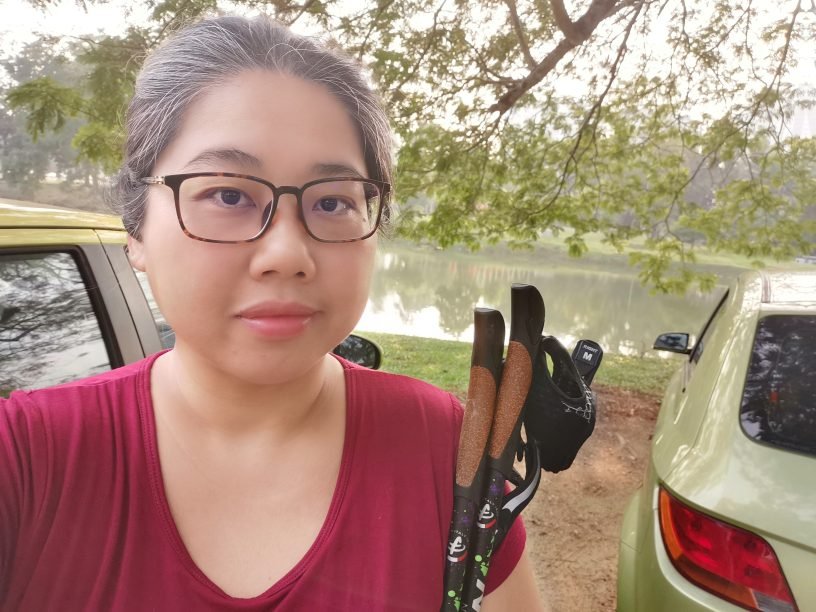
Me with my Nordic poles. These ain’t cheap – about RM600! I took up Nordic Walking when I had back problems, as it helps you walk without much pain. Now that I am recovered, I still do it as its supposed to burn more calories and help you walk further.
Anyway I am always the only one with sticks around so I don’t know what people must think about me.
#GoOutside #Malaysia #Parks #SouthEastAsia #Gardens
-
Subscribe
Subscribed
Have a WordPress.com account? Log in now.

