-
The COVID-19 lockdown diaries
This is a guide of my writings on Covid-19.
I chronicled so much of my life on Twitter during the 2020 Covid-19 lockdown. I’m currently trying to “rescue” the diaries from my Twitter archive.
Here are some long-form older essays I wrote about it:
-
Personal Finance
Tag: finance
When I started writing about money, I was overwhelmed, unprepared, and intimidated by the idea of managing it well. Since I think by writing, writing about personal finance was a natural thing to do.
Over the years, I’ve learned how to build my savings, tackle debt, and strategizing for long-term wealth.
However, due to the chronological nature of the old-fashioned blog, my personal finance got “lost” in the past.
This “guide” serves as a map to all the content I’ve written about finance over the years. By the way, this is from a Malaysian perspective, so some of the terms may be unfamiliar to you if you’re not from Malaysia.
Table of contents
Debt management
- How I paid off my six-figure debt
- Suicide isn’t the answer to your debt or money problems
- 10 steps to paying off all your debts
- How to become debt free in 7 steps
- The time when I was struggling with credit card debt [flashback post]
Living with money
- I lost something in my pursuit for financial independence
- How to track expenses … when you hate tracking expenses
- I embraced “lifestyle creep” and upgraded my lifestyle – here’s what I learned
- Managing uncertain times (Money & Minimalism Monthly Roundup #1)
- Monthly Money Diary and Reflections (January 2021)
- Monthly money diary and reflections: February 2021
- The role of privilege in personal finances
- My biggest financial mistake
- Kicking off my Monthly Money Diaries: 2020 financial year in review
- List of Personal Finance Youtubers in Malaysia
- A conversation about money, privilege and contentment
- Being frugal in Malaysia and Singapore (Money & Minimalism Monthly Roundup #3 )
- 5 money tips for college grads
- 5 reasons I prefer to rent a home
- My experience with a financial planner
- Emergency budget: Design one that can sustain you in a crisis
- Don’t be a Scrooge with your home
- Saving money tips: 10 things I cut from my budget
Investing
- My rocky adventures in investing
- How to overcome your fear of investing
- Guide to robo advisors
- Should you use a robo advisor?
- Stashaway Malaysia (very honest review 2022)
- Wahed Invest review (2022)
- I’m moving away from roboadvisors. Here’s why.
- Kenanga Digital Investing (2022 honest review)
- My experience with EPF’s Retirement Advisory Service (Part I)
- My experience with EPF’s Retirement Advisory Service (Part 2)
- Saving and investing in pre-apocalyptic times
Recommended content
-
My 15-minute city lifestyle in Malaysia!
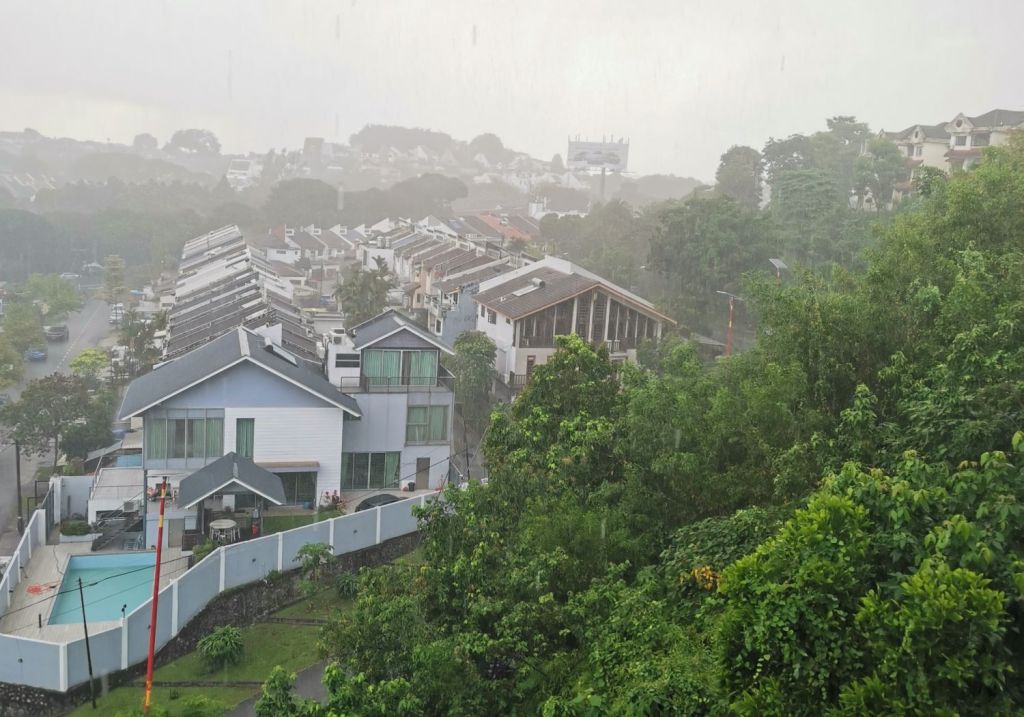
When I first told my friends that I wanted to rent an affordable apartment near nature, public transportation, and shops, they said I was dreaming and it couldn’t be done. Most apartments near nature have luxury price tags, and they’re often not near amenities like public transport and shops. (Because, apparently, the monied sniff at such plebeian things near them, apparently.) And apartments that are near town centres are often not near nature.
But I was determined to find a place that was cheap, walkable, and surrounded by greenery. At first, friends directed me to gorgeous apartments with stunning hill views, but they were far from city centers and completely unwalkable. (Meaning not walking distance to shops.)
While those places were beautiful, I knew I’d be unhappy there because I love walking. I love being able to do everything I need on foot. Being isolated in a car-dependent area would make me miserable—and I know this from experience.
A few years ago, I lived in a breathtaking place in Penang. It was near the beach, on top of a hill, with views of the ocean and lush greenery behind me. Monkeys would sometimes visit in the mornings. It was idyllic—at first. But I quickly realized how isolated I was. Without a car, I relied on taxis, but the area was so remote and traffic-prone that getting a ride was often impossible. The nearest shops were 4-5 kilometers away, and I couldn’t walk anywhere. I felt trapped, unable to do things independently. Sure, some people might say, “Just get a car,” but I’m someone who values walkability. I don’t want to depend on a gas-guzzling machine. I knew I’d be happier in a place where I could walk to everything.
This philosophy was reinforced when I read Happy Cities by Charles Montgomery. The book highlights how people are happier in places with easy access to community. You could live in a fancy skyscraper, but if you’re isolated and unable to connect with others, you’ll feel lonely. For me, the key to happiness is living in a walkable city where it’s easy to connect with people and access amenities.
That’s why I’m so passionate about my current lifestyle. I live in a walkable part of town, and it’s transformed my life. I’ve lost weight, gotten healthier, and my friends say I have a glow in my cheeks. I’m happier than ever, and yes, I managed to find an affordable apartment. By U.S. standards, I pay just $300 a month for a three-bedroom place. Even by Malaysian standards, it’s a steal at 1,200 Ringgit. I rented it unfurnished during the pandemic when prices were low, and though it was run-down at first, I refurbished it myself. Now, it’s my little oasis.
My apartment is on a hill, surrounded by nature, with two balconies. One overlooks the city, and during festivals like Chinese New Year, I can watch fireworks light up the horizon. I’m also just 1,500 steps (about 10 minutes) from the nearest light rail transit (LRT) hub. While I usually drive to the LRT to avoid sweating, I love knowing I could walk there if I wanted to.
The best part of my neighborhood is its walkability. I’m just a few hundred steps away from charming cafes where I can work or read in the morning. If I need groceries, I can walk to the nearest business center. It’s exhausting in Malaysia’s heat and humidity, but it’s a great way to stay active. Sometimes, I’ll walk to the business center for dinner and back, which helps me burn off calories and regulate my blood sugar.
My neighborhood also has playgrounds with exercise equipment, so I can do outdoor bodyweight workouts when I don’t feel like going to the gym. Living this way has helped me save money, too. I’m not car-dependent, so I spend very little on gas—about 50 Ringgit every two to three months. I grow my own vegetables and cook big meals that last me all week. Life is simple, affordable, and fulfilling.
I’ve heard some people criticize 15-minute cities as dystopian, but I can’t help but chuckle. My experience has been the opposite. Living in a walkable town has made me healthier, happier, and more connected to my community. And it’s not just a European thing—I live in Malaysia, where there are plenty of walkable towns and neighborhoods.
If you’re considering a move, I encourage you to think about walkability. Living in a place where you can walk to shops, cafes, and public transit isn’t just convenient—it’s transformative. You’ll save money, stay active, and feel more connected to the world around you. For me, it’s the perfect way to live.
-
How I use social media, and why Mastodon is still No.1 for me
The past few weeks have been overwhelming for me, as I indicated in my post I am social media burned out. With work ramping up again after the Christmas holidays and having to prepare for Chinese New Year, life was not only a whirlwind, but somehow, I became consumed by social media.
From January 1st until now, I’ve been glued to my phone. It started with Weibo, catching up on drama surrounding a couple of actors, and then it spiraled into the red note migration—Little Red Book. I couldn’t tear myself away.
I actually wrote about this in my Substack. (I’ve been so busy I just didn’t copy my newsletter over to the blog as usual. Apologies, my friends!)
- The risky, scary business of Chinese entertainment (where I wrote about why I was consumed by my Weibo feed for the first half of January)
- TikTok refugees flee to ‘Red Note’
I tried to focus on work, but it was impossible. Social media just pulled me in and wouldn’t let go. It’s frustrating to feel so out of control, knowing full well that this isn’t good for me. I’ve been stuck in this cycle of endless scrolling, switching apps, and I can only tentatively say I’m emerging from my stupor only now.
Anyway, this time gave me another push to evaluate my usage of social media. By the way, I’m not one of those people who want to eliminate social media use altogether. It’s not sustainable to be 100% off social media.
Instead, I hope to get a more balanced way to interact with them.
English social media
One positive factor stands out for me: I do not use Meta products like Facebook, Instagram, or Threads. That’s like a lion’s share of commercial social media already.
This isn’t due to some grand ideological stance against billionaires or their companies. Malaysians are practical people—we use what serves us, and I’m the same. But the blunt truth is Meta platforms are useless, toxic and don’t serve me at all.
Facebook feels like a giant soap opera I didn’t sign up for. It bombards me with updates about acquaintances’ lives. Acquaintances that, if I were to be honest, I’m not particularly interested to know about, and who overshares way too much.
If Facebook was functional, there’d be an RSS feed for only the people or groups I actually care about. But no, it’s a mess of private lives, poorly moderated content, ugly ads. It takes precious cognitive power to sift through what really matters to me.
But in general, the whole point of the app is lost on me due to my personality. I don’t really want to know about other people’s lives. I’d much rather meet a friend over coffee than scroll through updates on their daily lives.
As for Instagram and Threads, I never found the appeal. Instagram’s visual bombardment overwhelms me, and Threads felt like just another platform throwing vile content my way. I’m only on Instagram to send one friend cat videos.
X? Well, I scroll my favourite follows since they’re still stubbornly there, but I barely am there because its toxicity is insane.
Tiktok? Never had an account. The brainrot content there destroys my brain and people whinge too much over there.
Reddit. Honestly, if I wasn’t the moderator of a subreddit, I would’ve been off that site ages ago. It’s incredibly toxic, full of racism and other awfulness. And as a moderator, while members are benefiting from my moderation, I get exposed to the worst of the worst. Trolls that harass you in DMs, spread rumours and cause trouble in the sub. I can’t wait for retirement.
I don’t interact with many subreddits. At most three at a time, and they are incredibly boring, geeky subs like r/ObsidianMD where the hottest ‘argument’ would be a discussion about folders vs no folders. Needless to say, I stay away from all political subs.
Substack Notes started off as a tolerable space, but now my “for you page” is filled with negativity, doomerism and far too many Americans complaining about everything. (It’s a very America-dominated platform and their favourite past time there is to rail against something I guess.) However, if you get off Notes and just dwell in the comment spaces of newsletters you follow, it gets better.
All in all, Substack remains a mixed bag. Sometimes, I find inspiring content. Other times, the feed floods me with mean-spirited posts, especially those filled racist, anti-China sentiments. (Sigh, the algorithm thinks that since I like content about China, sinophobic content is just fine.)
The biggest issue I have with all the commercial social media is that I can’t control the feed, and that lack of control makes it harder to fully enjoy.
There’s something inherently combative about Western social media platforms like Twitter, Facebook, and Instagram. The people there often seem mean-spirited, and the overall experience feels hostile. Whether it’s endless complaints or offensive posts, English-speaking social media feels like it thrives on conflict.
Chinese social media
Xiao Hong Shu (Little Red Book) appeals to me with its focus on art, inspiration, and beauty. I also enjoy the occasional robust discussions between Americans and Chinese people since the migration happened. But there’s still toxicity. Despite what Americans think, not all Chinese people are nice, and some will make that known. But the good thing about XHS is that it has robust moderation (when you report someone for bad behaviour, they do take action. Also, the agorithm is very responsive.)Weibo: China’s Twitter. Also toxic. Only saving grace is that I don’t have to endure Sinophobia and the moderation is stricter than the dumpster fire that is Twitter (or whatever it’s calling itself these days).
However, if you want to watch a mass of people (and bots) spreading rumours, cyber bullying and destroying careers and lives (and celebrating the aftermath) – it’s a great place to be!
But there’s no denying that Weibo is a great place to be if you want to see Chinese perspectives about international or Chinese news. The only way to manage Weibo healthily is to carefully curate your feed and follow the most civil content creators. (Though no guarantee the comments don’t get mean. They almost always do.)
I usually just use Weibo to see what’s trending in China (news). I avoid the Entertainment tab because this is where the most cyberbullying happens.
Social media that works and is good for your mental health
Mastodon
There’s Mastodon—my one saving grace in the chaotic world of social media. It’s peaceful, sane, and manageable—all because I can carefully cultivate my feed due to a series of filters to avoid content I consider toxic and to mute/block people that are hostile. The people I interact with are rational, and the small, curated community I’ve built brings me genuine joy.I don’t care about having thousands of followers. For me, it’s about quality. The 20 or so people I follow are enough. Mastodon allows me to block or mute negativity effortlessly. It’s a haven where I feel in control.
This blog
Lately, I’ve been thinking more and more about retreating to my blog. I look at bloggers like Todd Tyrtle and Scalzi, who’ve turned their websites into their base of operations, and it inspires me. Mastodon makes it easy to blurt out thoughts, but there’s something satisfying about compiling those thoughts into structured blog posts where I can keep forever.Maybe I can find a balance—posting spontaneously on Mastodon but revisiting and expanding those ideas on my blog, like I described in the blog post about the PESOS method of content management.
The only problem with blogs is that it’s very difficult for me to get people to really engage with me. Fortunately, wordpress.com has Mastodon connectivity, so there’s two-way communication.
Also thanks to dominance of content marketing blogs, blogs like mine are just hard to find. So until this changes, I’d have to continue ‘pushing’ my content to social media.
-
Public transportation in my neighbourhood and I have electric car envy
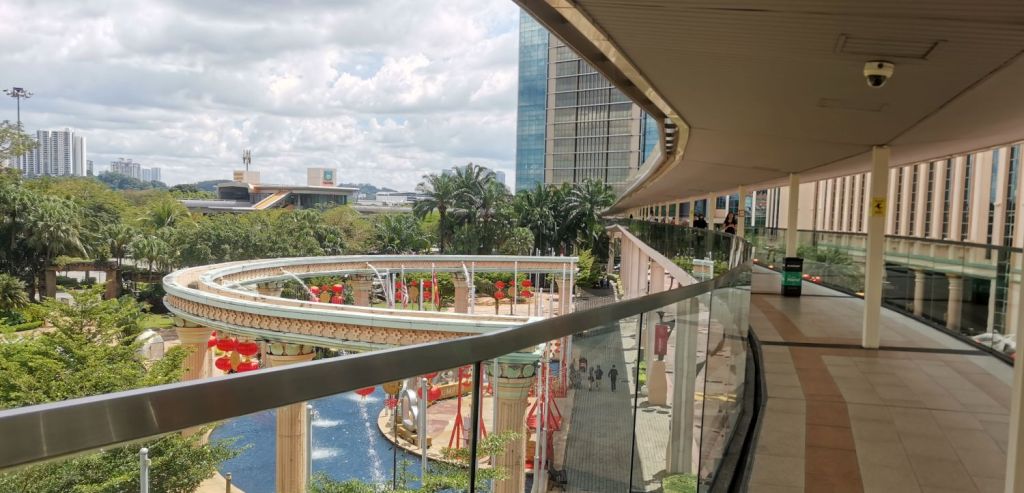
One of the biggest reasons why I love my neighbourhood is that it’s one of the most public transport-connected neighbourhoods in Malaysia. I can easily walk from my apartment to the nearest light rail transit station (I actually have a choice of two stations to walk to) and take an LRT to visit my parents a few kms away. I can even hop on a train to the KL Sentral station where I can travel to other states via train, or to the airport.
I’m probably a rare Malaysian in the sense that I love using public transport. Due to Malaysia’s hot weather, many just prefer not to walk, so I can’t blame them. Yet, as I walked back to the LRT station via this scenic elevated walkway, I feel so grateful that I can live in a neighborhood that is so well-connected by public transportation.
Fun story: Decades ago, when people heard out about the plan to build elvated walkway that snaked around my town, people protested that it wouldn’t be useful because it’s far too hot to walk for long distances. A part of me wished that the plan had gone ahead anyway, because I adore walking and it’s not as if these walkways won’t but shaded.
As a concession, this walkway now snakes around the neighbourhood of Sunway, and I really like the fact that you can use it to get from one place to another (besides the mall, you can walk to hospitals and colleges) without having to endure car traffic.
I realize living this way makes me happy, because I love living in a way where I’m not car-dependent. I hardly ever use my car, to be honest, and if I do use my car, it’s usually because I’m feeling lazy or trying to avoid the heat, which is almost a constant in Malaysia. (I spend about RM50 – about US$12 – on fuel for my car every two months!)
I hope that Malaysia will become less car dependent one day, but that’s probably unrealistic. Will it at least transition to affordable electric vehicles like China, perhaps? (I’m super jealous of China for being able to pull this off, by the way.)
As for myself, I don’t see an electric car in my future, but maybe an electric bicycle. I’m such a homebody. I don’t travel great distances. And if I do, I prefer to take public transport instead of drive. (I think anyone driving during peak festival periods is insane, for one.)
However, if electric bikes are going to be my future one day, the only hope I have is for Malaysian roads to become safer for because right now, it’s suicidal to use a bicycle – electric or not – on our roads.
-
Gearing up for Chinese New Year with a day of shopping at Sunway Pyramid

This morning, I decided to visit one of the busiest shopping malls in Malaysia, Sunway Pyramid.
I live in a wonderful area the light rail transit (LRT) network is just a walk away. (In fact, from my apartment, I can take the LRT to KL Sentral and even catch trains to another state.)
However, today’s trip wasn’t going to be far; just to Sunway Pyramid, which is near where I live.
I opted not to drive there for a few reasons:
(A) Traffic is crazy on Saturdays
(B) parking is nearly impossible at the mall on weekends
(C) I anticipated eating a lot of food, so I figured the walking would help burn the sugar off!I parked my car near the LRT station. Fortunately, it’s the weekend, and since Chinese New Year is just a few days away, more parking spots were available because many people have already travelled home.
From there, it was just a short 50m walk to the station.

The BRT is on an elevated road, and only these busses can use it. After boarding the train, I travelled to the USJ7 station, which is close to my parents’ place, and from there, I took the BRT (Bus Rapid Transit) to Sunway Pyramid. My favourite part of this journey is the slow walk on the elevated walkway from the station to the mall.
By the way, the mall is massive—so big that it can take a while to walk to the shop you want to visit! Sunway Pyramid is bloody huge, so you are guaranteed to make many steps if you come to this place.
A Chinese New Year must-have: Bakkwa

My main mission today was to buy bakkwa (preserved meat) for my parents. I don’t know whether if this a Chinese tradition, but it’s my family’s tradition and a must-have for the festival.
Bakkwa tends to be expensive during this season. Still, I bought quite a large amount. My mom is definitely going to scold me for it, but I just wanted to treat them.
Thankfully, I got to the shop around 11 am and avoided the long queues that tend to form later in the day. With the shopping part done, it was time for lunch.
Sunway Pyramid has seriously good food

Every time I visit Sunway Pyramid, I make it a point to eat at Village Duck. Their roast duck is sublime, and so is their char siew.
After lunch, I walked around a bit more before indulging in coffee and cheesecake.
Since I’m not much of a shopper, and the crowds were just too much for me, I decided to head back after the coffee.
Back home now and honestly, today was quite an indulgent day for me, as I don’t usually eat this much. (And so richly) If I do eat like this, I always make sure to walk at least 10,000 steps or have a hard workout at the gym.
Current step count: 8300. Time to step it up!
-
Weekend Tales #8: My favourite things of 2024

I was wondering who in the world would be interested in my favourite things. But then I realised that one of them could actually save your life, so here am I sharing it.
Siti the kitty
She’s a little bite-y, but we have this little ritual where, each time she sees me, she’ll let out a little high-pitched meow which is a mimic of my equally high-pitched greeting to her: “Heeeey!”
Then she’ll proceed to make cookies at her catio fence, slow blinking at me. And I try to touch her toe beans. Sometimes she escapes her catio, and I find her doing belly flops at my front door … three floors up. (We live in a town-house-like apartment.) I don’t know how she knows where I live, but she gives me joy lol.
Nourished by Science and The Glucose Goddess
These two Youtube channels can save your life. No, I’m really not kidding.
I’ve struggled with my weight all my life, and my recent A1C was inching towards pre-diabetic range. I was desperate to do something, but felt that I’ve tried everything to lose weight but just couldn’t. This has been an especially despairing thing for me as, before the pandemic, I was much slimmer and my A1C was stellar. However, the pandemic hit and I just lost all control. Trying to lose weight in your forties, as a woman, is fraught with difficulties.
These two Youtube channels: Nourished by Science and The Glucose Goddess taught me the best, life-changing hacks I’ve ever learned: How to control your blood sugar levels. But hacks is probably not the right word, it’s more like, how to eat and live the way our ancestors did and not get diabetic.
The Glucose Goddess talks about the same thing, but in a more user-friendly, entertaining way. But I prefer Nourished by Science as it’s more evidence-based and thorough.
The most impactful “hacks” I’ve implemented are:
- Exercising after meals
- Vegetable starters before every meal
- Eating earlier in the day rather than later
It makes so much sense, really. Our ancestors didn’t eat a heavy meal in the morning only to laze about and do nothing. Most went to work in the fields, burning what they’ve consumed. They also didn’t eat all the time. Food was not plentiful.
So, watch the video, I implore you – this could save you future pain, and even if you’re pre-diabetic or diabetic, it could still help you.
My walking pad

This little device only cost me RM300 (less than US$80) and it’s the no-excuse machine in my house which I use to get my steps in when I couldn’t do it outside like I want to. I usually get on the walking pad right after a meal and watch TV while walking. I barely feel the time pass by. A walking pad is a treadmill without frills, essentially. It fits neatly beneath your sofa, and some can even fold. I just have mine at the side of the sofa, ready for me to hop on when I need to.
My favourite Chinese Dramas of 2024
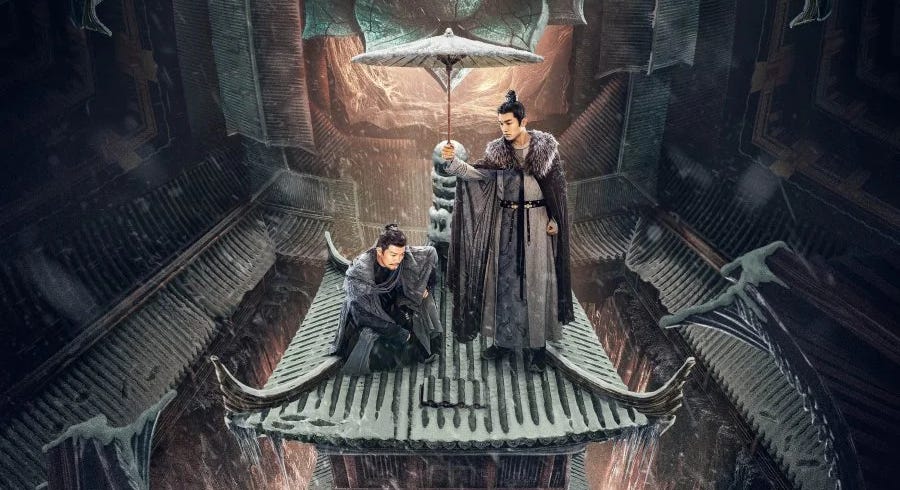
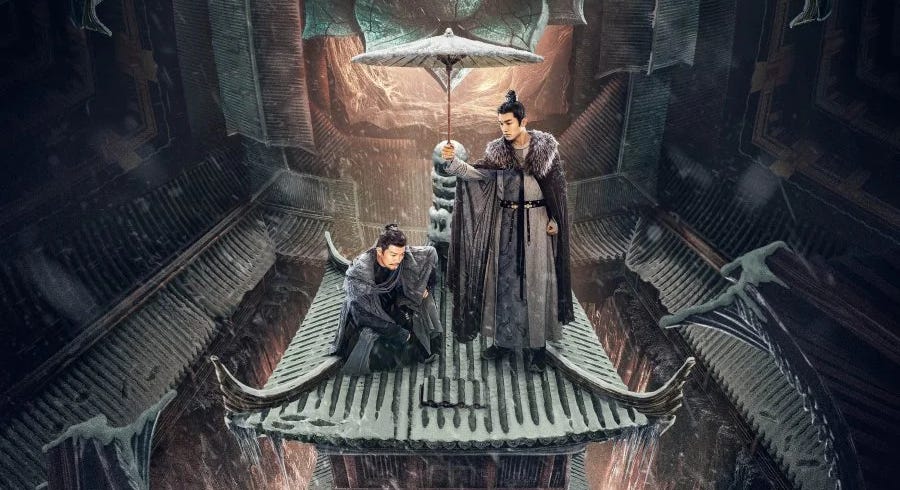
Strange Tales of Tang Dynasty 2, one of my favourite Chinese dramas of 2024. I love CDramas so much I am now going to write about them in the newsletter.
It’s been a great CDrama year for me. You can read my blog post about the Chinese dramas that stole my heart in my Chinese drama blog, DramaTea.
Pleco’s document reader, which enables me to to read Chinese ebooks!
Pleco is a well-known Chinese dictionary app. You can actually buy an add-on where you can read ebooks or documents with it. Why do this on Pleco? Well, it enables you to tap on words you don’t recognise, and it gives you the meaning in English. You can even turn it into a flashcard!
I started 2024 completely illiterate in Chinese. I’ve always felt ashamed about that, as I wrote in Hello from a banana. While I’m able to converse in Hokkien and a little bit in Mandarin, I’ve always been sad I couldn’t read Chinese literature in the original language.
Being able to recognise the text in a webnovel or in a Weibo post just makes me a little teary-eyed. Finally, I’m able to connect with my heritage in a meaningful way – because being able to read means I can one day access China’s wealth of knowledge and literature. I may not be there yet but I have a finger in it!
This should be a Substack issue, but I just want to share how profound it is to be able to read Chinese at last, even if it’s at a low level. If you ask me if I’ve ever felt ashamed to be Chinese, I’d say no. I don’t share the typical American-Chinese experience in this. But I was ashamed of not being Chinese enough.
When you are a descendant of a hybrid, creole culture like the Peranakans, which is a mash of Chinese, Malay, Thai and even British influences, you have a hard time knowing who to “support”.
I grew up being taught that I shouldn’t be like that type of Chinese – the ones that attend Chinese schools – because they just think differently.
That said, I never felt that my kin in Chinese schools were inferior, just that our thought processes are extremely different. Now, I’m glad for the fusion of East & West in my thinking.
My dad was a complete banana, in the sense that he couldn’t converse in Mandarin or read Chinese. Though he spoke Hokkien, he preferred to speak to us in English. And Queen’s English, mind you. I grew up being taught how to speak like a British lady lol.
But, the one part of his heritage that he loved was Chinese literature, so he gave us books (in English of course lol) of the great classics like Dream of Red Chambers, Journey to the West and Justice Bao. He also began my obsession with Chinese dramas by feeding me them at a young age.
However, I’ve always felt upset I couldn’t read these books in the original Chinese. Learning to read Chinese felt impossible due to life’s pressures etc.
But I started earnestly this year, and I’ve made enough progress that I could understand what was written on Weibo! (Though at low end.)
This vital connection to my Chinese part is just making me … proud? I’m discovering more and more what makes my culture so amazing. It’s a lovely feeling.
The little sunbirds that nest in my balcony every year
I’ve seen three sunbird couples raise their chicks right at my doorstep the last two years. I hope they come again in 2025.
It’s the simple things in life that makes you happy.
-
My experience ‘going paid’ on Subastack in 2024
Well, has it been a while! And here am I, back to overwhelm your inbox with a girnomous essay! Just kidding – I hope?
Anyway, recently, in a moment of weakness, I subscribed to a popular newsletter about increasing Substack paid subscriptions. I wondered if there was a “magic formula” for Substack success.
Turns out, there isn’t any.

Subscribe to continue reading
Subscribe to get access to the rest of this post and other subscriber-only content.
-
Weekend Tales #7: Year ends and bodice rippers in the desert
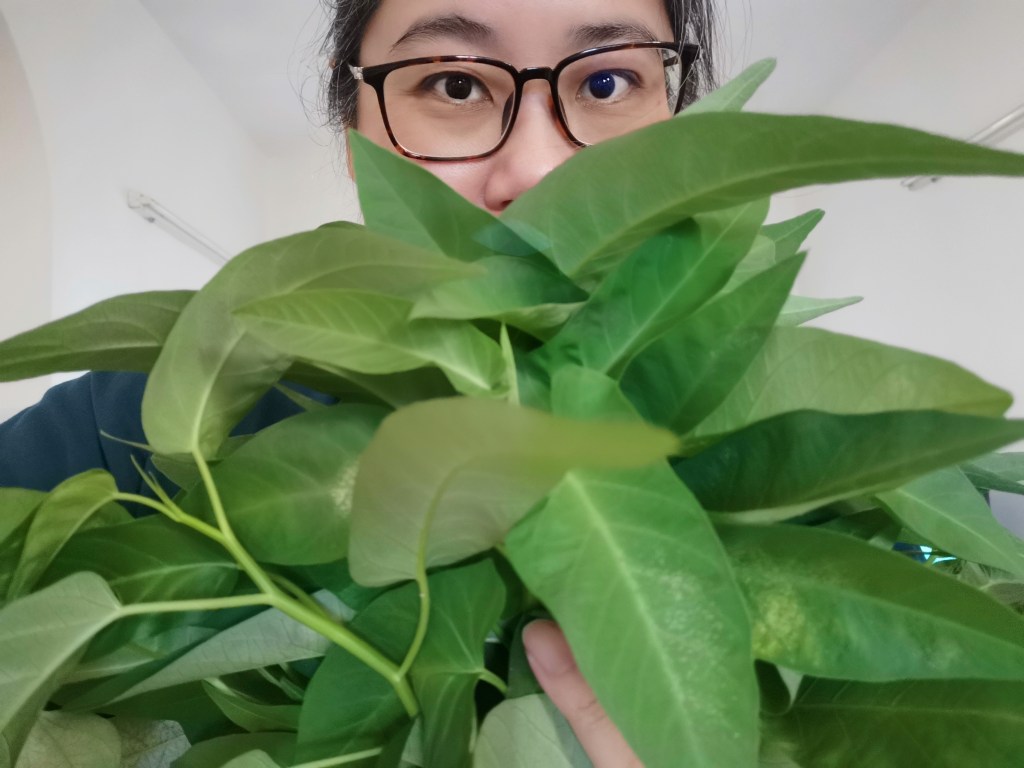
I may be disappointed with a lot of my goals in 2024, but I am proud to say that my gardening skills have gotten to the point where I regularly harvest vegetables from my tiny balcony garden. This vege is “kangkung” or water spinach. Apologies for the late newsletter. I’ve just survived a tough quarter at work. By “tough” I mean, “Hey, OMG here are 100 tickets and can you get it done by today” kind of tough.
Before you start wondering what I mean by “tough”, I want to quickly say that I really love my job, and I’m not just saying this in case my boss has subscribed to this newsletter (er, hi boss if you are?). But my current role in tech has been the most rewarding role I’ve had. It’s one of the rare jobs that seem perfectly syncronised with my personality and how I’d like to work, down to project management systems.
I had a very tough pivot from journalism. After leaving journalism, I didn’t think I’d find a career as satisfying, but technical writing has proven to my happy place, even better, dare I say, than journalism.
Journalism was glamorous though. I cannot deny that it was insanely wonderful to travel all over the world in the first 10 years of my career.
Of all the careers I’ve had (and I’ve had a crazy number of pivots), it probably satisfies my massive thirst for new experiences the most. However, it can be a demoralising profession, especially towards the end when the industry was falling apart.
Maybe, one day I’ll tell you about this.
So, big apologies. My brain is a little overwhelmed of late I have fallen so behind in commenting on people’s newsletters and I feel guilty. I do read them though, please be assured you are read!
Also, I want to share my gratitude to the people who have deigned to be paid subscribers. I don’t really talk about paid subscriptions etc, because I know it’s a lot of pressure, but I appreciate all of you, paid and unpaid, for believing that my writing is worth your time.
Anyway, I’m glad to have closed the quarter satisfactorily, and it’s now time to begin a new one. However, this quarter I’m doing something a little different. Instead of in December, I’m currently doing my personal year-end evaluation three months early.
So, here I am in a Hilton suite writing this issue while watching the Korean Drama Brain Works and Chinese drama, Love in the Desert.
This was suggested to me by someone on the Internet and I thought it was a good idea to evaluate your strategy and restrategise so that you can meet your goals. It is sort of a “last chance to meet your goals” sprint, so to speak. Instead of ending the year with disappointment that you’ve fallen short of your goals, you can at least end it knowing that you’ve tried best because you tried another tactic to achieve them in the last quarter.
Personally, I’m not very pleased with myself this year, though I have to say that I achieved a lot of my work and writing goals, I have sorely underachieved in the health and social category.
I really, really need to improve my health! I’m of that age where it really matters.
But, anyway, before I bore you, I just want to quickly say that in the next few weeks I’m taking a break, but not from sending you Substack issues. I have a wealth of writing that I’ve published in the past that I’d love to share instead. And I hope you will enjoy them too.
Before I go, here are some things that could pique your interest:
What I wrote
I didn’t write much beyond Tai Tales, but if you feel like it you can read my Chinese drama reviews here:

An amnesiac woman tries to be a dutiful wife. But in truth, she’s being used as bait by her husband to lure a nefarious bandit. A rare, beautiful gem of a drama that will make you smile and sigh.
A big-shot banker is demoted to a tiny branch of his bank when he refuses to participate in his superiors’ corrupt dealings. He refuses to lie low and causes ripples in his new place of work.
Okay, nerdier stuff I wrote:
The circle of competence and our information diet
When it comes to information consumption, am I focusing on a subject that will help me improve my life or make it worse?
Auditing my social media use and information consumption
When you get such extreme mental fatigue from social media and you just want to check out and sleep all day – you know you’ve got a problem.
Okay, maybe I wrote a lot LOL.
Great reads
Some interesting articles I read recently:
Has China’s younger generation really chosen to ‘lie flat’?
Even in Malaysia, Chinese youths face great pressure to excel. I remember watching a Youtube video of an naturalised American who visited China recently. There, he asked some Chinese teenagers about their plans, and they were already planning for their careers. He was so amazed by that.
I remember thinking, wait, Americans don’t do that at 16?? When I was 16 I was already drawing flowcharts for my path towards a medical career and working for the United Nations. (Which, er, as you can see, took a sharp detour to journalism in my 20s.)
I’m not sure if Chinese youths in Malaysia or youths in China have the greater pressure, but it is a pressure all Chinese people understand well. The belief that the Great Exam will change your life is a pervasive one in China, and among the diaspora in Malaysia.
This newsletter from the fabulous Baiguan offers three stories around this lie flat phenomenon in China.
The long strange trip of Julian Assange
With Julian Assange giving his first speech since he was released from prison, I wanted to get up to speed about him. This is a good primer.
Can China’s Long-Suffering Idol Fans Catch a Break?
Since I moderate a Reddit sub (a “responsibility” that I question each day) that often discusses this topic, I try to read up about it. Honestly, I’m still flummoxed by how insane fandom can get and don’t know what to think of it. Frankly, I think they’re (the stars, the industry) are milking profits off these young, para-socialised minds and the symbiotic yet toxic relationship disturbs me.
What I watched
Happily devouring a trashy drama that can be best described as “bandits and royalty in the desert”. Basically about a princess who ends up entangled with a bandit, a prince and a king. It’s not exactly “intellectual” TV, but it is about as much drama as I can handle right now LOL.
Thank you for reading Tai Tales! To receive new posts and support my work, consider becoming a free subscriber.
As I know subscribing to a newsletter can be quite a commitment, you can also give me a tip:
If you liked this issue, it would be great if you could share it with your network. 🙂

-
Subscribe
Subscribed
Have a WordPress.com account? Log in now.

