-
I once tolerated Kuala Lumpur. Now, I love it
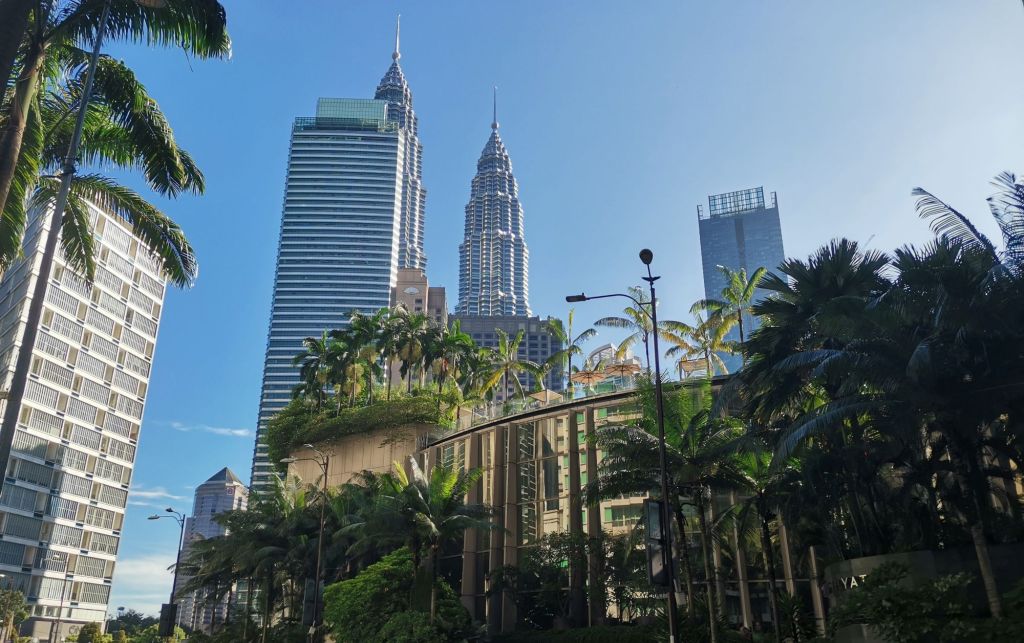
I never drive to Kuala Lumpur. The car I bought in 2015 has only 41,000 km on it. That’s how much I dislike driving to “KL”, as we locals call it. I rather battle the heat and rain, being squished in public transport, than endure her infamous jams or unpredictable floods. (Yes, floods! If it rains around 5pm, most office workers would brace themselves for a flash flood in the city.)
When I was a young student, I attended a college deep in the heart of Kuala Lumpur. The only way to get there was via the unpredictable, maybe once-an-hour trains from my town to a stop about 5km from the college.
From that stop I’d have to take a “mini bus” to another bus stop where I’d take yet another bus to finally arrive at my college. A lot of times I’d have to stand on the steps of the bus as it whipped through town, with its doors open to let in the air in the stuffy, non-air conditioned bus.
There was no light rail transit (LRT), no proper pedestrian paths, and the traffic was an utter nightmare.
Back then, I was a slim bunny because I’d prefer to walk 2-3km to my train stop rather than take a bus to it. I was often there much faster than if I’d taken the bus. There’s nothing worse than sitting in a non-airconditioned bus breathing in exhaust fumes.
My memories of KL then was of a hot, grimy, dusty city with barely any trees. I’d have to avoid being hit by cars and motorbikes as I walk on road side as there were no proper pedestrian paths. Frankly, I’m surprised that I didn’t end up with a deep loathing for public transportation and become a car junkie.

Subscribe to continue reading
Subscribe to get access to the rest of this post and other subscriber-only content.
-
A secret Pentagon campaign to spread vaccine disinformation has come to light
So, Reuters broke this story recently: “Pentagon ran secret anti-vax campaign to undermine China during pandemic.”
This couldn’t have come out a worst time. Whatever credibility the US government has, after its disastrous decisions and actions with Gaza, is lowered even further. If it’s even possible.
Now, lawmakers in the Philippines are demanding for an investigation into these allegations and are saying that these allegations are “likely true”.
And of course, China is mad about it.
Pentagon is not helping matters by not denying that this clandestine operation happened.
Apparently, it’s a bid to “counter ‘malign influence campaigns’ run by Beijing.”
Well, okay, so what if a couple of Filipinos died because of this right? Are Filipino lives just consumables, ask this Global Times editorial?
Though, I have to say it’d be much worse if Pentagon did deny it. Best to preserve whatever tiny bits of PR you have left.
Lastly, a journalist reacts to the news, calling it “shameful”: A shameful American pandemic propaganda program.
Glenn Greenwald, one of the better US journalists out there who dare to bash both the “left” and “right” of politics, also covered this issue:
My thoughts
First, I was so surprised that it was Reuters that broke the story. If anything, I expected a “China cooked up the virus in a lab” story.
During the pandemic, Malaysia was fighting so hard to get vaccines. There was a lot of hoarding of vaccines in Western nations so we could only get scraps. If not for the generosity of AstraZeneca and China who donated vaccines to us, where would we be today?
So, the news about this deliberate misinformation made my jaw drop. What a morally bankrupt, evil thing to do!
But then again, these days, the US actions on the world stage has just dropped down to such a low that I’m no longer surprised they would do such a thing.
What’s interesting is even in Malaysia we had “news” that Sinovac doesn’t work. There was a lot of sniffing about how AstraZeneca and Pfizer vaccines were better, and Sinovac shots are just inferior.
However, instead of avoiding it, many Malaysians accepted it as less effective and took the vaccine with the belief that “it’s better than nothing”. We are very practical folks after all.
Older Chinese folks preferred Sinovac because they believe it’ll help them visit China easier 😆. I know some folks who are more suspicious of the mRNA vaccines chose Sinovac as it uses a more “traditional” technology.
I have journal entries about my experience during the COVID-19 pandemic (I’m still rebuidling it slowly from my Twitter archives):
-
The cold war in Chinese fandom spaces

ℹ️ I rewrote this newsletter several times. I want to be very careful not to make this an anti-West rant; the last thing I want is to make people feel bad about being born in a region; that’s not something we have any control over!
Also, the reason why I pivoted my newsletter to talk about cultural issues is because I want to promote the positive things about Chinese culture. There’s so much content that ends up making you angry at a country or a region – I don’t want to be a part of that. I want to be a bridge builder, not a bridge basher.
However, this is an issue that’s been nagging at me for years, and I want to get it off my chest. And I hope by doing so, you’d understand how careless, badly researched takes about a country can affect its citizens and her diaspora. There are forces in the world right now agitating for conflict rather than cooperation, and they are creeping into “light” spaces like fandoms too.
So, recently, I wanted to share an article about To the Wonder, a Chinese drama selected for the 2024 Cannes, in a Chinese drama Reddit forum.
I almost completed the post when I realised where the drama was set:
The mini-series is an adaptation of the award-winning essay collection My Altay by Li Juan, a renowned Chinese essayist. Set in Northwest China’s Xinjiang’s pristine Altay region, the eight-episode series offers audiences a fresh narrative and sensory experience, blending light comedy with Li’s literary aesthetics to explore themes of nature reverence, self-discovery, and the simple yet resilient spirit of the northern Xinjiang herders. – To the Wonder selected CANNESERIES, marking the first Chinese language drama in longform competition
Oh.
Subscribe to continue reading
Subscribe to get access to the rest of this post and other subscriber-only content.
-
The tricky art of learning Chinese characters
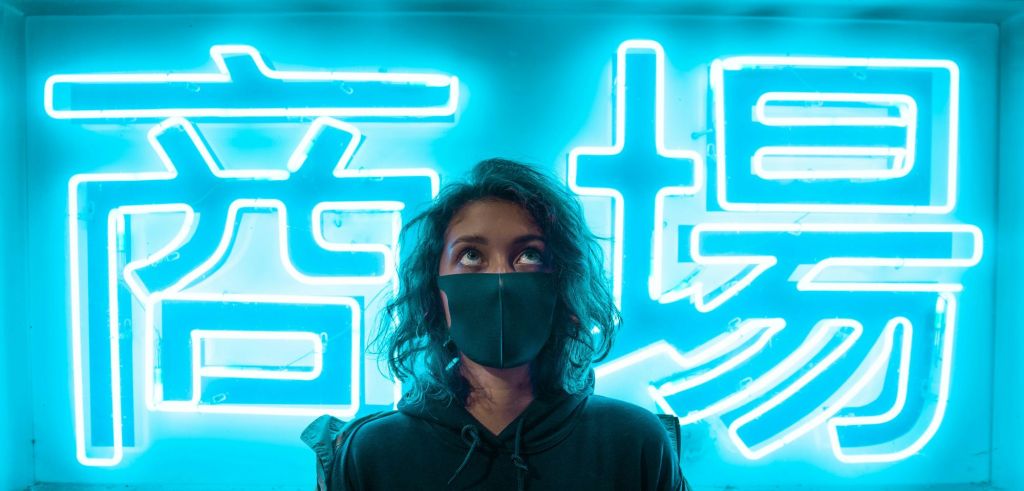
I used to believe that my memory was so terrible that learning Chinese characters would be impossible for me.
However, a few months ago I had to get a tech certification for work. I panicked. How was I supposed to remember all this information?
I tried mind maps, which helped me get a distinction in A-Level Law, but it took too long and a lot of the data I’m trying to remember didn’t relate logically to each other.
Then, I tried flashcards. It worked brilliantly. I took the tech exam and I passed and actually did well! I’m talking about a high distinction. Not bad for somebody with zero software engineering background.
Now, my Brainscape flashcards are being used by some folks in my company. Not bad for a non-engineer.
My attempt to earn the certification taught me that it was not my memory that was the problem, but my method of remembering.
Subscribe to continue reading
Subscribe to get access to the rest of this post and other subscriber-only content.
-
Substack round-up: Six newsletters from Asia

I tend to like reading quieter, less “popular” newsletters. While they may not have a girnomous number of subscribers, these writers’ words are worth reading. There are plenty of good stuff on Substack, but I want to do more to highlight writers from countries out of the Western sphere as they barely if rarely ever get top spots on the Substack charts.
Subscribe to continue reading
Subscribe to get access to the rest of this post and other subscriber-only content.
-
So I’m learning Mandarin

In language-learning circles, I’m considered a Mandarin “heritage speaker”.
Heritage speakers have “learned a language informally by being exposed to it at home as opposed to having learned it formally in a school setting.” (What is a Heritage Speaker?)
Technically, I don’t fit the label because my real heritage language (mother tongue) is Hokkien, an 8-tone Chinese language that is considered one of the oldest in China. And I learned Mandarin in a school setting!
Basically, I was thrown into Mandarin classes during my primary school years. But I was a terrible student who spent most of my time copying homework and doodling instead of paying attention to the teacher.
Subscribe to continue reading
Subscribe to get access to the rest of this post and other subscriber-only content.
-
Weekend Tales #5 My ambition is to have an unextraordinary life
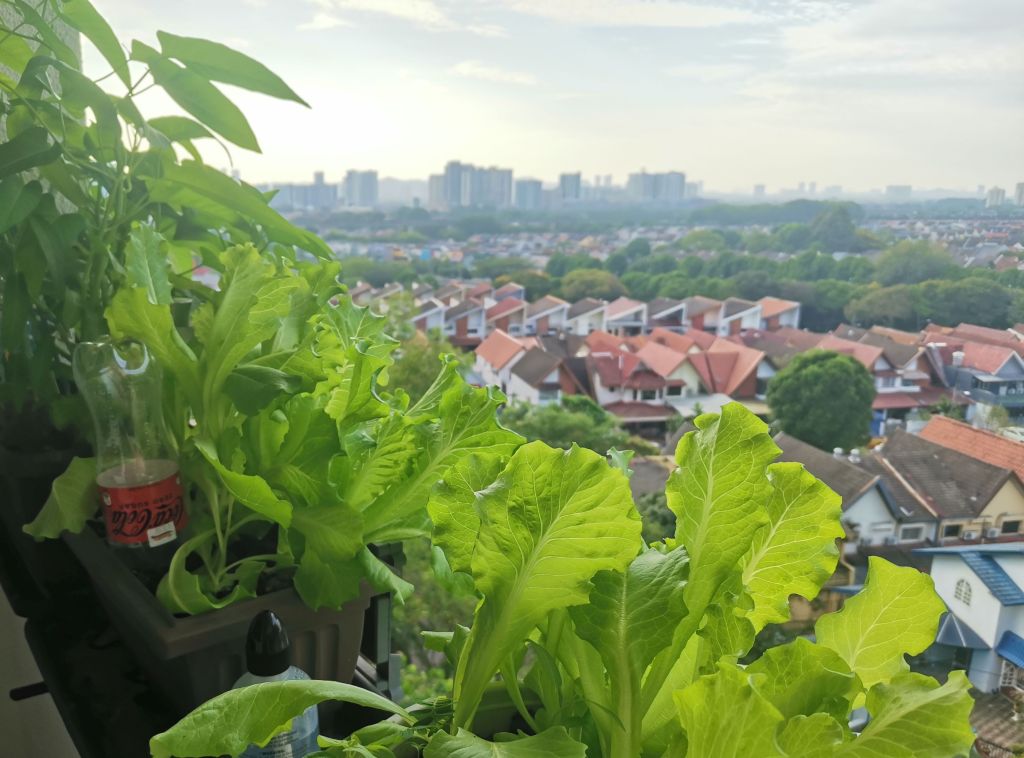
After I returned from my Penang vacation in April, I quickly checked my balconies. (I have two balconies, one which overlooks the apartment complex, and another which has a view of the hills and has a stunning skyline of the city I live in. I know, I’m terribly lucky!)
The one with the less stunning view had the most thriving garden as it gets most of the sun. As I was sure that most of it would die during my two weeks away, I harvested most of them to cook in Penang. There were some left, but by some miracle, the water spinach was still clinging to life, and the Brazilian spinach cuttings I had left in water bottles on the balcony table were sprouting roots, ready to be replanted.
But that’s not the only thing I found. I noticed that there were dried leaves and debris on the wooden floor. Puzzled, I looked up at the money plant hanging on the wall.
Subscribe to continue reading
Subscribe to get access to the rest of this post and other subscriber-only content.
-
3 Body Problem is a bit of a problem

In my last newsletter, I explained that the main issue I had with Netflix’s 3-Body Problem is the dumbing down of the book’s plot.
Subscribe to continue reading
Subscribe to get access to the rest of this post and other subscriber-only content.
-
Comprehensible input and creating my own Mandarin-learning curriculum
I spent the whole week trying to figure out my Mandarin-learning curriculum.
One thing I realise – as a “heritage speaker”, meaning someone who has a foundation in Mandarin due to her heritage, I have a leg up when it comes to learning.
Some language learning experts say that we should focus on listening and speaking first, then learn Chinese characters.
I agree because that’s how I’m learning Mandarin right now lol.
I spent most of my life with this HSK3-level comprehension of Mandarin, but this has helped me massively in learning Chinese characters now.
I can’t imagine grappling the complexities of tones, pronounciation, increasing vocabulary and understanding the grammar all at once!
This, btw, is a very good video about how to learn languages. This is the clearest explanation I have heard so far about the comprehensible input method.
BTW, this was how I learned English. English lessons in Malayisan schools are very basic. If you depended on them to increase your proficiency, you won’t get very far. However, I read and watched a lot of English TV. Like, A LOT.
Especially reading. I read like a demon.
And I think I’ll be doing the same with Mandarin, though I need to take care to take off the crutches – pin yin and English subtitles. For that, I need comprehensible input, which means I need to understand 95% of what I’m reading/watching.
That’s tough for the reading bits because there’s so few reading materials for those with a proficiency of 200 characters (where I’m at now).
Listening – I’ve watched dramas at 70-80% comprehension which, apparently, isn’t great, so I need to downgrade my content to simple HSK2 level stuff and really focus on learning characters I don’t know rather than “assume” and “brush off” words I don’t know.
This has been a fun adventure. Exhausting, really, but really exciting to see myself progress from just being able to read 10 characters to 200+!
-
I think I read a racist thing from Canada this morning
I was browsing Substack Notes today and noticed an eye-catching graphic. The Great Canadian Darkness was one of the top 5 articles under the “culture” category, one of my favourite categories.

As a denizen of the English-speaking Internet and thoroughly exposed to the rants of North Americans and other Westerners, I more or less guessed what it was about. But even then I was floored. My initial reaction to this article wasn’t …. positive:
I couldn’t believe what I just read, and it was one of the “top culture” posts on Substack.
The writer called Filipinos “SEA monkeys”, claims that Indian people who get into govt jobs only do so cos they cheat through diploma mills and says Chinese people are purposely poisoning the west with drugs.
The worst part were the people agreeing with the writer in the comments.
The eff did I just read?
That’s why I never took the hullabaloo over Nazis on Substack seriously because such racist toilet paper exists on Substack and people 👏 them. 🥴
PS: May need to reread it again to understand it better because I found it so hard to finish it due to people being called monkeys and such 😵
After taking a breather, I listened to this article using text to speech …
On the one hand I appreciate that I get a peek at the ennui besetting the working class (I assume) in Canada.
There’s also a part of me that finally appreciate having an example of “the negativity in the West” Singaporean geopolitical commentator Kishore Mahbubani talks about. Some parts of me are even empathetic to the melancholy about one’s country, having most of my life lived with the “Malaysia no hope” message. (I no longer think that, but that took me moving to Australia and realising Malaysia is pretty fab in many ways.)
Yet, I’m hugely disgusted by how the writer depicts minorities and foreigners in this newsletter. I’m not sure whether he’s being allegorical or honest or …
“A family of four SEA monkeys are chirping away in Tagalog…”
“… the Arab family with the creepy hijab-wearing woman”
“You watch a Tamil woman in full traditional garb scoop up a handful of curried white rice with her bare hands, bring it to her mouth, and eat it … You think there’s practically no excuse for this. It’s not simply their culture; this is objectively unhygienic, primitive, and disgusting.”
“…. smoking opioids that are mass-produced in the Chinese Mainland for the purpose of warfare against Westerners”
WOW.
BTW a lot of Malaysians eat with their hands.
Maybe I’m misunderstanding something here. But there’s so much hatred against non-whites in this newsletter I’m not sure what to think.
I’m sure most Canadians don’t think this way.
Do they??
Anyway, I’m not calling for it to be banned or anything. I believe that free speech is important. I’m currently reading “White Working Class” by Joan C. Williams and it’s pretty aligned with the themes in the book, the same fears, the same anger.
I think this anger needs expression, and these people need to be heard, and people need to understand why this anger exists.
One main message by White Working Class is that people feel powerless about changing their lives in a world set up to make them fail. We need to turn their lives around to create real change.
PS: Even in Malaysia we have this same tide beneath society, and the “Bangsar Bubble” (our equivalent of NY upper East side people) are pretty ignorant or ambivalent to their anger. They often call these people “stupid” and “ignorant”.
We ignore them to society’s peril.
-
Subscribe
Subscribed
Have a WordPress.com account? Log in now.

