-
3 Body Problem vs Three-Body
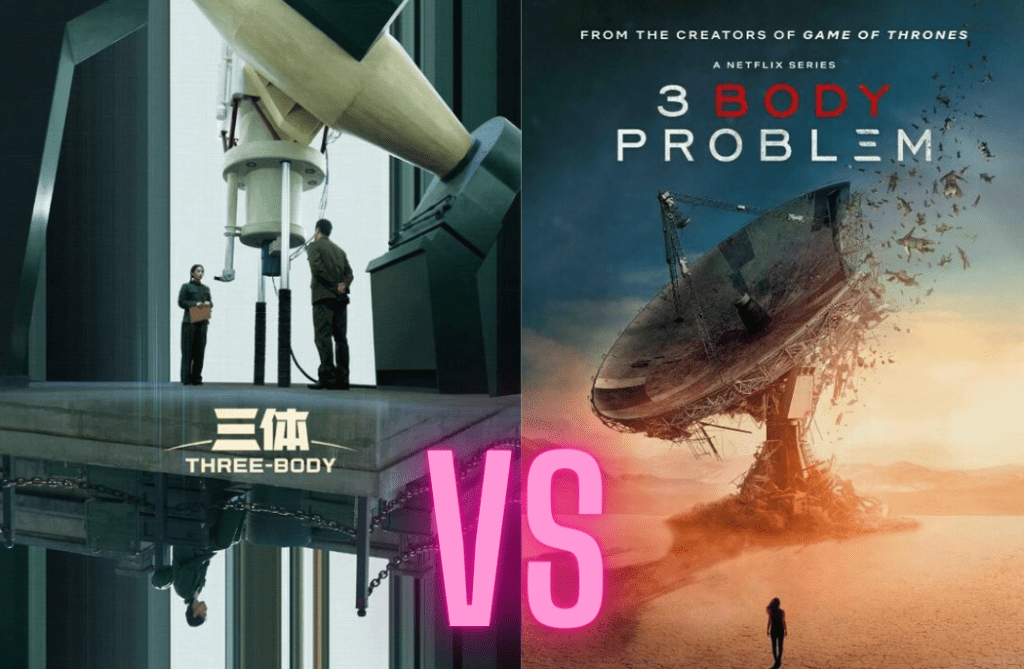
When I heard that Netflix was going to adapt Liu Cixin’s The Three-Body Problem trilogy of novels and that the people behind it were the ones behind The Game of Thrones my initial reaction was:

It’s not purely because David Benioff and D. B. Weiss totally ruined the best fantasy drama ever made with that shoddy last season.
And true, my trepidation has a lot to do with how little confidence I have in Hollywood depicting one of the most sensitive periods of China’s history, the Cultural Revolution. For god sake, they couldn’t even do China’s folk tales right (exhibit 1: Disney’s live action Mulan), let alone China’s history. (PS: I’ll be covering more of this topic in part 2.)
But my main concern was around the inevitable China vs West comment wars on social media and movie forums everywhere, with both sides touting their version as superior, and then the inevitable “Communist Party bad”, “OMG Chinese propaganda” and “You only like the Chinese/Netflix version cos you’re pro-China/pro-West” conversation points.

Subscribe to continue reading
Subscribe to get access to the rest of this post and other subscriber-only content.
-
Sweeping tombs, eating food and waving at the dead

Last night, my Chinese American friend and I were talking about how some places just call to us. Penang island is like that for me. I grew up here, and so did my parents. My ancestors have been here for nearly two centuries. It is here that I can slip into my mother tongue, a Hokkien variant only found in Northern Malaysia.
I feel like I am finally home, where nobody will accuse me of not being “Chinese enough” because I can’t speak Cantonese or Mandarin well enough.
Subscribe to continue reading
Subscribe to get access to the rest of this post and other subscriber-only content.
-
Have you enjoyed some Chinese propaganda lately? I did.

In January I watched the Chinese drama, Draw the Line. Some people (okay, mostly those not of the Chinese persuasion) have dismissed the drama as Chinese propaganda because it had to do with the Chinese legal system, which made me think, so because you think it’s propaganda you are not going to watch it?
To quote Uncle Roger:

Like most people in Asia and South-East Asia, I have consumed Western movies all my life.
I have imbibed the “America saves the world” message and watched American armies swoop down to save the unwashed masses of brown people in movies over and over again, either in spandex or in big planes, and I would like to reassure you that I’ve not lost my marbles nor have I turned American.
Subscribe to continue reading
Subscribe to get access to the rest of this post and other subscriber-only content.
-
Creating a Mandarin-learning routine for myself
Trying to come up with a Chinese learning routine for myself has been hard. My method so far has been: Will learn when I feel like it, which as you know, tends to get derailed quickly when life gets busy or hard. February was like that for me, with work becoming so busy that by the end of the working day I become way too tired to learn/revise my Chinese characters as usual.
Routines are my kryptonite. My brain rebels at them because it thinks they’re boring and on top of that I keep forgetting the details of said routine. (So that’s why I’m writing this post, to help me remember and also help me stay accountable because I’m announcing to the whole freaking world I’m doing this.)
That said, routines have been an absolute life saver for me in life. For example, in 2022, I started aiming to walk at least 5,000 steps a day. My problem has always been consistency, so having a low number felt more doable to me. Once I conquered 5000 steps, I increased it to 6000 and so on. In 2024, I now walk 7000-10000 steps a day. So, I know they work.
Determining how or what my Chinese learning routine has been more difficult.
As a “heritage” speaker, meaning, someone who has some foundation in Mandarin, I have to learn Mandarin differently from second language learners.
For example, I find the mnemonic systems by some language learning systems far too complex for me as I already know some of the words, which includes the meaning, how to use them, the tones. I just don’t know how to read the characters.
However, there are some words that are unfamiliar so I have to employ second-language-learner techniques for these words.
Having such a hybrid or mixed learning system increases the complexity of my routine.
Yesterday, I spent an hour reading the Outlier Linguistics’ Pipeline Strategy and it made my head spin a little. I know it’ll be far too complicated for my brain to follow, though I understand the logic behind it. The teachers of the course meant for second language learners to use this technique, so I understand why this technique will work.
However, on top of that, I know, just know, that learning 3-5 characters a day on a working day is nigh impossible for me. I need a day free of work distractions to learn something new, so I decided to only use weekends to learn new characters and weekdays to revise these new words.
Changing Goals
I have decided to throw away the HSK mastery goals. (Originally, I wanted to reach HSK 4 level by end of the year.) Now, I’m using this Chinese frequency list instead:
- Wikipedia 1000 most commonly used Chinese characters
- Leiden Weibo Corpus – which lists the most commonly used Chinese Characters on Weibo.
The goal is to master 1000 most commonly used Chinese characters by the end of 2024. So far, I’m at 130 characters — my progress significantly slowed in February due to work being busier.
Mastering 1,000 Chinese characters – learning routine v1
This is what I hope is my extremely simple Chinese learning routine:
Weekend, 10am: Learn a total of 20 new characters by:
- Understanding the components of each character
- Creating mnemonics for each
- Adding the characters to the Tofu Learn app
- Use the Anki deck I downloaded (maybe an extra step too many. Will evaluate but I really like the deck!)
Weekdays: Revise and remember the 20 characters by:
- Using Tofu learn flashcards – 10 minutes a day during lunch time
- Using the characters by writing them in a sentence in my diary. (Context learning) – end of day
Comprehensive input practice:
- Watch Chinese dramas daily (really not a problem for me. It doesn’t feel like work at all haha)
- Mondays (will increase frequency once I remember to be more consistent with this routine): Listening to Chinesepod Elementary & Intermediate, and writing down new words, and entering them in my flashcards.
So, language learners, what do you think? Would love to know more about your routine so that I can get more ideas/inspiration/motivation for my own routine.
-
I speak four languages. That’s just being Malaysian.

The first time I realised I had a superpower was when I was living in Australia.
I was at a party where there were mostly Malaysians and Australians, and a lady from China was there. She could only speak Mandarin, so I spoke to her in my not-so-good Mandarin, apologising for my subpar command of the language. She reassured me in the polite way Chinese people do when you’re trying your best but not hitting the mark.
Then, a friend from Malaysia came over, and I responded to her in a mix of Malay and English – Manglish, to most of us.
Then another person came over to talk to me, and I joked with her in Hokkien and then switched to English when her Aussie spouse came over.
When I returned to the lady from China, she remarked, “You Malaysians are so amazing!”
At first, I was confused, because I was just doing what many Malaysians do and take for granted – context-switching and adjusting my language to the person I’m speaking to.
Then she said, “You can speak Mandarin, you can speak English. I’m amazed that Malaysians can do this.”
This may sound like I’m humble bragging, but this was not the first time people said this to me. I’ve travelled around the world when I was younger, and I heard this often.
Once, in Japan, the guide and translator who accompanied us said that the Japanese people were intrigued by Malaysians due to our linguistic abilities. I had the same remark about Koreans from another tour guide when I visited Seoul.
I’m not sure if they’re flattering us Malaysians, but since both tour guides were originally Malaysians, maybe they were speaking the truth.
And I think, due to this flexibility, a lot of people are confused by Malaysians.
Subscribe to continue reading
Subscribe to get access to the rest of this post and other subscriber-only content.
-
Sad Stories of Asian People
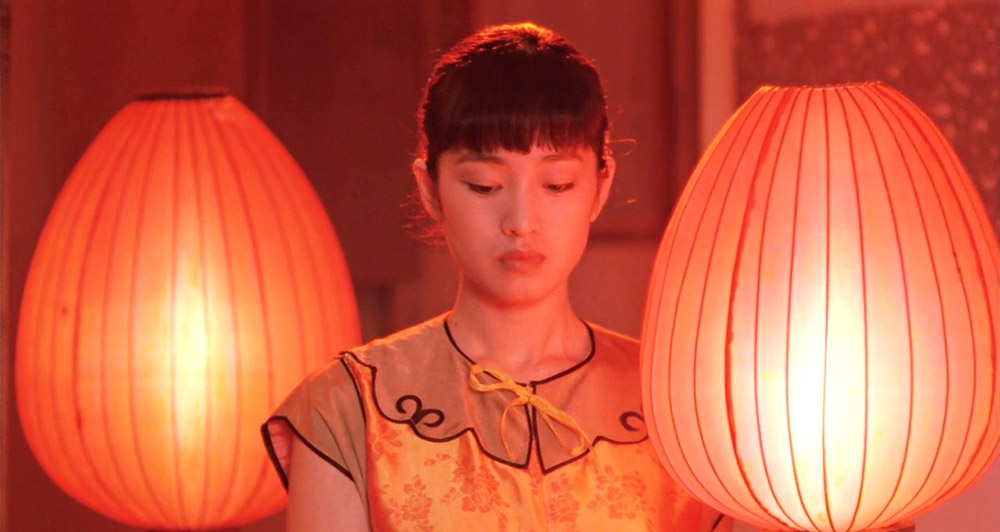
There’s one section of the bookstore that I judiciously avoid.
I call it the “Sad Stories of Asian People” shelf.
I mean, I do like my periodic injections of Did you know how much we suffered as Asians in all our history or OMG being an Asian is hard in the modern world stories.
For one, I adore Su Tong’s novels, who wrote the novel behind the world-famous Zhang Yimou movie, Raise the Red Lantern.
And I mean, logically, I know there’s demand for it, especially overseas-born-Asians who have to wrestle with East vs West cultural pressures. But something about the West’s adoration of these novels has always rubbed me the wrong way.
What is it about these stories that Western publication houses love them so much they throw awards at it?
Subscribe to continue reading
Subscribe to get access to the rest of this post and other subscriber-only content.
-
Hello from a banana

So, theoretically, I’m a banana. Though, maybe half a banana.
Let me explain.
In Malaysia, we call Chinese people who cannot speak their native tongue a “banana”. (Yellow on the outside but white on the inside, get it??) Bananas are often looked at with disdain by Chinese who can speak and read Chinese.
Chinese people — those from Mainland China or the diaspora, fiercely cling to their culture and origins. Like, we are very aware that we are from this super ancient, 5,000-year-old civilisation, didn’t you know? Many of us still practice customs that are just as old, no matter how long our ancestors have left China.
So, if something negative is being said about China, we will feel it, even if we’ve never stepped foot in China. I find that an interesting thing because when the Western media began pumping out anti-China news, I began to feel really, really offended. Logically, I couldn’t comprehend it and thought something was wrong with me. But when I asked other Chinese folks who were born abroad, they felt the same.
But that issue is a topic for another day. However, this mindset will help you understand why I’m called a tropical fruit.
Subscribe to continue reading
Subscribe to get access to the rest of this post and other subscriber-only content.
-
My yearly negotiations with Mum about Chinese New Year cooking

The conversation almost always begins on Chinese New Year eve.
Me, in the morning, as I work as reluctant kitchen help: Mummy, seriously, can’t we just go to a restaurant and not cook for once?
Mummy, looking baffled at such a suggestion: How can I not cook? We have to pray!
Later in the evening, after slaving over the wok for hours, and producing a few days’ worth of food, Mummy: “Next year I will not cook anymore!”
Me: “That’s what you said last year.“
Mummy: “I will not cook next year! Tired already!”
Me: “You promise? Promise?!”
Subscribe to continue reading
Subscribe to get access to the rest of this post and other subscriber-only content.
-
Thoughts on Tucker Carlson’s interview with Vladmir Putin
While most people watched Chinese variety shows during Chinese New Year, I watched the Putin/Tucker interview. It is a two-hour interview and not for the casual viewer.
Here are my thoughts about the interview:
- The Russian history was probably needed, but could’ve been much shorter. Most US folks probably don’t know about it, and Putin was probably trying to reach out to them.
- I didn’t find Putin’s reasoning for the invasion convincing especially the denazification bits. It feels exaggerated. I am unconvinced and still think the invasion is wrong. Also, if we were to go by Putin’s reasoning, many countries have the right to lay claim to swaths of land that formerly belonged to them!
- Putin is very intelligent – I am surprised people are surprised by this. How did you think he stayed in power?
- Nordstream – it is also true most of the world, esp non-Western countries, suspect the US did it. Again surprised people are surprised by this.
- What Putin said about how the genesis of the Ukraine war has been echoed by a few geopolitical commentators in South-East Asia: Geopolitical incompetence and a bid to retain US hegemony.
- A lot of the things Putin said is not new to me. So, I am more interested in how the US officials and media are reacting. They’ve been super defensive.
- I surprisingly liked Tucker’s interview style here. US-media interview styles are annoying because they always insert their opinions and agendas in them, are leading and confrontational. They constantly interrupt their interviewees, are rude to them and obviously want to make themselves look “tough” rather than do actual journalism. Much of Western broadcast and print journalism has devolved into this farce, so I was amazed that Tucker, who is one of its greatest offenders, actually let Putin speak and didn’t interrupt. Too often journos liked the sound of their voices too much. 🙄 Context: I was trained by a Canadian interview expert so I know what’s good technique.
- Tucker did not seem to be prepared with the Russian history bits so can’t rebut/clarify Putin’s points, which is a pity. Apparently, while accurate, Putin has spun Russian history to fit his narrative.
Some people complain that we’re giving a platform to Putin’s propaganda. I find that a disturbing argument.
Beneath this remark is the assumption that the United States or the Western world doesn’t produce propaganda. What did you think the rest of the world have been getting? Of course, we get their version of propaganda!
As a member of “the rest of the world”, I was rather relieved to finally get to hear Putin’s side of the story, no matter how twisted and jarring it may seem because we’ve been only hearing one side of the story in the English media because the US and the West controls much of it.
After watching the Tucker Carlson interview, I decided to get a different view of Russian history. For that I turned to Konstantin Kissin, a popular political commentator and naturalised Brit originally from Russia:
And from a Russian Youtuber I follow — a younger and more liberal point of view:
Final thoughts
Some folks, mostly US Americans, I noticed, argued that Putin is not worth listening to because he’s obviously evil. I give them that freedom to ignore this interview.
However, I am disturbed by the degree of media illiteracy I’m seeing. People are:
- Only reading and watching journalists whose values they agree with.
- Dismissing information as propaganda, yet consume propaganda from media they approve of.
- Wanting a certain spin to the news that echoes their values rather than challenge them.
- Unable or unwilling to critically think through content that challenges their worldviews.
- Assuming those who do, belong to the “bad side”.
About the last point, I almost immediately received flak for even wanting to watch a Putin interview. Reply guys and gals lectured me about how evil he is (not realising, as a former world news editor, I’m pretty well caught up with his nefarious and shady actions) and how they will never watch anything about him (am not impressed by that declaration; they are essentially telling me they want to stay willfully ignorant.). Okay, I guess.
So much so that I had to write a toot that said: Don’t assume where I stand based on this toot. That would be very reductive and probably wrong.
It’s definitely exhausting to be on the Internet when interviews like Putin’s come along. If I was smarter, I’d stay out of it and just record my thoughts quietly on the blog. But I wanted to see what other people are saying, and sadly, the reaction by some folks are unsurprising. However, did have a good laugh with some who could see the grey like I do.
Perhaps there’s hope for the world after all.
-
Subscribe
Subscribed
Have a WordPress.com account? Log in now.

